
To begin with, I do acknowledge the positives of watching true crime, particularly for people who are at risk of being scammed, abused, have the abuse escalate or whose lives are potentially in danger. Spotting behavioural patterns in violent offenders or deceivers can be very valuable. That is not to say such information can’t be obtained otherwise, without material based on real human tragedy, lacking the victim’s or victim’s family’s explicit consent.
There is a huge difference between covering a story one is invested in, possibly with the family’s input (such as a disappearance, a murder that the family feels was mishandled etc.), trying to help people who still seek answers or justice, and simply having an output schedule (like a video per week) in order to maintain your income, sensationalising random murder stories to feed to the audience. It becomes about money and consumption, if not entertainment, as described below.
The risk of this niche causing harm includes the following:
- Inaccuracies taken from poor sources; no due diligence;
- No professional background, no editorial standards, no accountability;
- Upsetting families trying to move on, or who have moved on, by bringing cases to public attention for completely selfish reasons (to monetise them);
- Speculating on personal dynamics as filler;
- Encouraging armchair detectives and anonymous judgements in the comments (comments are always left on for engagement, which translates to more views and more money);
- Refusing to acknowledge families when they signal disapproval or distress towards the content;
- Treating the content like entertainment;
- Creating an identity for oneself as someone whose livelihood is based on discussing serious crimes, with the assumption of having the right to continue, regardless of egregious mistakes.
A viewer comment I often come across is there are decent channels, that treat the victim and story with respect. There well may be. However, this category tends to include two creators I’m about to discuss, who maintained a good reputation through the sheer size of the audiences (over 2 million subscribers each).
Indicators that they don’t actually treat cases with respect can be apparent at first sight, starting with tabloid-like thumbnails (I’m not comfortable pasting those here), using the victim’s image, murder location, last sighting etc. with brightly coloured arrows and clickbait titles. If it looks like a content farm designed solely to draw attention, it is. When thumbnails use the image of murdered children, it’s even more sinister (not that using adult victims in this way is better). It doesn’t matter what disclaimer the creator recites, or what sensitive language they may use throughout the video. They seek to attract views through shock value, like the Daily Mail and similar rags.
Eleanor Neale’s “true crime tour”
Recently, Eleanor Neale, who renamed her channel “Outlore”, announced a tour in the UK, sometime this year. She did so on social media, as opposed to YouTube, perhaps to only gain the attention of her most devoted followers. She is already selling tickets and some events are sold out.

To start with, she announced this bizarre concept with a great deal of excitement and the mention that she didn’t want the atmosphere to be depressing, promising fun surprises and such. It’s clear that she treats it as a meet-and-greet – only her events will be based on discussing real murders and “debating suspects”, as she termed it. It’s so wildly stupid and irresponsible that it shouldn’t be allowed to take place, especially for monetary gain, either direct or by gaining more followers.
First off, they are engaging in this process without crucial information – investigators never make everything public, withholding details only the person responsible would know. It’s a game and a pastime for most of them. Some, on the other hand, may take themselves too seriously.
Imagine this.
Five, ten or twenty years after your loved one or acquaintance was murdered, with information being out there that you had spoken to the police, this individual discusses the case in a rented venue, to entertain her audience and encourage armchair opinions on “who dunnit”. Who is in attendance? Not the best and brightest, obviously. The sleuths, who think there’s absolutely nothing wrong with this. Hell, they might even crack the case right there. They dissect every witness and relative and come up with a theory that you were responsible. They encourage each other with more and more arguments. Then they stalk and harass you online.
Unheard of? Not at all. The families of those murdered or disappeared nowadays dread this phenomenon. The police hate and discourage it constantly. Shortly after a tragedy or disappearance is made public, the location is flooded with gawkers filming themselves looking for clues. The footage is then monetised on their channels, replete with speculation out of their back holes (cough-cough, Andy Signore).
As to the tour, let’s remember, this turmoil is solely caused so the content creator can have an engaging event and profit from it. To clarify, after the (predictable but not for her) backlash, Neale stated the money would be donated to charitable causes. As this wasn’t stated in the beginning, it seems to be a late effort to soften the public’s opinion.
Neale’s defence of this concept was her usual don’t worry, we will always treat the victims with respect and focus on bringing awareness. The tour itself is a massive lack of respect to begin with. Words are meaningless when actions show the opposite.
Prioritising the channel, victims as a commodity
This wasn’t Eleanor Neale’s first clear indicator of disregard for the impact of her content.
In 2022, it came to light that after she released a video on a young woman’s murder, the victim’s sister reached out on multiple platforms, asking for the video to be taken down, as it contained false information and embellishments that couldn’t be traced down to any sources. The way she was treated by Neale’s representatives and audience is described in this video by Mika’s Rhetoric, as well as the follow-up.

The response was considerate enough, though it took some time to arrive:
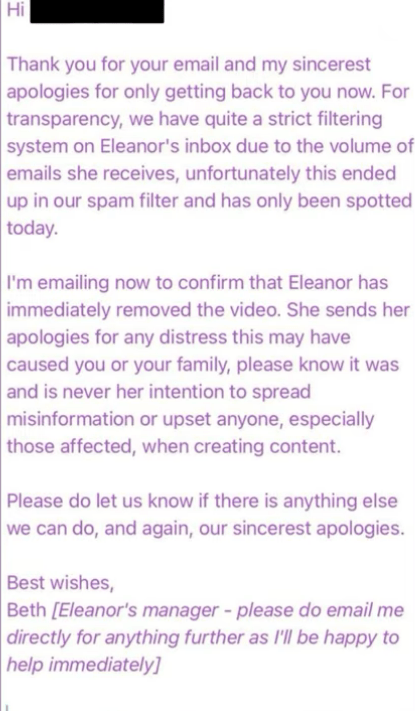
Note the last paragraph: “please do email me directly for anything further as I’ll be happy to help immediately”. The victim’s sister did email back with unanswered questions.
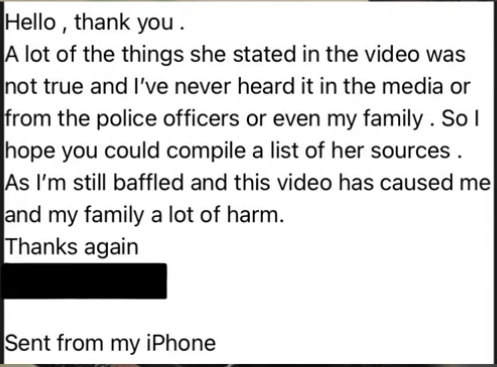
Unsurprisingly, she went on to be completely ignored. It makes sense to assume there was no list of sources and the bullshit was nothing more than Neale’s speculation, used as filler to make a long enough video. Admitting that, even in polite and apologetic terms, would mean admitting this was common practice and the channel posed a similar risk of distress to the family and friends of every victim Neale covered. That was a no-no.
The rationale
This is by logical deduction, of course, based on Neale’s refusal to address the issue properly and change some of her practices (she has since attempted a blatantly disrespectful, chatty format for murder stories, which she argued was more fun for her; viewers rejected it).
The importance of the channel, and her revenue, were compared to the distress of said family. Her brand was treated as having the right to exist, even though it relied on the suffering of people like them. May I point out:
- No one forced Neale to rely on covering murders for her livelihood; perhaps she should reconsider that choice;
- She knew the risk of such a reaction was implied;
- She is not more important than the victims because she built a business and a reputation.
Ignoring the victim’s sister was likely seen as the smart move, and in truth, it was, if one lacks morals. The victim’s sister lacked an audience of millions. She was powerless. Without enough noise, the issue would be swept under the carpet. The limited noise made by Mika’s videos was marginal. Life went on.
Neale had deleted the video, therefore losing out on the revenue, perhaps perceiving it as having done the victim’s sister a favour, to her own detriment. The bigger picture never manifested. The word here is entitlement.
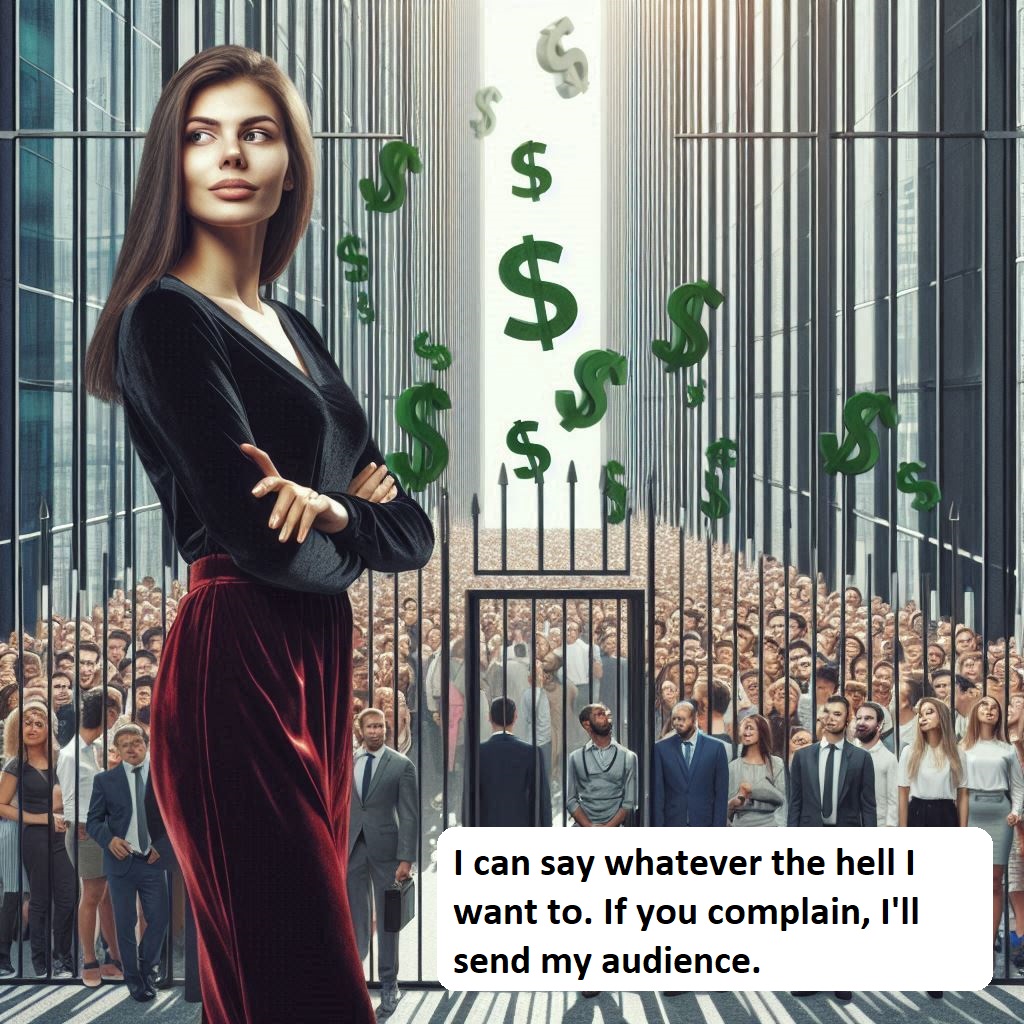
Kendall Rae, too important to respond to victims’ families
When clearly exploitative true crime channels are discussed, one creator is often mentioned as the most ethical one: Kendall Rae. It’s true that she has collaborated with victims’ families and investigators in the past and overall appeared to be genuinely invested and respectful.
Then this happened.
In this Reddit Post dated 2 years ago, a victim’s niece, who recounted having had a very close relationship with her aunt, described her shock and revulsion at Kendall Rae’s video, based on her aunt’s murder by an employee whose fraudulent behaviour she had discovered. The video was released 16 years after the murder, and as her aunt had been a successful real estate agent, details Rae used largely came from tabloids, which had hounded the family at the time, embellishing and speculating disgracefully.
Kendall Rae named the victim’s relatives, including her niece’s mother, and referred to private issue in the victim’s life, like suspected substance use and health concerns, which had absolutely nothing to do with the murder. She also hinted that the killer was unknown, although the killer was arrested within hours and confessed two days later. This was likely to make the video appear more interesting and raise curiosity.
The most shocking part of this saga occurred when the victim’s niece attempted to raise this issue with Rae. It’s presumably OK to paste this here, as the thread has been left up and is still active, lacking any kind of apology from Rae or her team.
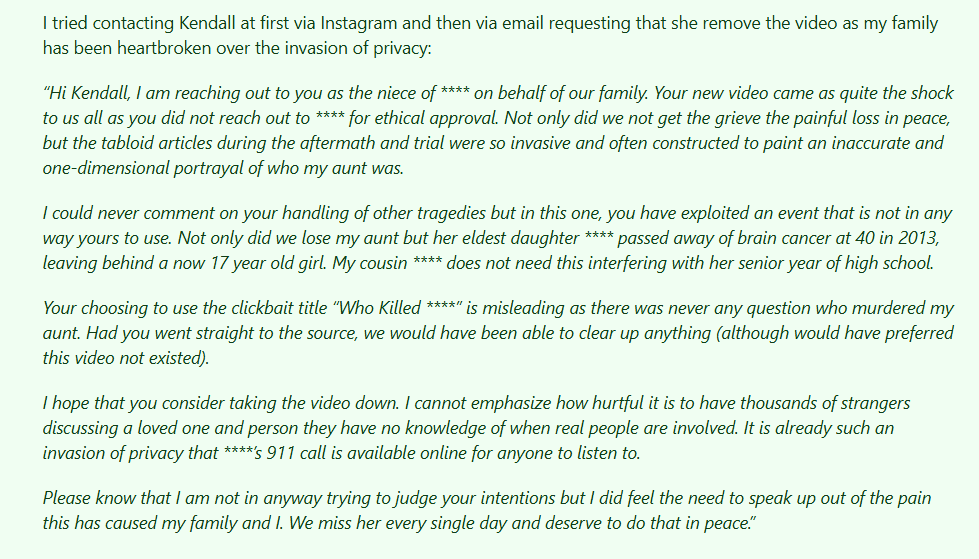
After pouring her heart out and remaining respectful simultaneously, she received this automated reply:
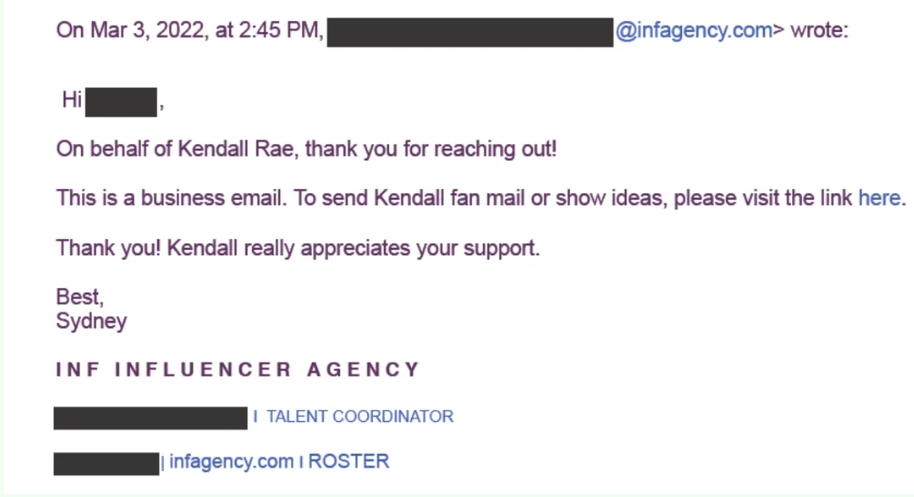
Let’s pause for a second and consider that Kendall Rae is just a person making YouTube content for profit, with no explicit editorial standards or accountability, based on information found online. She is able to publish data about anybody, while being unreachable to the people she uses, unlike publications which provide actual contact info, should someone affected by a story want to reply. Even tabloids allow that avenue. She doesn’t.
Regular people can be ignored (they can’t do anything about it), and I’m convinced this isn’t the first time it happened. Had Kendall Rae truly cared, she would’ve addressed it herself (she did voice the story, while it’s unknown whether she wrote the script or looked into it at all). She is the face and the voice of the business.
Once again, the brand had to be protected. An admission and apology could’ve been reposted online. The family could’ve made a rebuttal, proving she had perpetuated false information. Deleting the video was the removal of a reputational issue, as opposed to genuinely making amends for the harm caused to the family being exploited. Their feelings didn’t matter; they could be dismissed altogether.
What is more, deleting the video proved that her email was read and taken seriously, but with the completely wrong attitude.
Channel owners with large audiences are accustomed to revenue flows and must make financial decisions based on those earnings (and future earnings). Anything else becomes secondary, if not irrelevant.
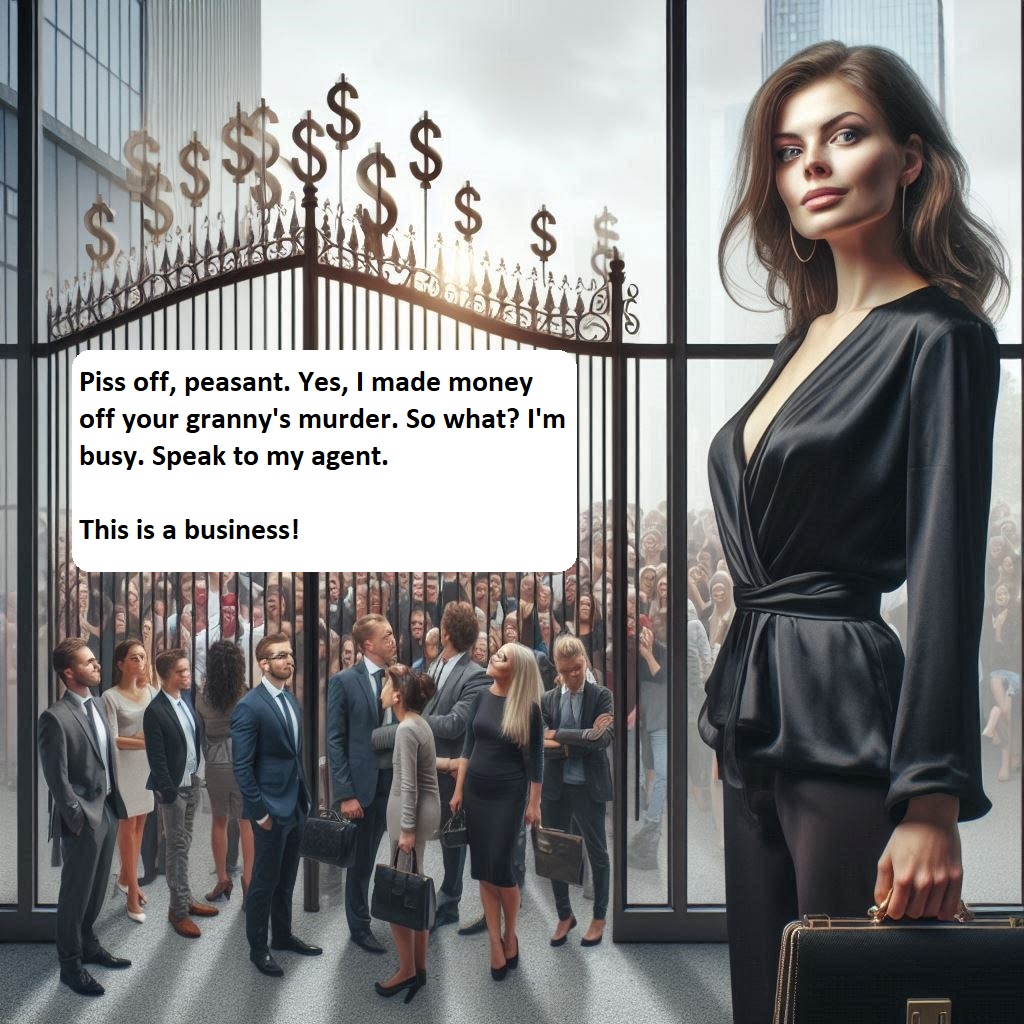
The victim’s niece replied to this Sydney character, who never even acknowledged the content and seriousness of the email.
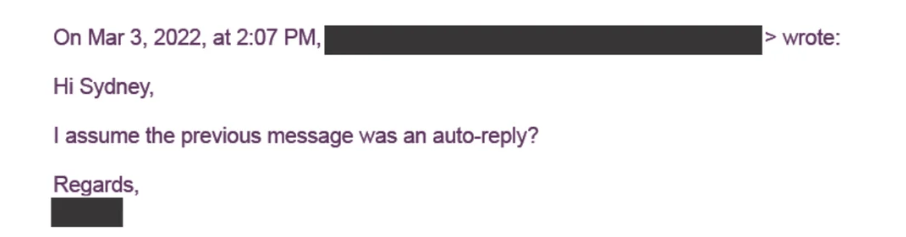
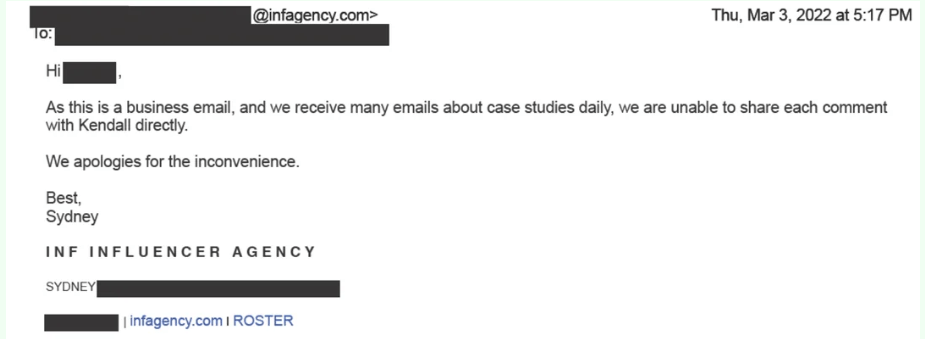
This is some Black Mirror type stuff (again).
What was Sydney suggesting here (never mind her trivialisation of the issue, which she described as an “inconvenience”)? That the family member who noticed many inaccuracies and defamatory claims had no recourse at all? How important and busy was this one content creator, that she couldn’t be contacted about a major mistake? Was she on a diplomatic mission abroad?
A bootleg version of Rae’s video is still available on YouTube. The victim’s niece has posted on Reddit since; there was no acknowledgement and no apology.
Channels of a certain size can avoid accountability for years, as hardly anyone on the platform is willing to raise awareness regarding their practices. Complete sleaze ball Andy Signore could’ve been put in his place 100 times over, yet no sizeable channel has taken this task on, allowing him to operate with faux credibility. The networking, access, corruption and nepotism seen in mainstream environments have taken over YouTube as well.
No end in sight?
Not at the moment.
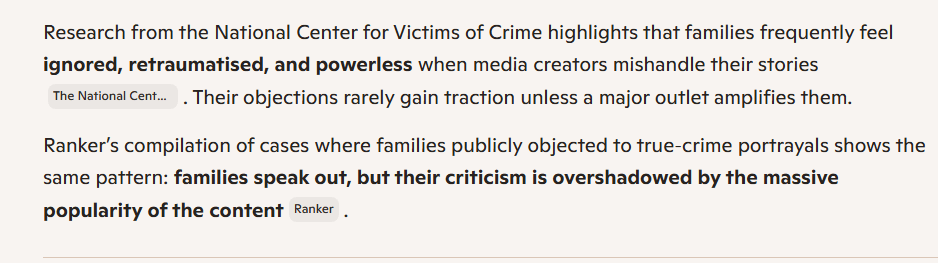
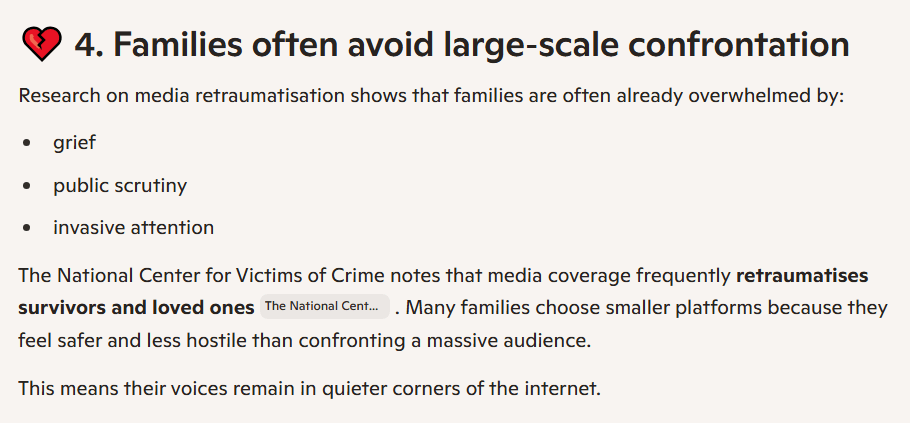
The other issue is that families affected by this don’t want publicity – staying silent, should they become aware that their family member’s death was used by a stranger to make conveyor-belt entertainment, is probably easier than getting involved. Audiences consume the story and move on to the next “instalment”. It matters little to them, while it causes upheaval for those directly affected. This suspicion is confirmed by research:
For more information on this subject, please see the Media Ethics and True Crime guidelines.
 The Artistry Of Glorified Bullshit