Update: as of March 2021, the word limit for both the counsellor and client is 900 words for texts.
When people reference the BetterHelp controversy, they only remember the scandal in 2018, around YouTube influencers promoting the company to their audiences for a fat commission, after “candidly” describing their mental health struggles out of nowhere. That is a way of hyper-focusing on their promotion and ignoring the more egregious issues described below.
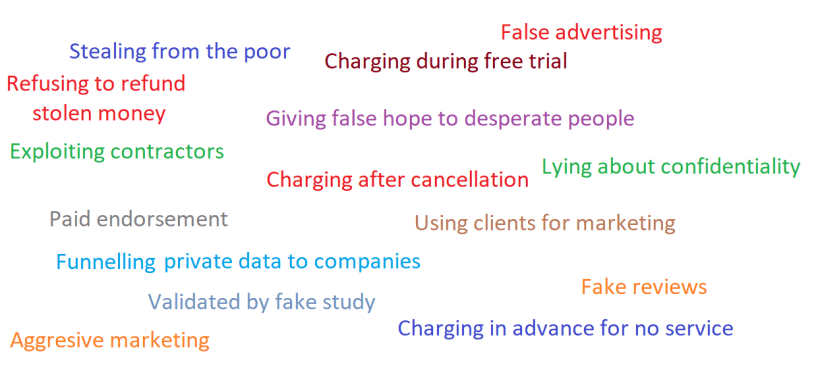
Crucial information has been leaking for more than a year regarding the practices of this “therapy mill”, from clients* and counsellors alike, as well as journalists who undertook an investigation into the company’s use of clients’ personal data. It has transpired, without a doubt, that they only care about their bottom line, exploiting clients and contractors, regardless of the consequences. Which in the field of mental health is particularly dangerous; not to mention devoid of scruples. The only logical conclusion is that the issues signalled in complaints are not accidental, but by design, in order to extract as much money while offering as little as possible.
*Note: I am using the word “clients”, since those subscribing to BetterHelp expect a therapeutic relationship and actual online therapy, as advertised by the company. Technically, they would be referred to as “customers” or “subscribers”; however, since we are talking about a service presenting as therapy, the use of those terms would diminish the gravity of this situation.
To make this post comprehensive, it will include every breach of ethics on their part. To summarise:
- Luring people into a subscription and making it difficult to cancel; charging repeatedly after someone has cancelled (see the comparison with subscription scams);
- Falsely advertising their services;
- Constantly matching clients with unavailable counsellors, to keep them paying;
- Paying counsellors per word, with no care for the quality of the services;
- Sending clients’ private data to third parties; using deception to collect some of this data;
- Obscure billing practices and frequent theft (!!);
- Disregarding the impact on people who had a terrible experience, which in the mental health field is particularly dangerous;
- Enrolling clients into a direct sales marketing scheme, as of 2020;
- Making it impossible for clients to reach them directly, except via email, frequently ignoring emails regarding refunds or unauthorised charges;
- Technical issues which make the platform barely usable;
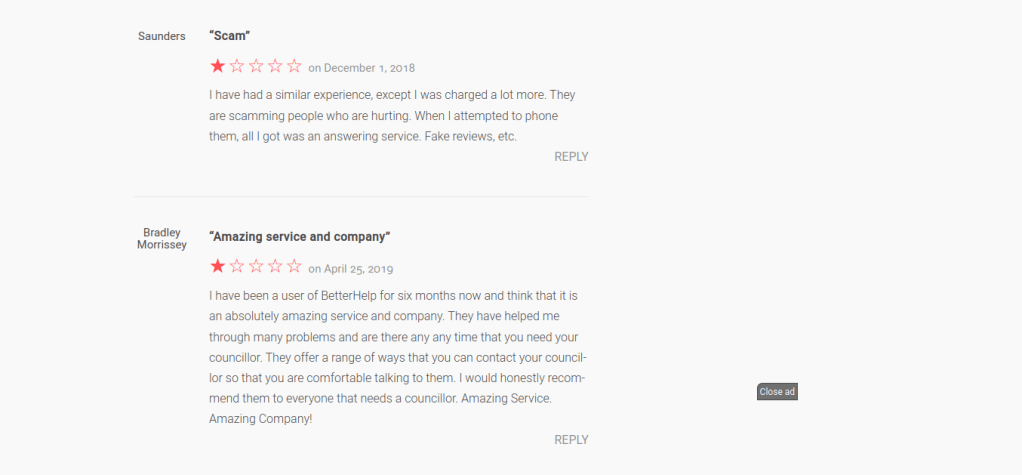
- Fake five star reviews spamming multiple websites, some including dangerous claims;
- Punishing clients for rightfully complaining.
Why target the most vulnerable in society?
BetterHelp advertises as affordable online therapy (and on certain platforms, as free), thus targeting financially disadvantaged people in need of counselling, a need which is often pressing and debilitating.
Mental vulnerability may lead someone to take risks with their last penny, naively putting their trust in others and disclosing their personal information. Extending a hand to desperate people in order to con them is the realm of religious shysters and crooks of all types. It entails having no empathy whatsoever. Also, rest assured the complaints posted here are not cherry-picked aberrations.
A few reasons why such people are the ideal targets for predatory businesses:
- They are far easier to lure into paying for a poor service, if they are in distress;
- They are less likely to be confrontational when mistreated or exploited, especially when dealing with anxiety or depression;
- They are less likely to take legal action, even if the company behaves egregiously, for lack of financial resources;
- They are less likely to be taken seriously when complaining to third parties, due to admittedly struggling with their mental health – this is extremely cynical, but nonetheless true;
- They are more likely to be intimidated into silence, for the above-mentioned reasons.
How subscription scams work
A subscription scam consists of using deception to enrol customers into a payment plan, on a continuum, usually monthly, by making unrealistic promises regarding the product or service on offer, and making it difficult for the subscription to be cancelled, which is sometimes not enough for charges to stop. A good past example is Berkeley Neutraceuticals (the “Enzyte” scam, not the current company), whilst a current example, perhaps more similar to BetterHelp in how it operates, is JustAnswer.
Common tactics subscription scams employ:
- Offering a free trial or requesting a small one-time sum, as well as payment information, without making it clear that if the customer doesn’t expressly cancel by the end of the trial period, the paid subscription will automatically start (many times, starting to charge despite the customer cancelling).
- Falsely advertising the product or service offered, whilst ensuring the TOS disclaim any responsibility towards the customer, should the product or service be radically different than advertised (even completely useless).
- Intensely engaging in promotion, through advertising, sponsoring “unbiased reviews” by entities the public trusts, as well as posting fake testimonials all over the internet, to seem legitimate.
- Making the subscription difficult to cancel, without the customer being made aware when signing up (as many people fail to read the fine print).
- Being as inaccessible to the customer as possible, usually by not having a direct customer service number, and ignoring any complaints, requests for cancellation or refunds, sent via post or email.
- Continuing to charge the customer after they manage to cancel their subscription (not always, but frequently).
- Making other unauthorised charges overtime (this happens frequently) and ignoring complaints.
- When faced with a complaint made publicly, such as through the BBB, pretending to have lost the customer’s information in order to avoid refunding months’ worth of stolen money, or admitting publicly that the company engages in such practices.
- Claiming that any instances appearing to be theft are accidental, as a result of the company growing too fast; these issue continue throughout the years, never improving.
Now on to BetterHelp and their use of the above-mentioned practices, worsened substantially by the fact they are taking advantage of people in distress. The post is designed to answer common questions regarding this company, which are seldom answered honestly or comprehensively online.
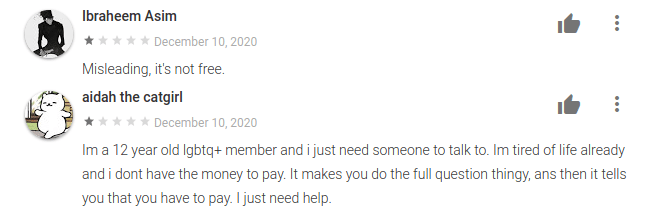
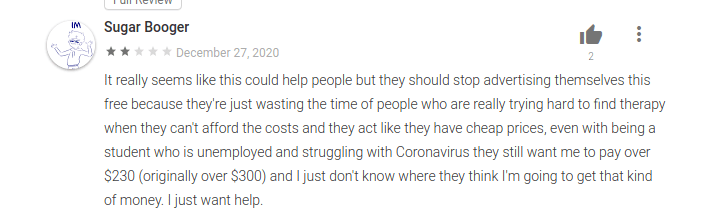
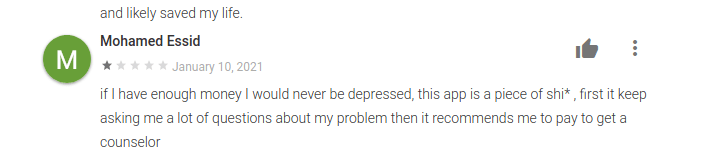
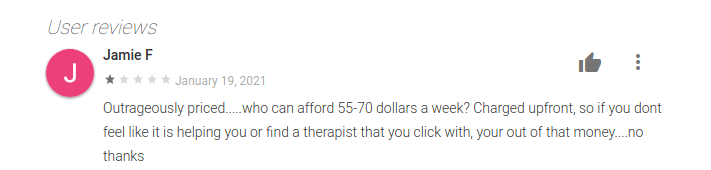
- Why does BetterHelp advertise as free on certain platforms, such as the App Store?
This is clearly not an oversight, as the company manages its image very carefully. BetterHelp has been proven to collect user data in order to send it to third parties; some of it comes from the initial form prospective clients fill out when attempting to create an account.
In February of 2020, Jezebel conducted an investigation into BetterHelp’s use of clients’ data, more specifically which third parties it was being sent to in real time, and what exactly was being sent. Please read it, as it’s very revealing.
https://jezebel.com/the-spooky-loosely-regulated-world-of-online-therapy-1841791137
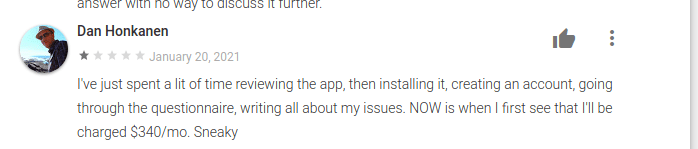
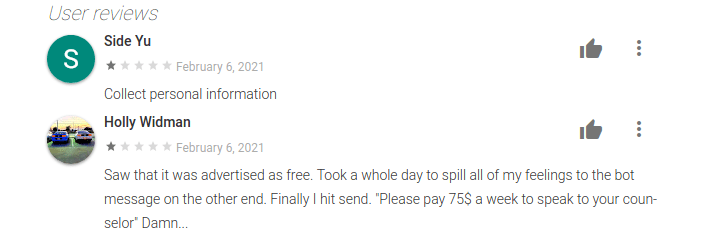
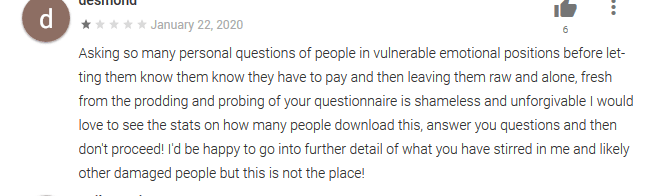
The sign-up process on BetterHelp entails, as the very first step, filling out a form listing issues related to one’s mental health and specific needs; these include very sensitive issues, such as suicidal ideation. After sending this form, the prospective client is faced with a paywall, only then finding out how much this service would cost. Many people, at this point, refuse to go further, especially if they had tried to sign up upon seeing the service listed as free. The information in that form, however, is on its way to data analytics firm MixPanel. Therefore, even if someone merely attempts to open an account and only fills out the form, their data is still collected and used by the company. And what better way to obtain such data, from as many individuals as possible, than fooling desperate people into thinking they would be helped free of charge?
Additionally, some people, though logically not many, do end up paying for the service after being led to it deceptively.
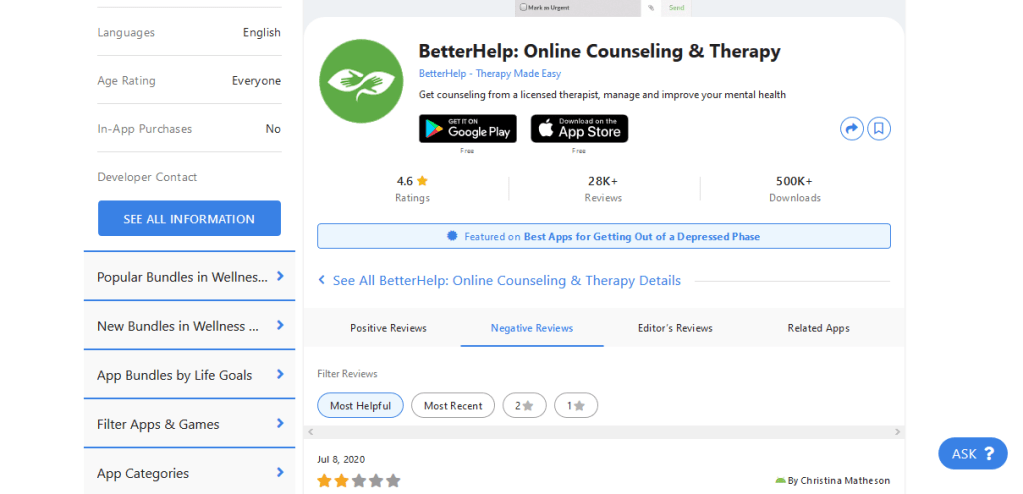

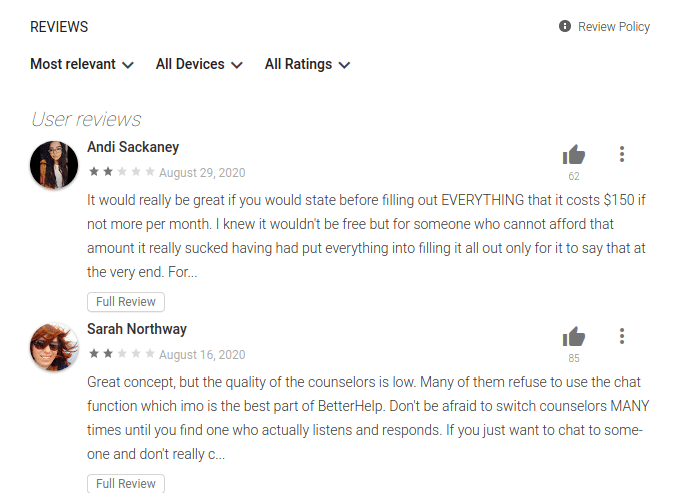
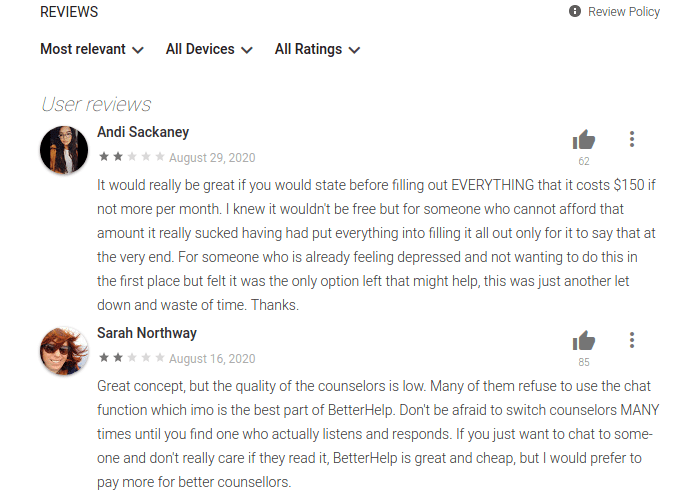













2. Is it actually therapy/ counselling…?
No, it isn’t. Although they advertise as “the largest online therapy platform in the world”, or “the largest online counselling service”, the company is very clear in its TOS that it does NOT provide mental health services (ie “therapy” or “counselling”). Instead, they claim to provide “counsellor services”, which is a nebulous concept, devoid of accountability on their side, and as they so carefully state, is not necessarily accurate, useful or even relevant to the person purchasing the subscription. By agreeing to their TOS, you agree that you might just be paying for hot air.
In this video, Derrick Javan Hoard, a therapist who was a contractor for them, explains the difference between “counselling services” and “counsellor services”, respectively.
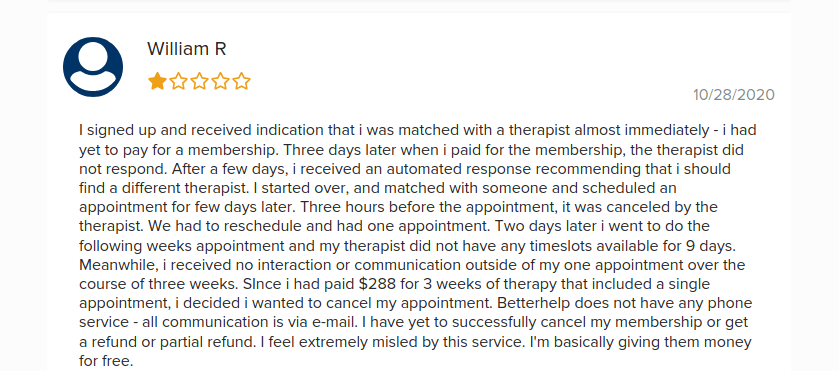
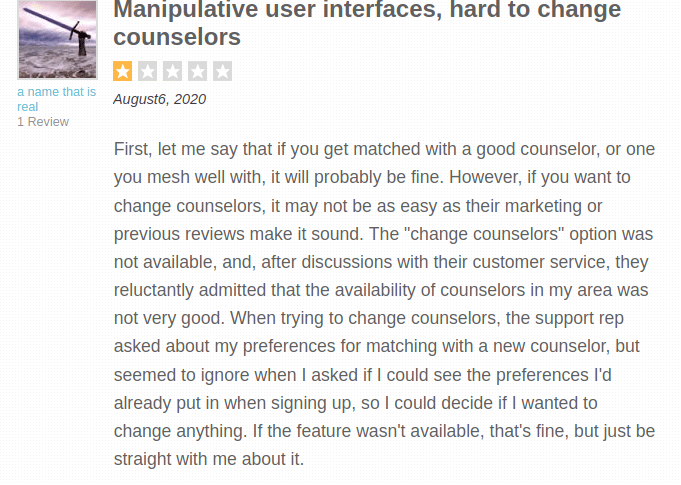
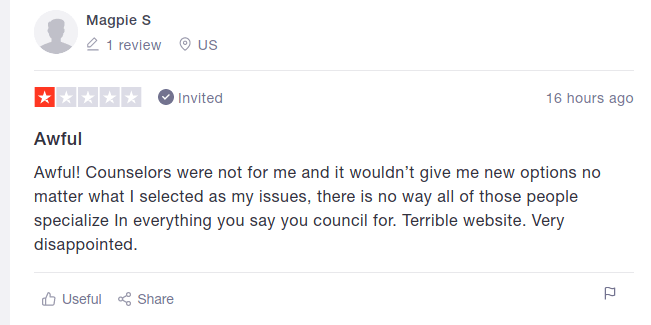
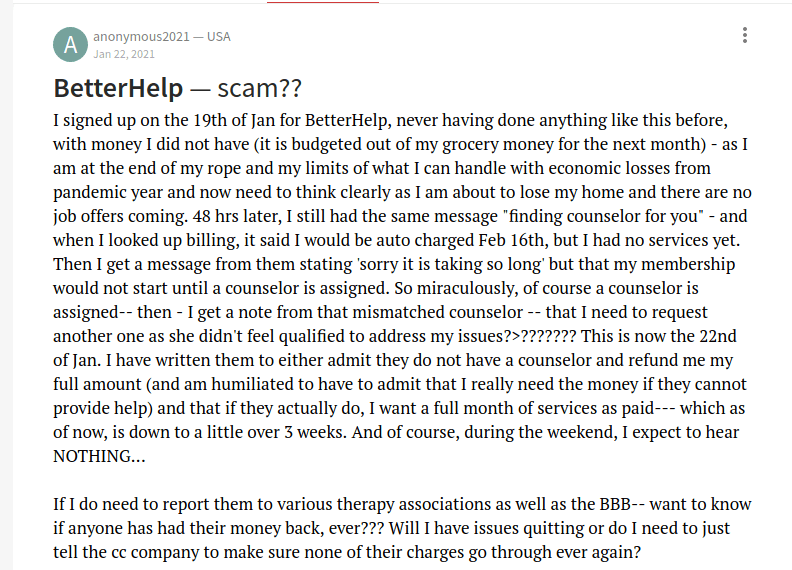
3. “Switch until you find a suitable match”; how realistic is that?
As mentioned above, BetterHelp largely targets people who cannot afford, or think they cannot afford in person therapy. This is being flaunted as a major advantage, “making therapy accessible for everyone” (as shown above, they do not even provide therapy). You will find rows upon rows of positive reviews assuring you that you can switch counsellors at any time, should you not be happy with their matching service.
The problem? That you do so on your own time and money; even the need to do so implies having received a poor service, after having paid in advance. How many businesses do you know encouraging you to keep trying their services after finding them useless? Nobody is happy about wasting money and precious time, especially if they need help right away with issues as sensitive as mental health. They are actively encouraging you to gamble with these issues in perpetuity.
Every reviewer claiming to be delighted with their counsellor after having gone through several before is essentially claiming to be glad they wasted weeks, potentially months, paying for nothing. Is that realistic? I don’t think so. Does that sound like these people were in need of immediate help and low on funds, like most people are when turning to this company, or likely fake reviewers? It’s incredibly counter-intuitive that anyone would keep trying to use a service after being repeatedly disappointed.









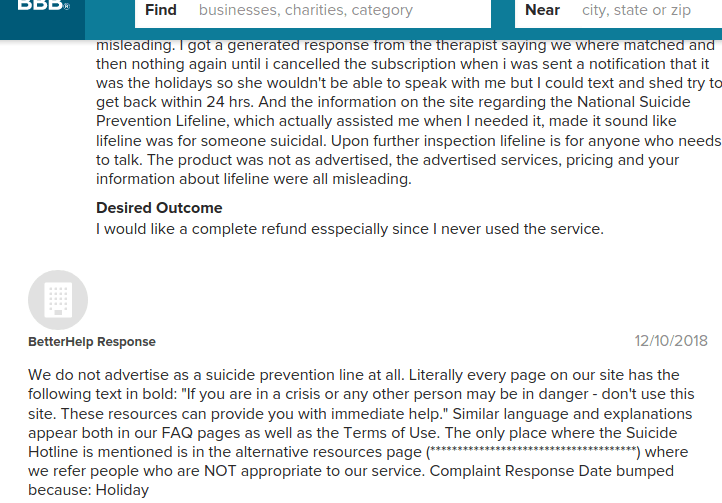
4. Why do their adverts make it seem like they help people with serious issues, when they do not?
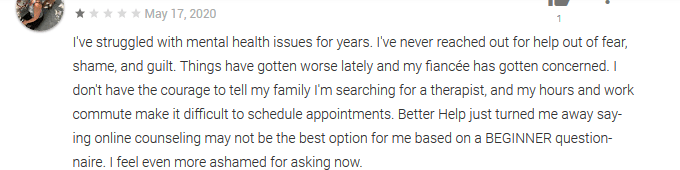
Aggressive advertising is a must, especially when providing a terrible service, not likely to be recommended by many in a genuine way. For that reason, adverts commissioned by this company portray people in crisis, who would likely be turned away when trying to sign up, or shortly after, as they are in fact liabilities to BetterHelp. The “shortly after” is an important aspect – as there have been reviews stating some people had been charged and turned away afterwards, without being immediately refunded, which may take a number of days.
Then there is the issue of data collection. As mentioned above, they also advertise as free on certain sites, attracting people they have no intention of helping, akin to the people with serious issues lured by their misleading ads. If BetterHelp can’t profit off those people substantially, other companies might, which is why they supply such companies with the data prospective clients give them.
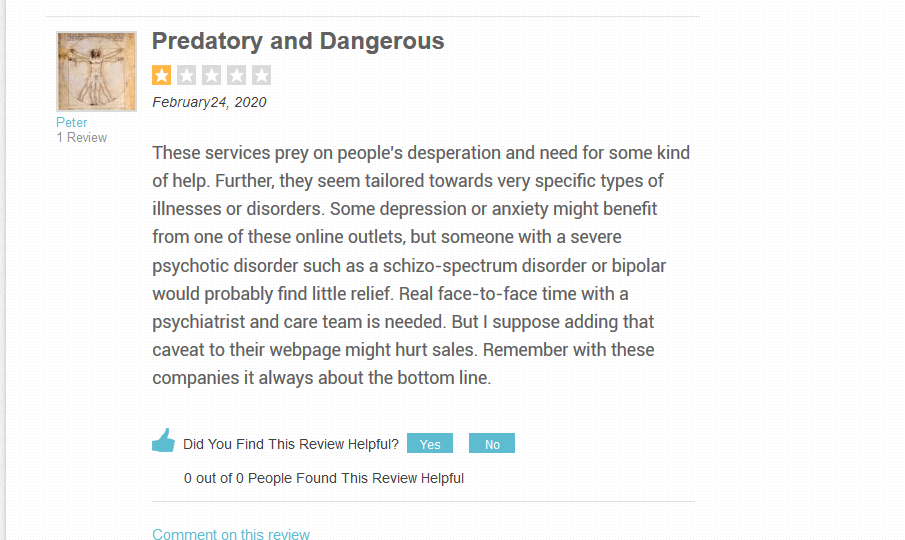

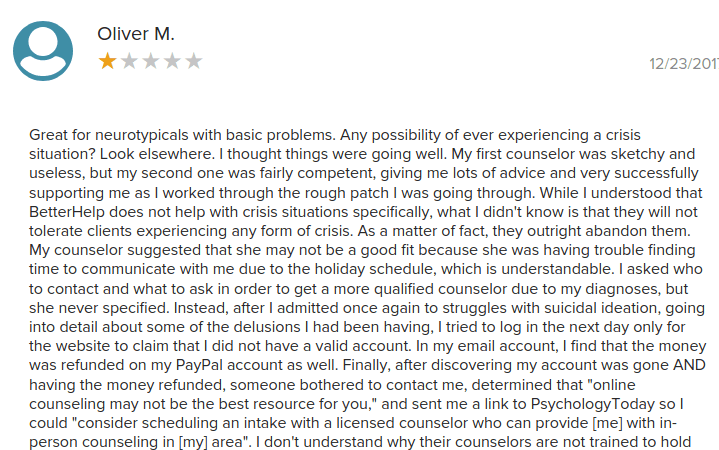




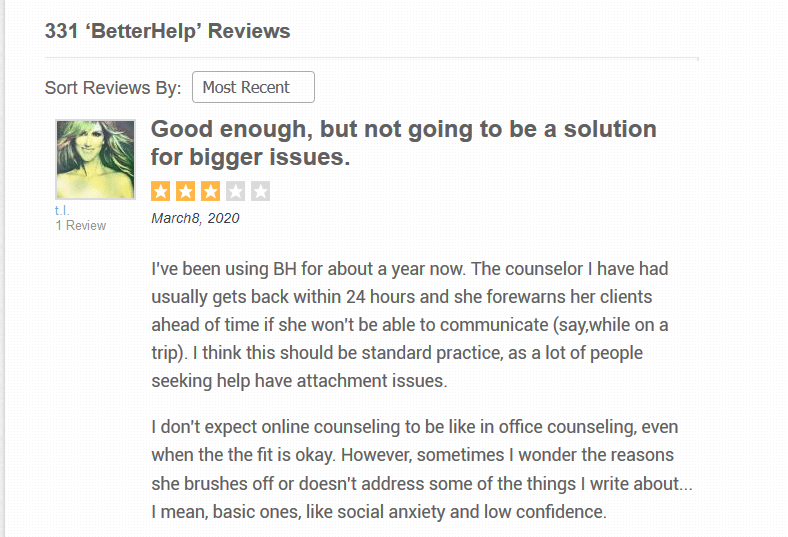


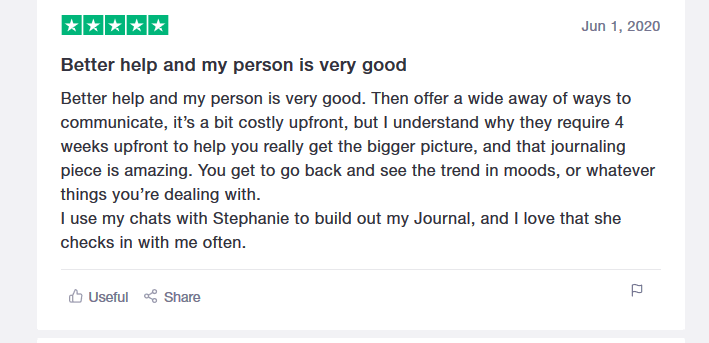
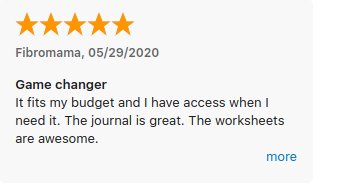
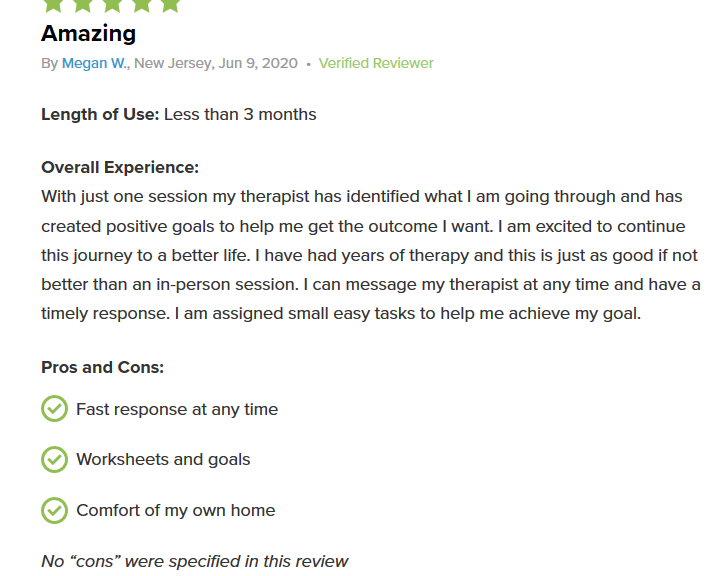
5. What is up with the mountain of 4 and 5 star reviews?
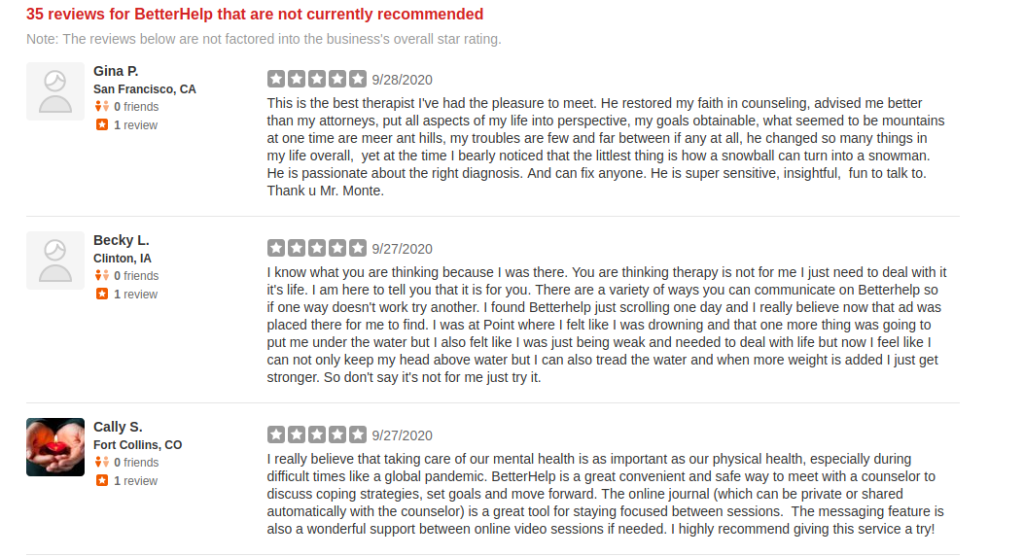
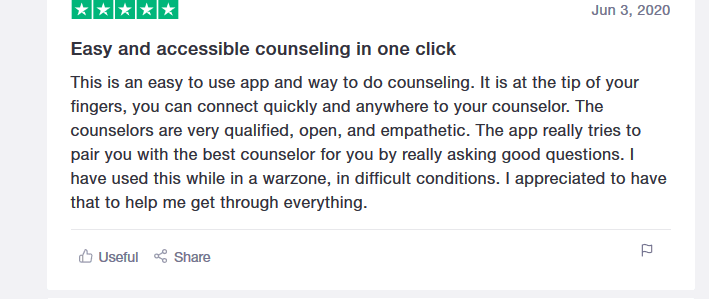
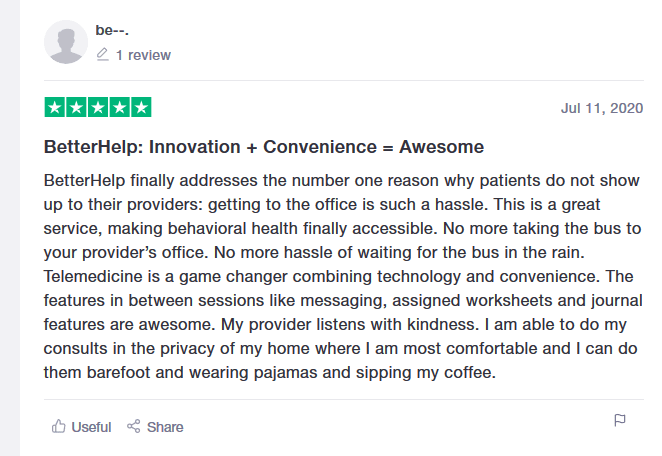
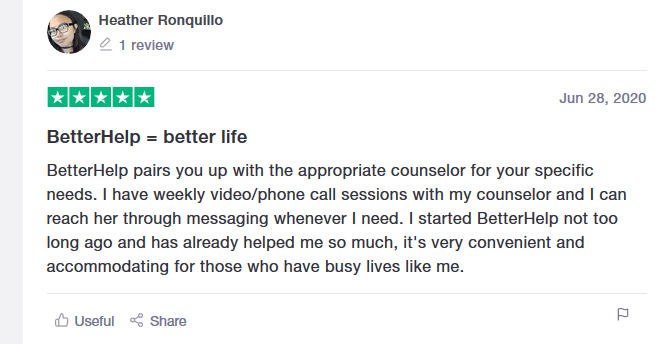
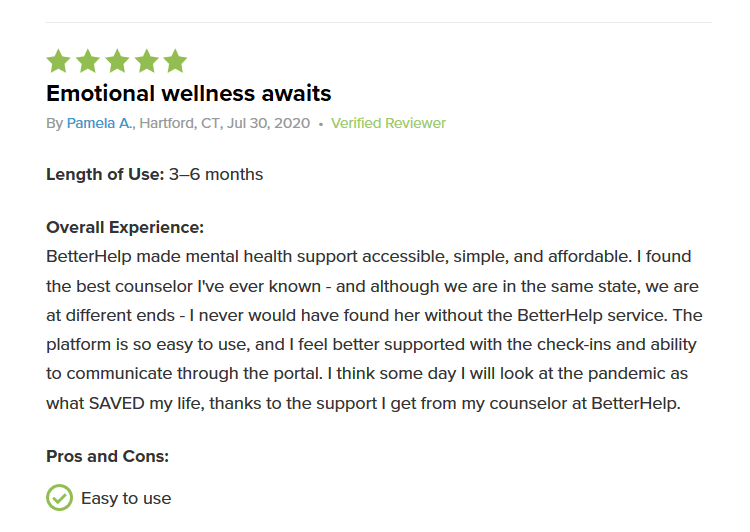
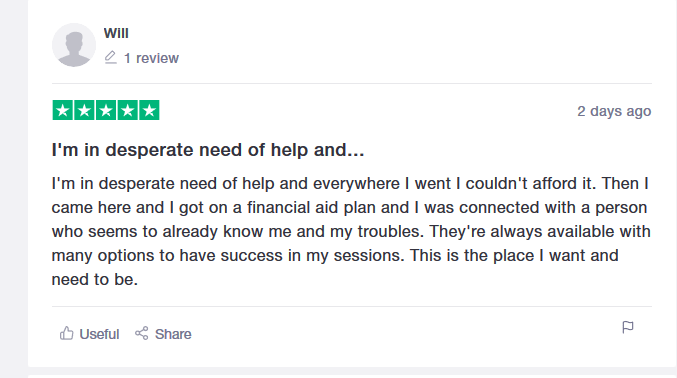
For a detailed analysis of this aspect, please see this post. In short, BetterHelp is demonstrably gaming the algorithm on review sites such as Google Play, TrustPilot, Highya, the App Store and most recently, as of September of 2020, Yelp. A regular inspection of their pages shows clear patterns of 5 and 4 star reviews in a row, at times posted on the same day, to counteract the impact of negative ones.
On Yelp for instance, before September 2020, they had a total of 11 reviews, mostly negative, and a 1.5 star rating. All of a sudden, an invasion of 5 star ones began, most of which did not pass Yelp’s fake review detection and ended up in the “not recommended” section. They did, however, improve their rating, and by continuing to do this, they will eventually end up with 4.5 or 5 stars, which they have attained on all other sites. They are currently (01/01/2021) sitting at 3 stars, with 32 reviews and 115 ones which are not recommended, mostly excellent ones. This did not happen organically.
Some of these 5 star reviews describe features which don’t exist, or describe the service exactly as advertised, when even those who tried it and liked it know that is not the case. Always be wary of reviews containing an awkward use of language, as they most likely originate from content farms. Also, it needn’t be said that those containing a call to action (“try it today”, “invest in yourself”, “what are you waiting for?” etc), are almost definitely fake.










Now, to get into more details about their tactics and why they are so detrimental to unsuspecting people:
- Falsely advertising their services
BetterHelp advertises 24/7 support, which is first of all unfeasible. This is meant to include unlimited texting (portrayed as actual interaction), one phone or video session per week, as well as access to “Groupinars”, where a counsellor answers questions from a live chat. All throughout, personal information is meant to be confidential.
What their adverts fail to disclose (and really should, since they charge in advance):
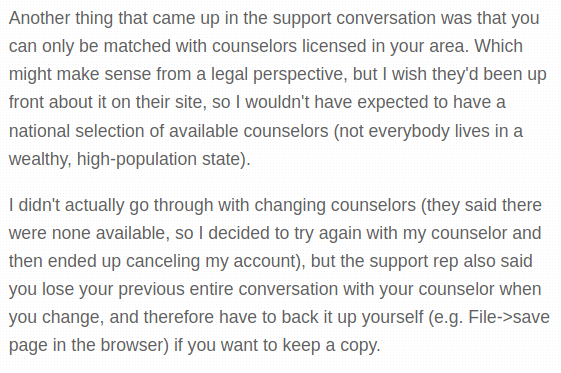
- In the US, one can only be matched with a counsellor licenced in their state of residence, which means that services will be unavailable while travelling, and if the client relocates, they will have to start the process all over again with a new counsellor. Also, the platform routinely matches people with counsellors not licenced in their state, wasting their time and money and failing to support them in a time of need.


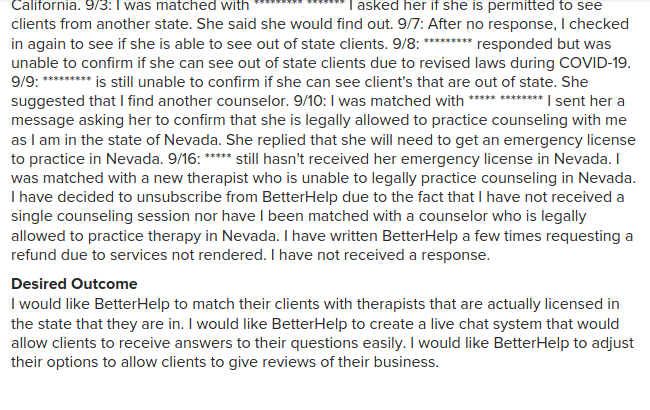


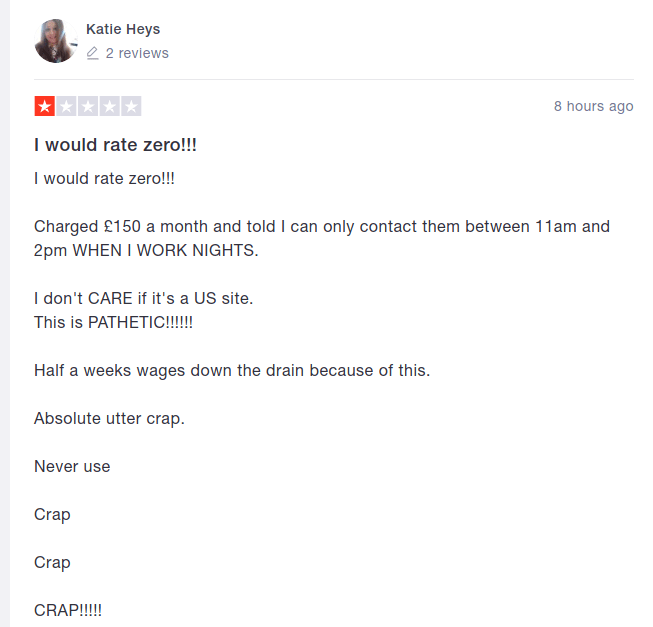
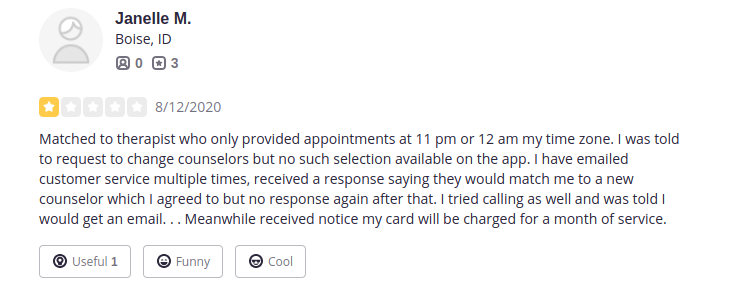
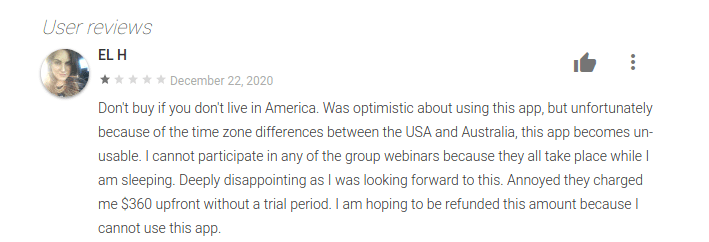
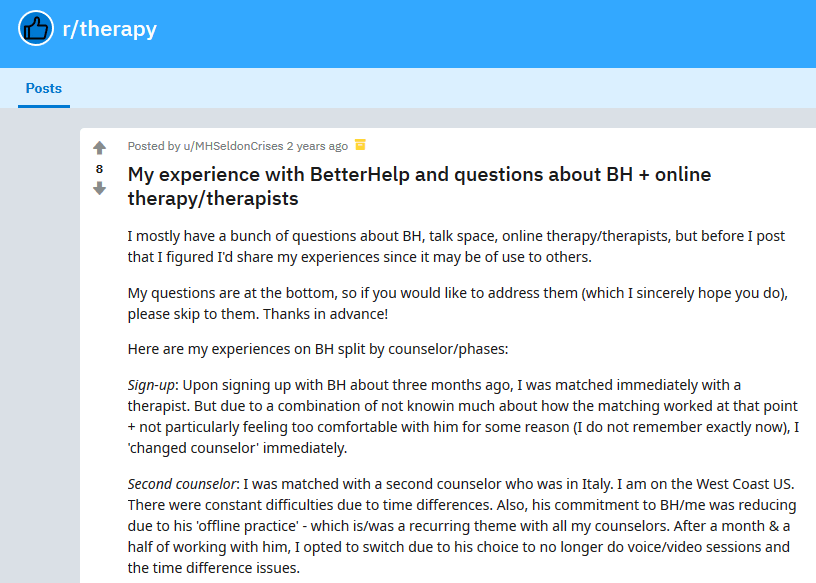
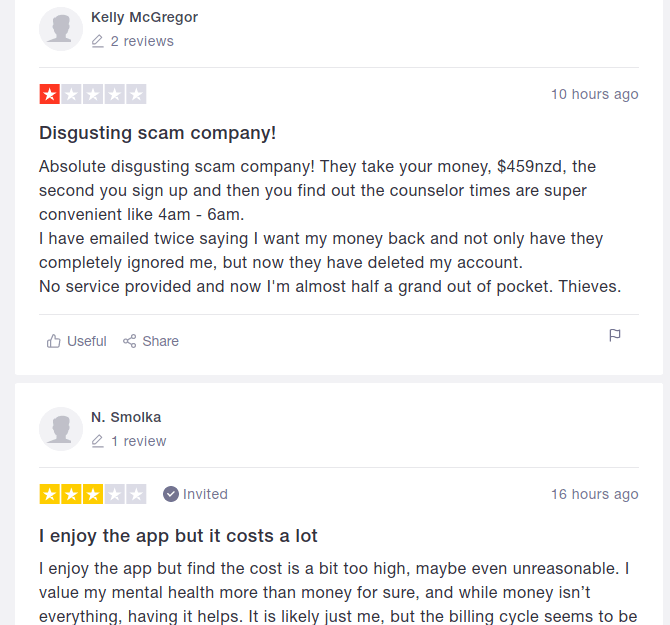
- Outside the US, there are usually difficulties in terms of communicating with the counsellor due to time zone differences. Nonetheless, BetterHelp advertises internationally, as a reliable service. Many people became aware, after having already paid, that it would be impossible for them to conduct any sessions at reasonable times.







- The service is anything but confidential. User data is sent in real time to a number of other companies (details below); it can also be accessed by employees (Silicon Valley tech people). It appears employees can also monitor counselling sessions, which is illegal.
When matched with a counsellor, this is what clients actually get:
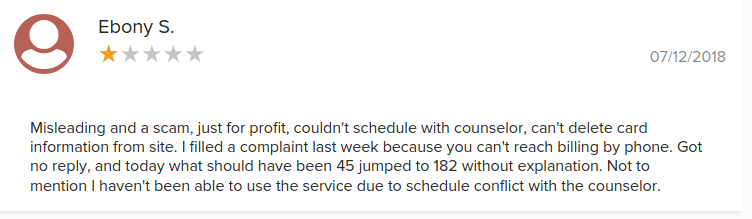
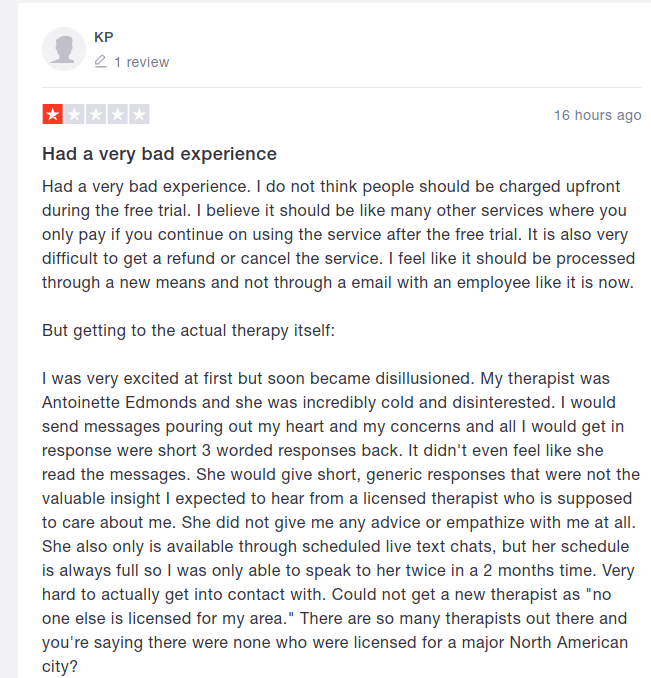
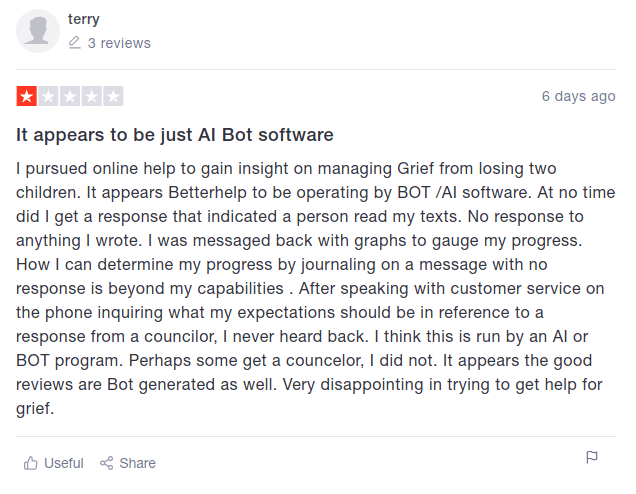
- The ability to text their counsellor at any hour through the app, with no guarantee what they send will be answered or even read at any time; many have compared it to venting into a void.
- Infrequent, short and vague written responses, many times disconnected to what the client had posted; alternatively, copied and pasted paragraphs from self-help books or other websites, as verified by some clients through plagiarism checks.
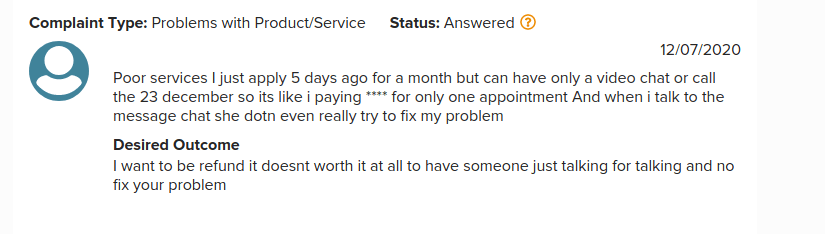
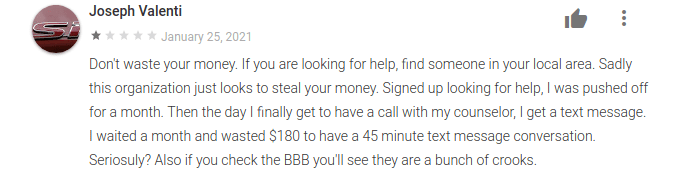
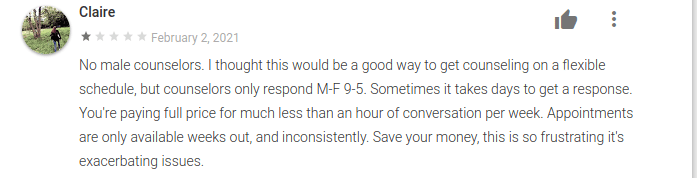
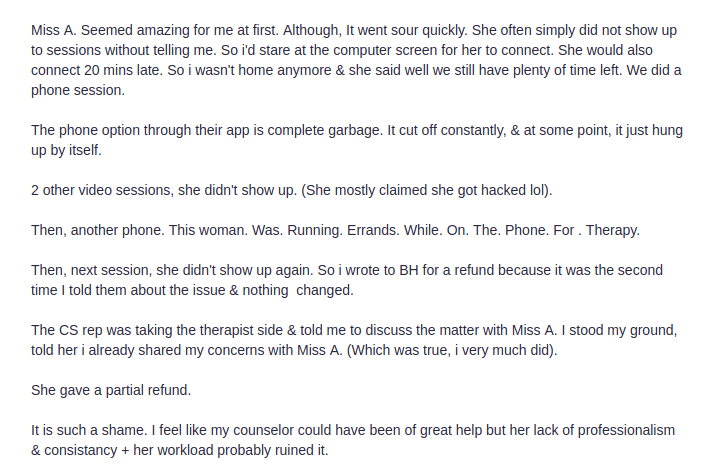
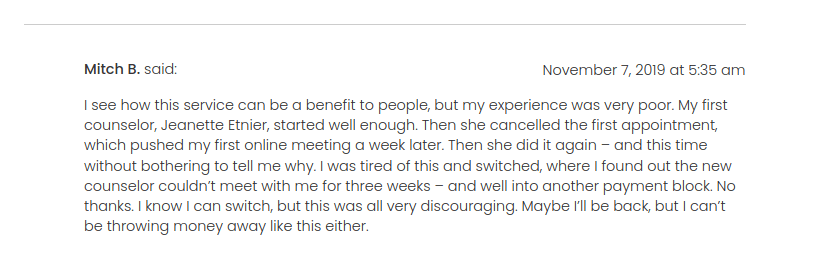
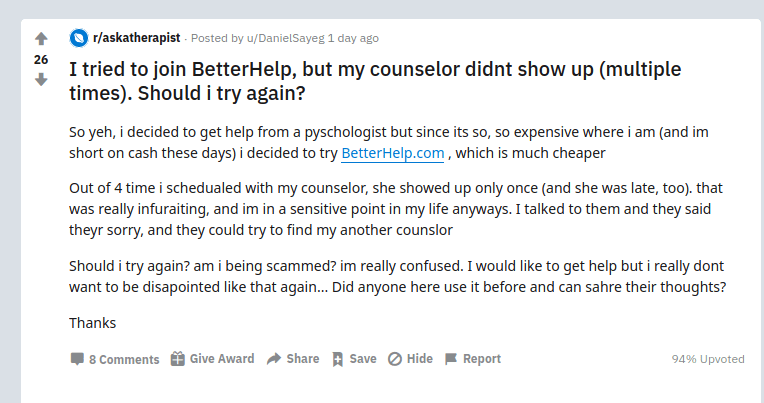
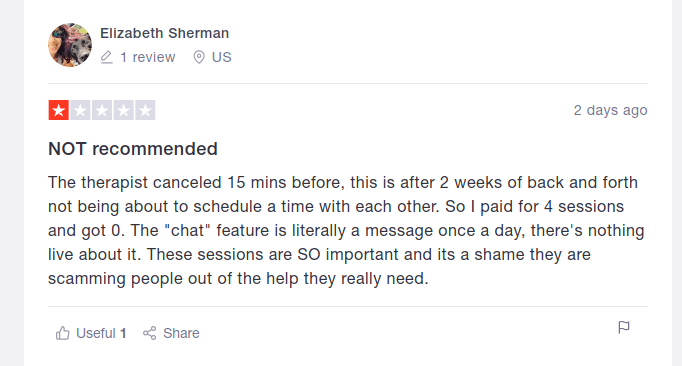
- Sessions according to the counsellor’s availability, meaning not necessarily once a week, regardless of having paid for them in advance. Many times these sessions are cancelled by the counsellor at the last minute, or they are a no-show; the client keeps paying regardless. There is a mountain of complaints regarding the lack of availability, especially since Covid.

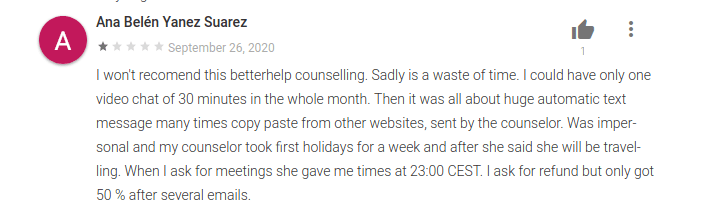
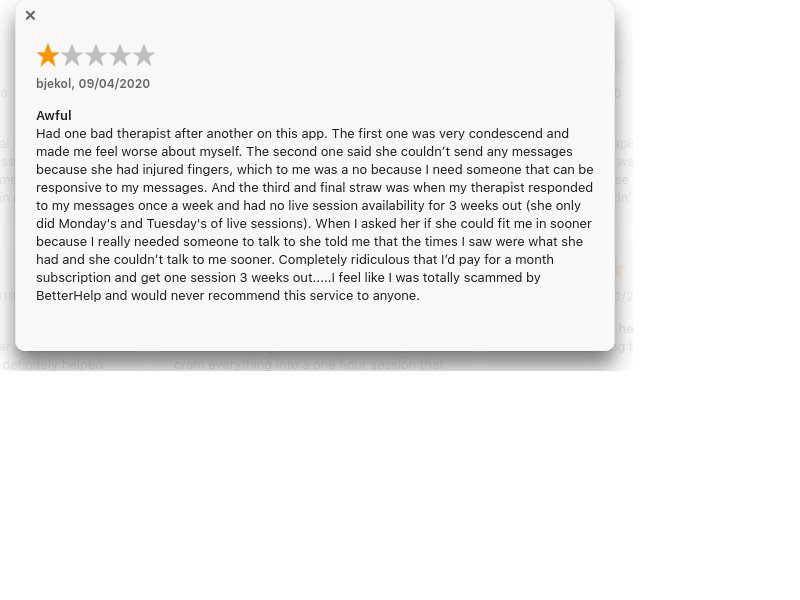


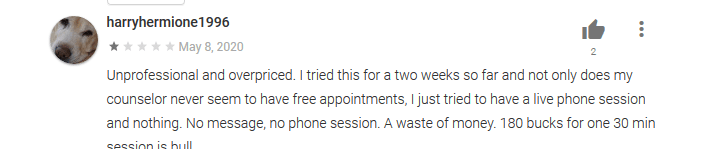
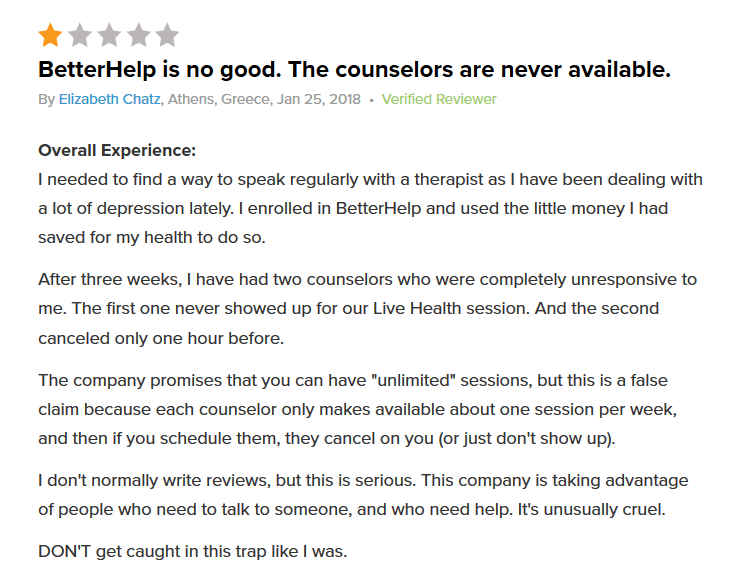
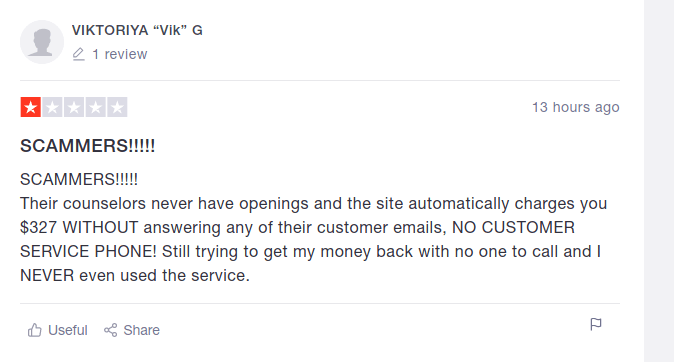

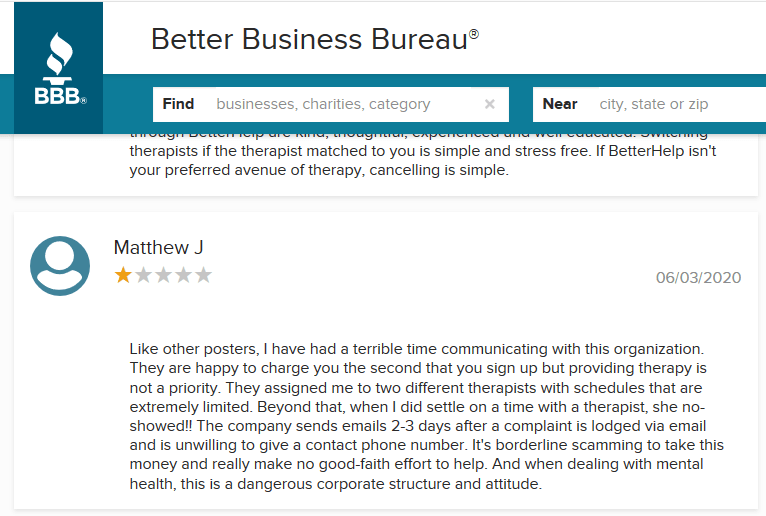
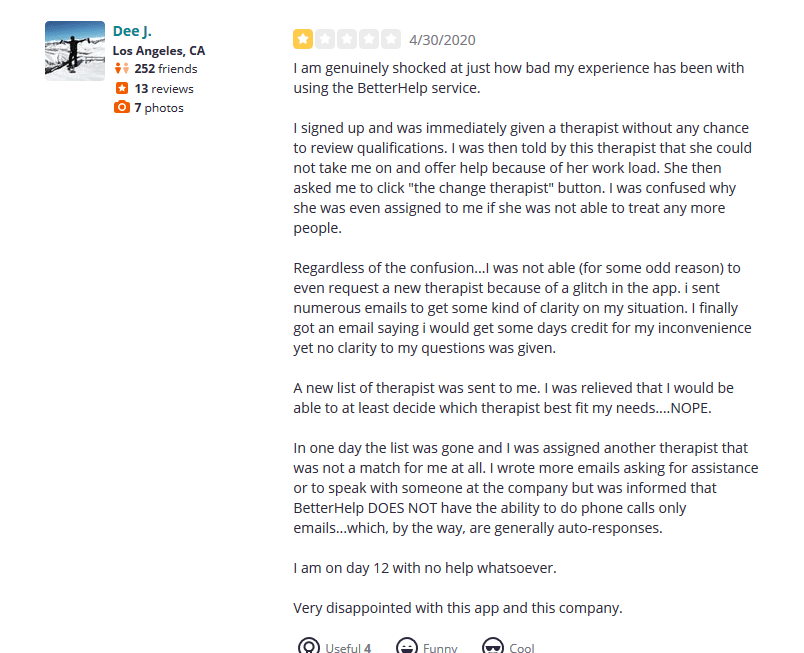





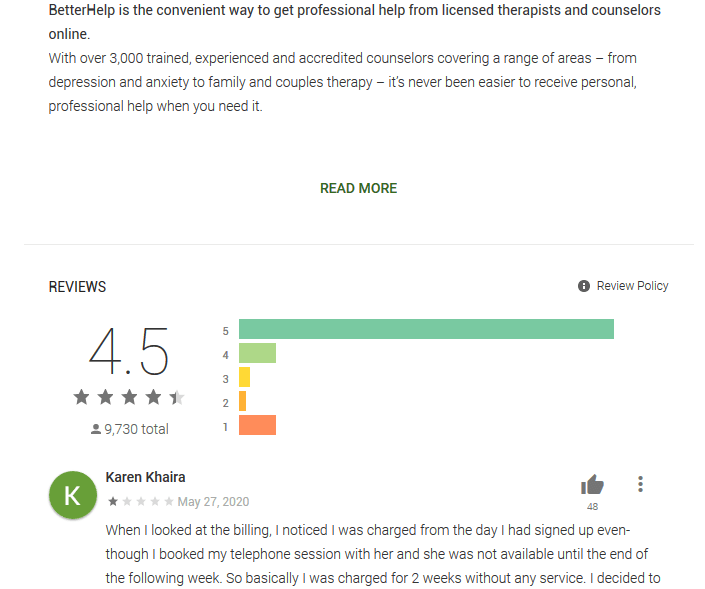
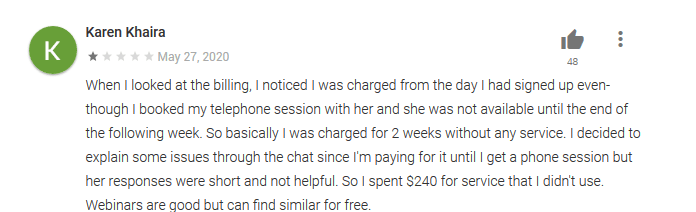
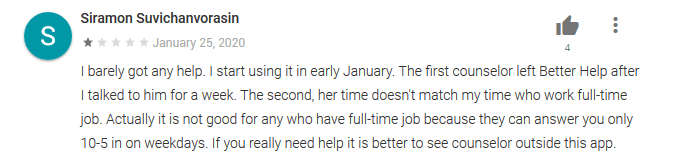




- Access to “Groupinars” (online seminars) when technical difficulties don’t impede it, and given that there are hundreds of people in the chat simultaneously, their questions are rarely being answered (if ever).
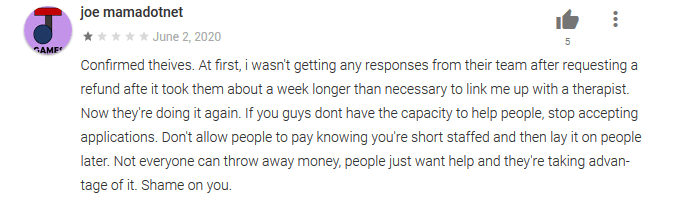
Cancellations and counsellors not showing up have been an issue for many years; it appears the problem has worsened:


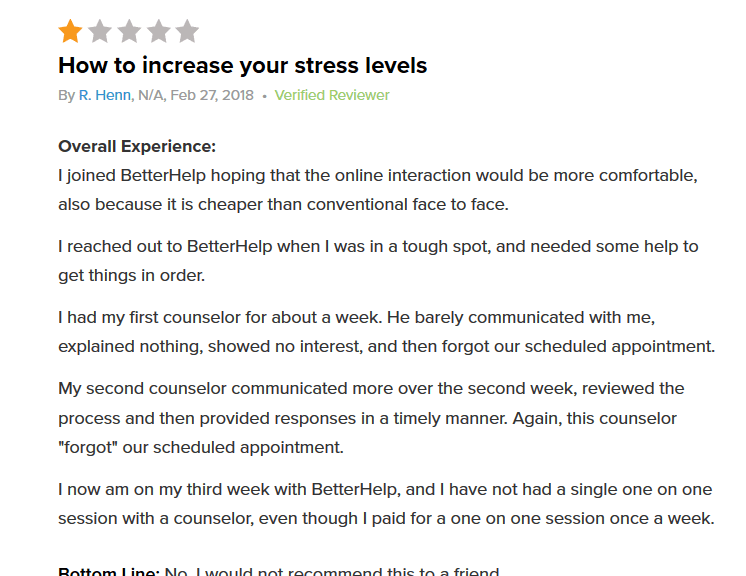

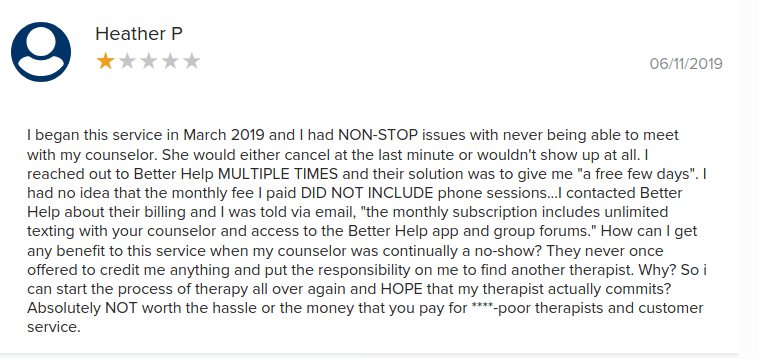
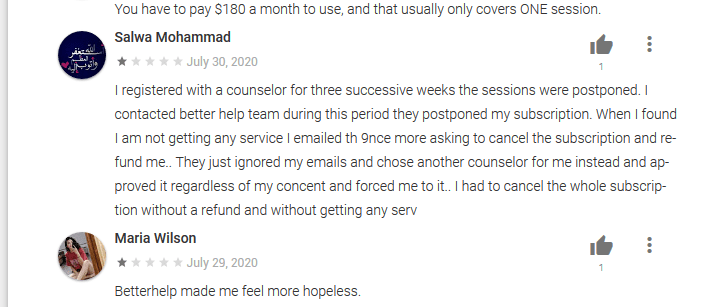

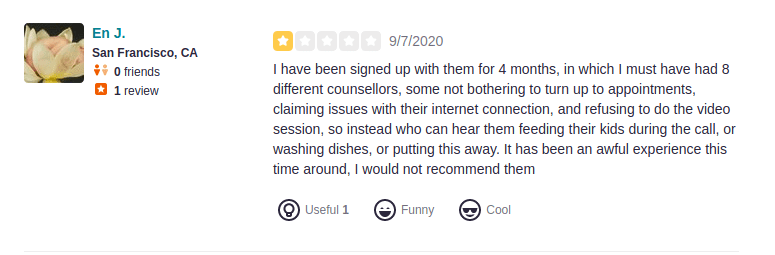

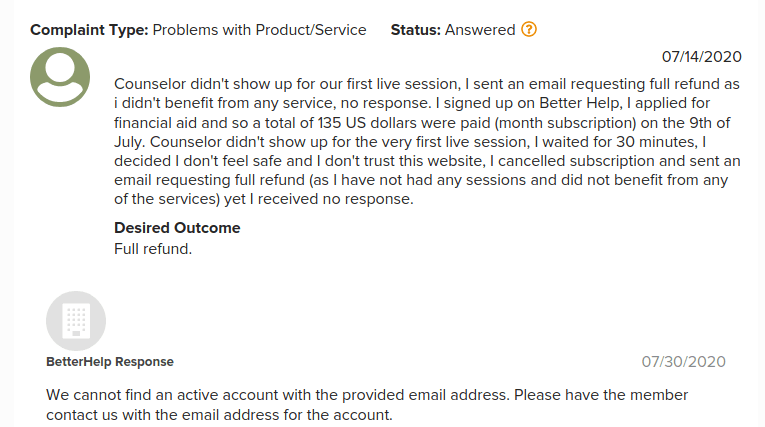
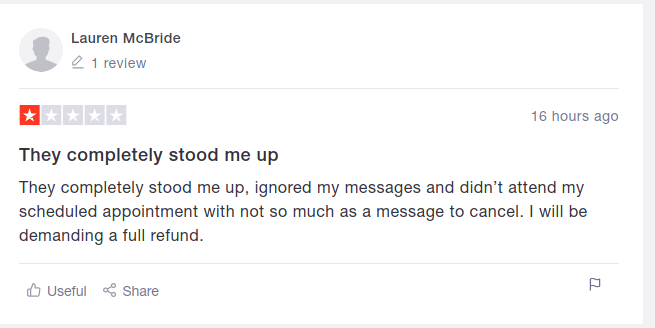
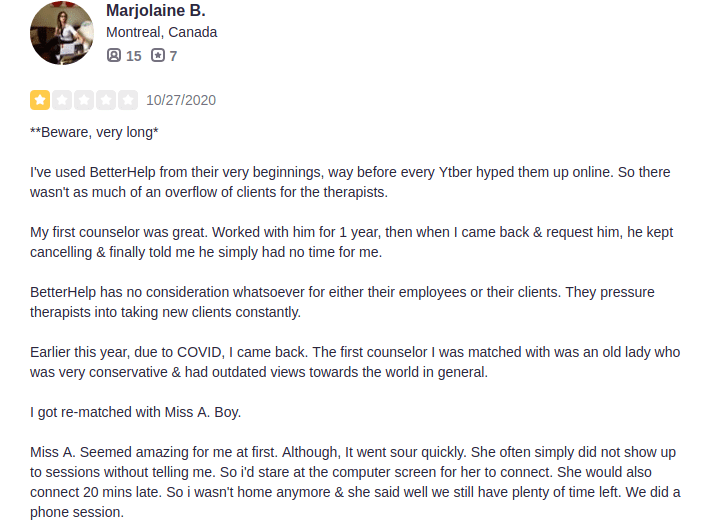


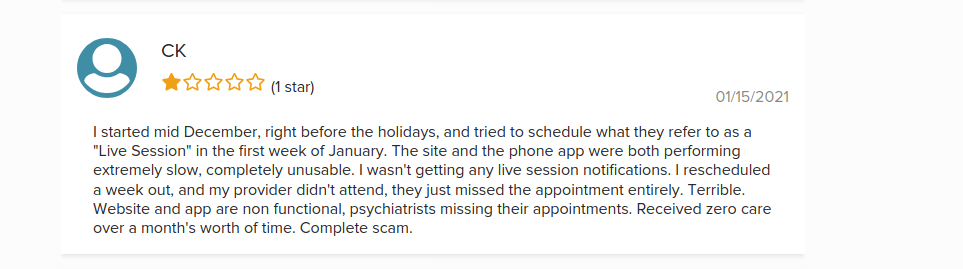
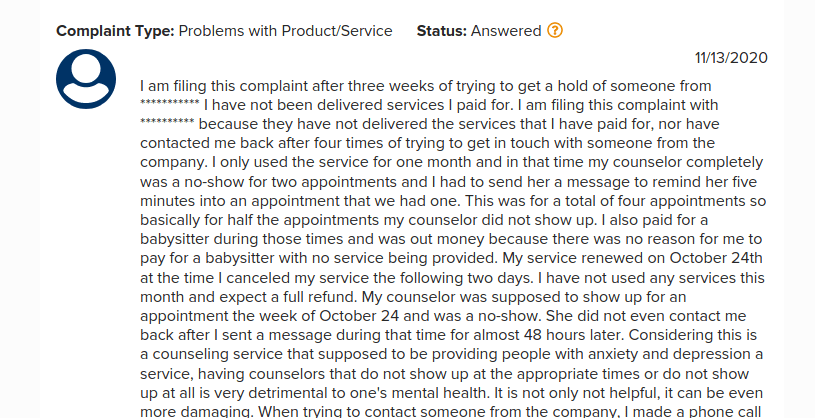


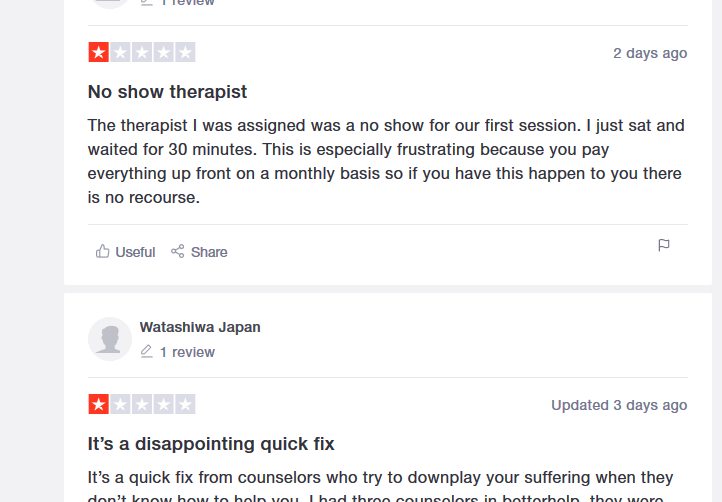





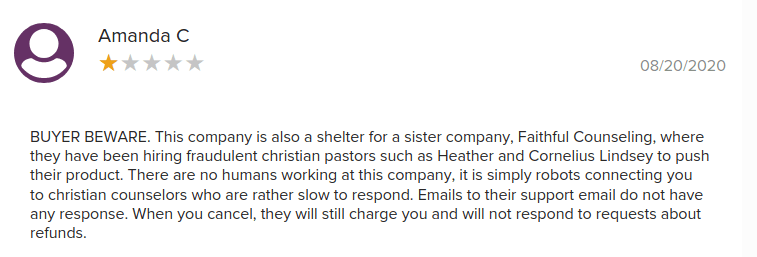
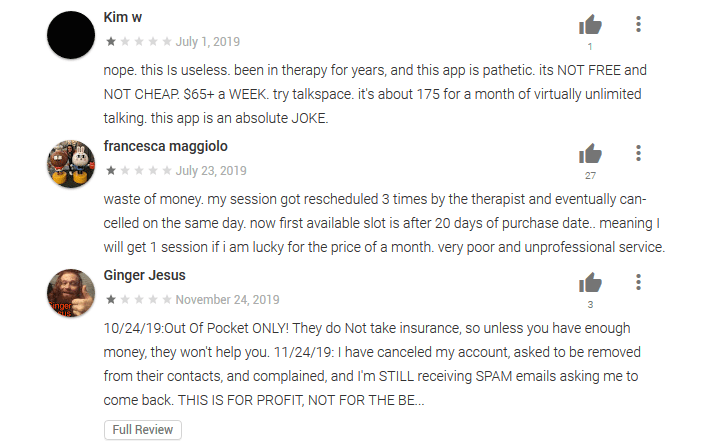
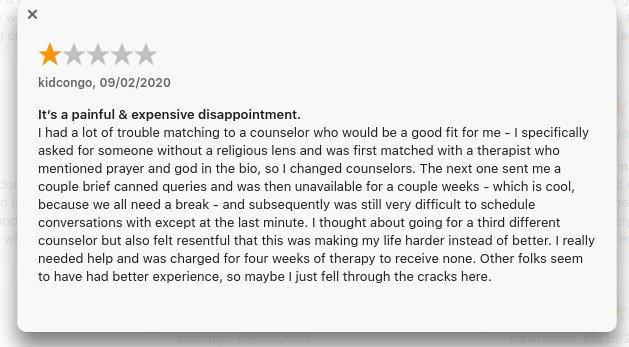
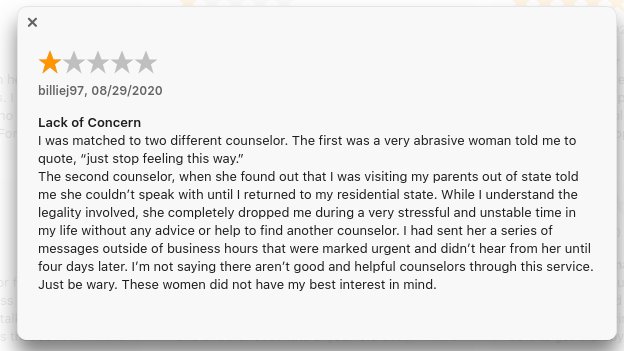
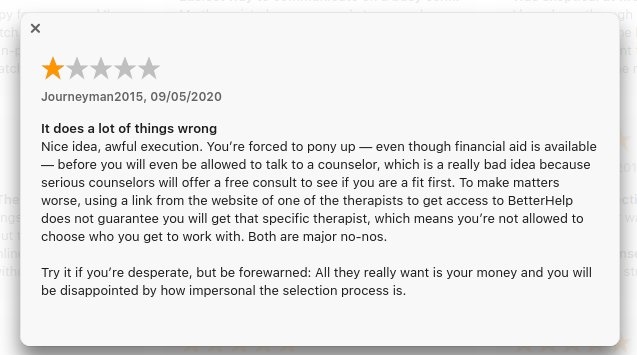




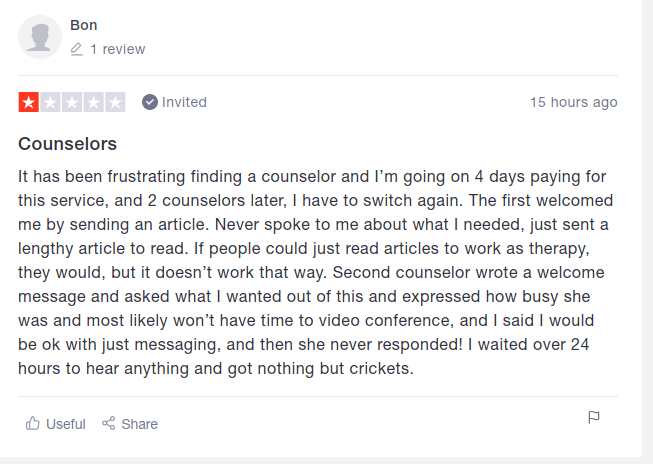

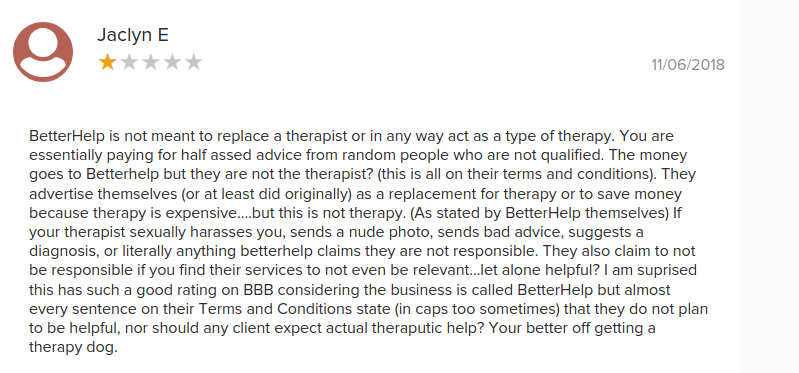
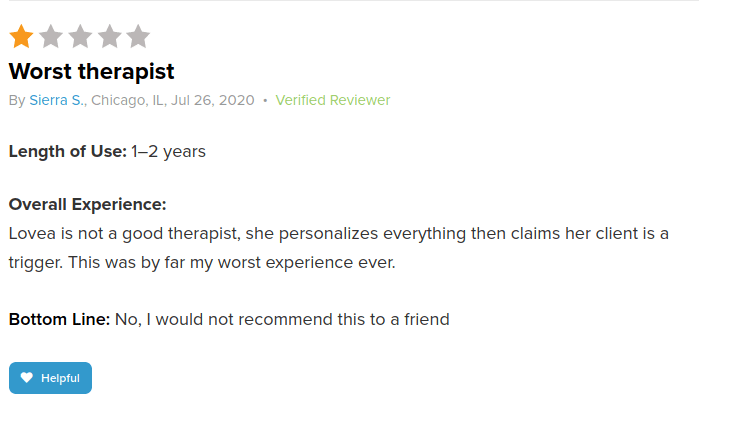
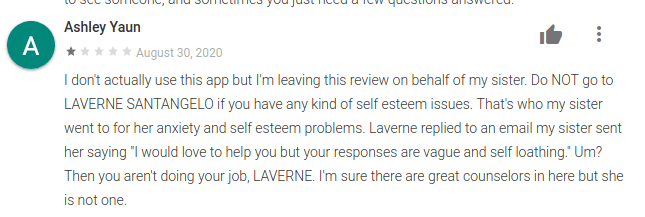


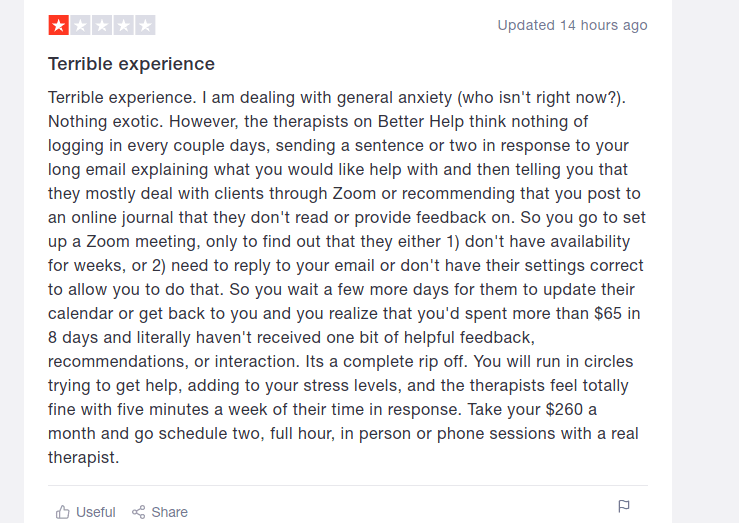

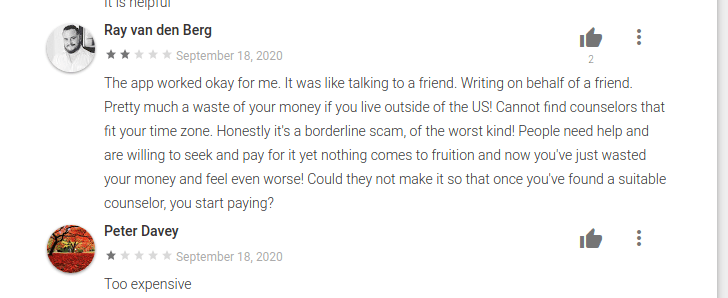
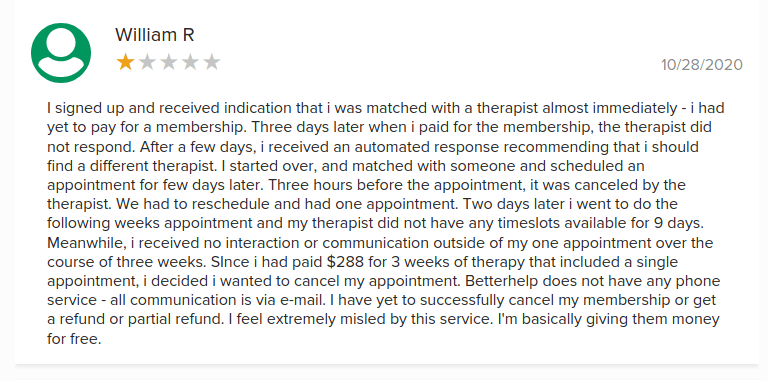


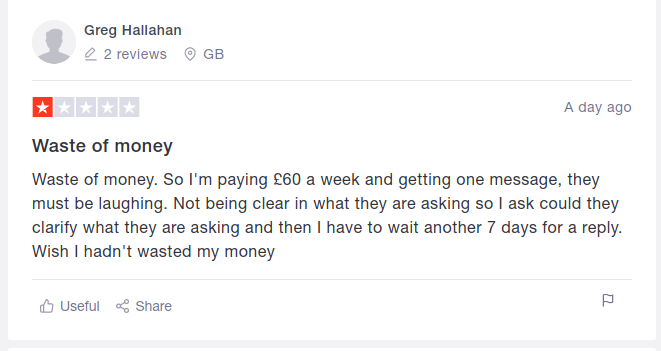
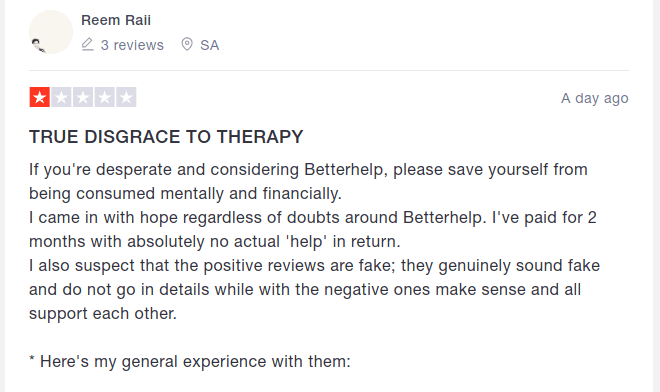


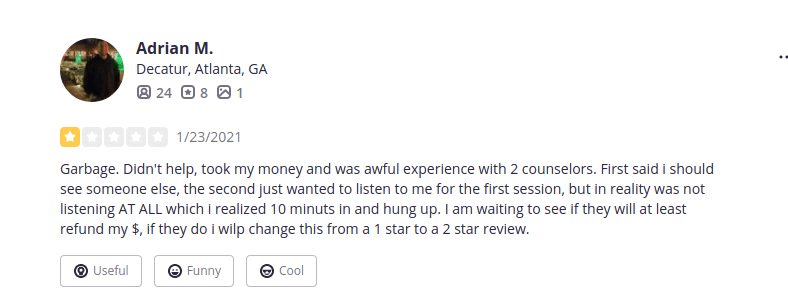


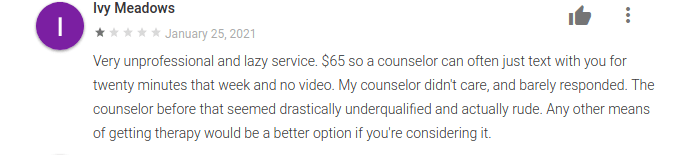


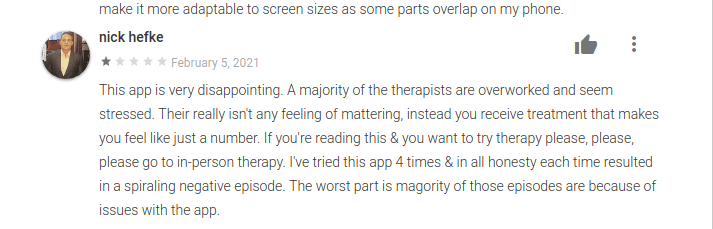
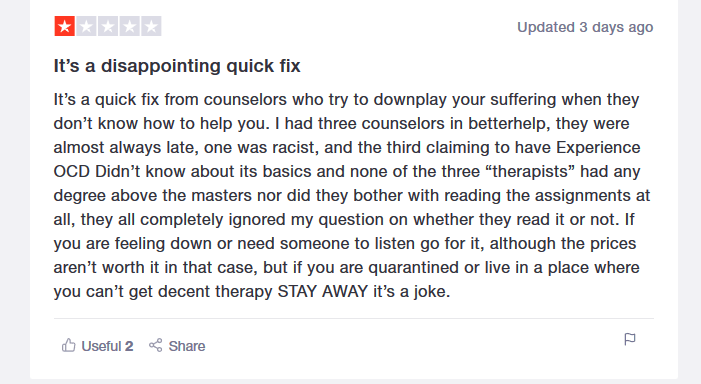


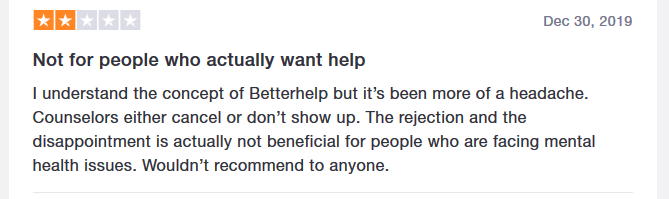


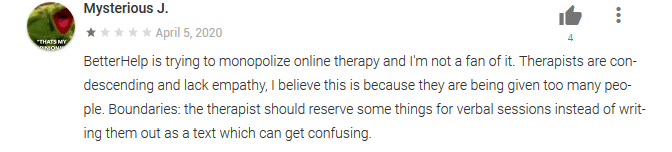





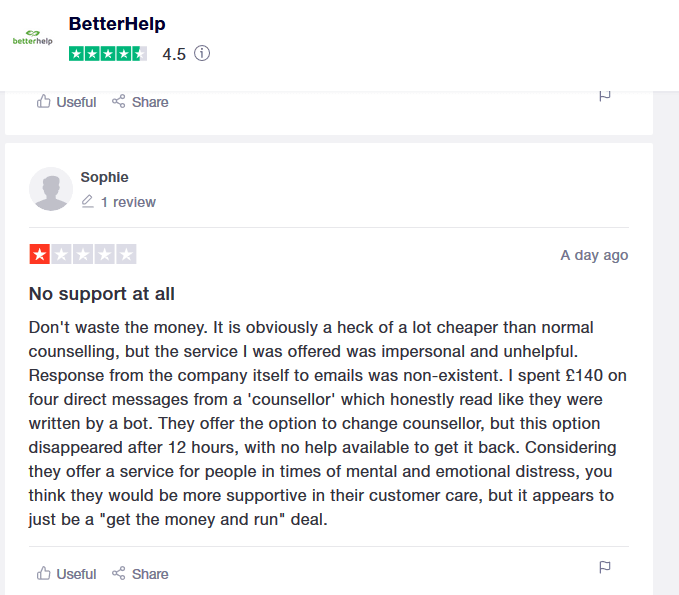


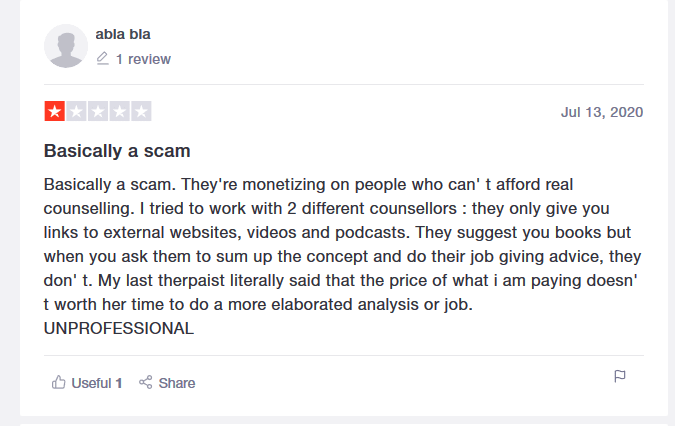

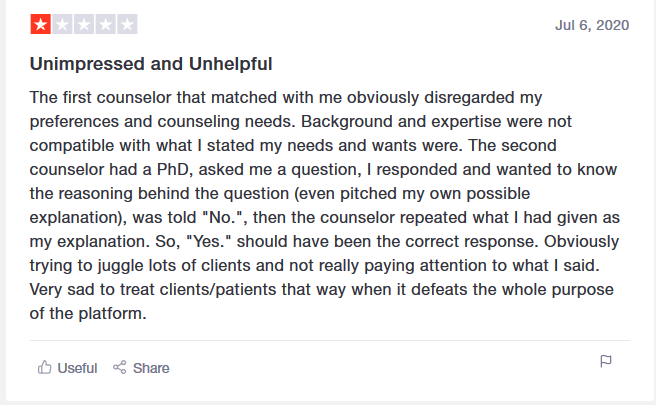
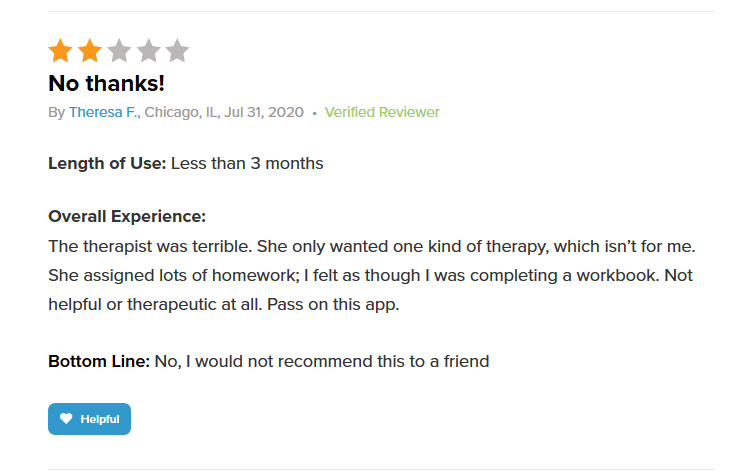

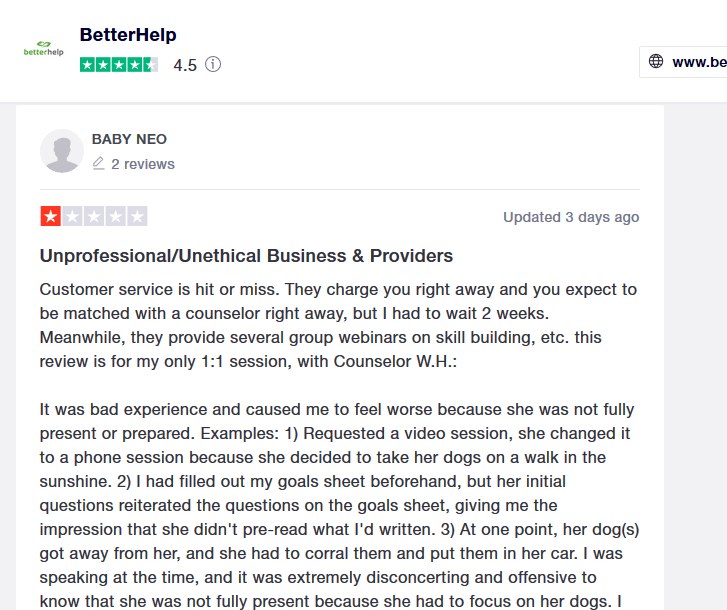


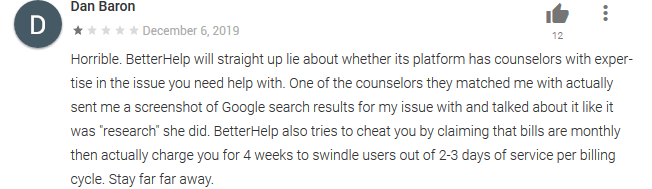
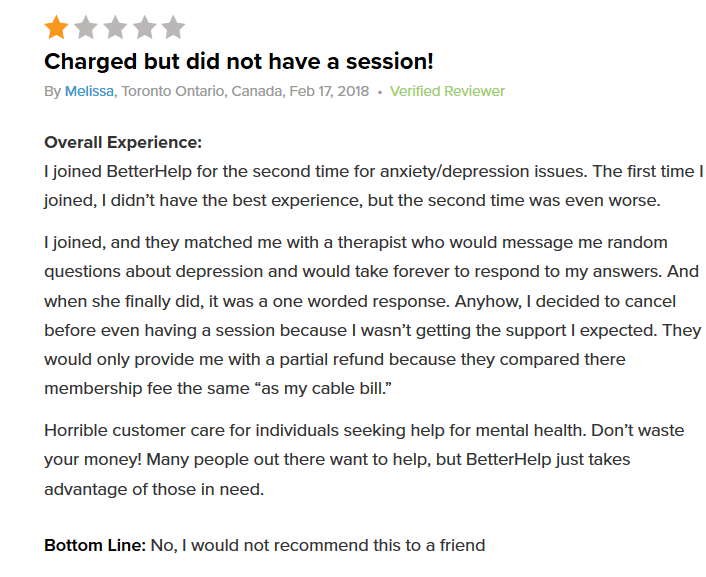
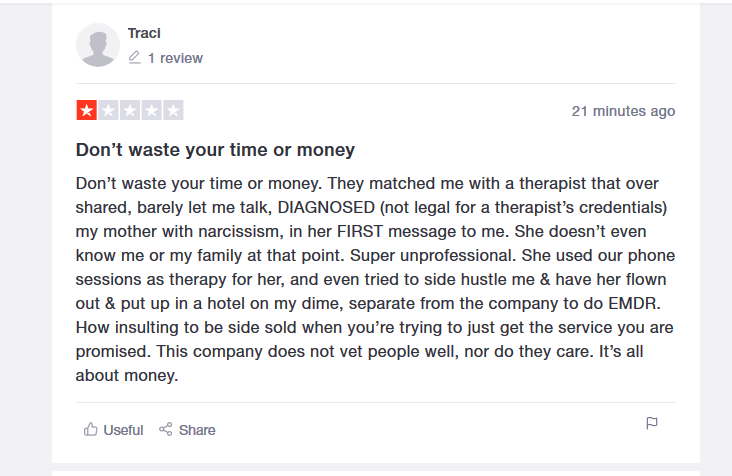
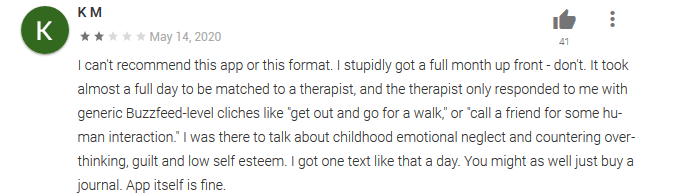
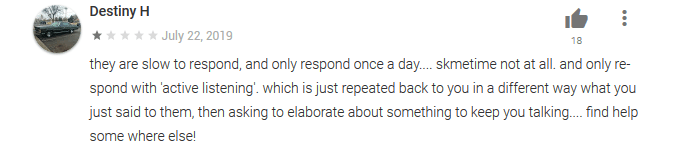
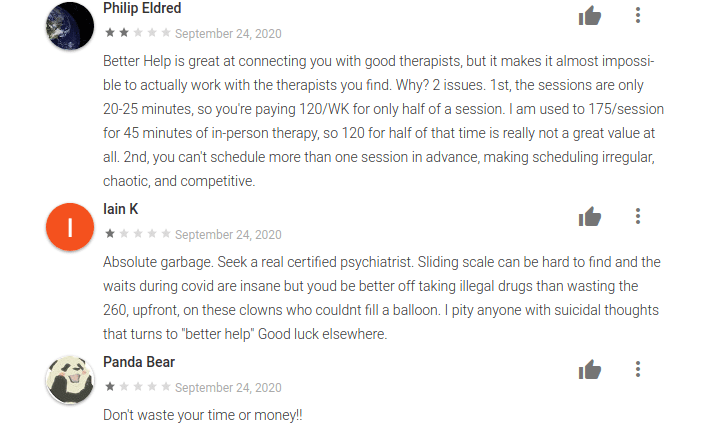
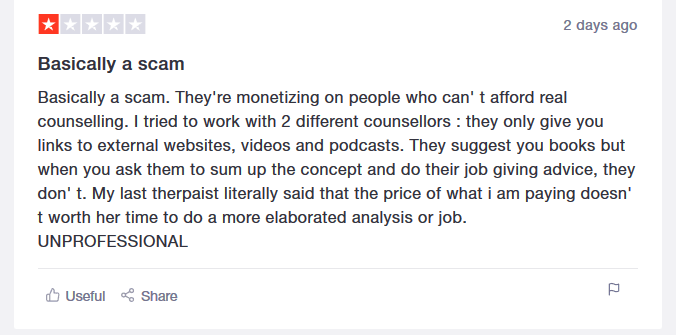
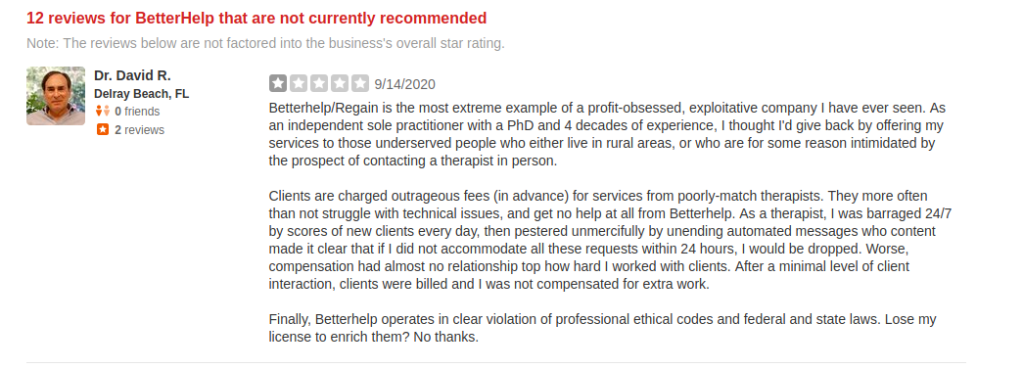
Counsellors anonymously admit the level of support a client signs up for is not realistic, but fail to criticise the company for raising people’s expectations to that level, when the service is in fact very limited; apparently it’s up to the client to adapt to having signed up based on false promises.
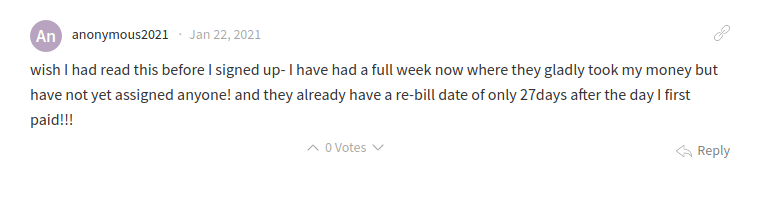
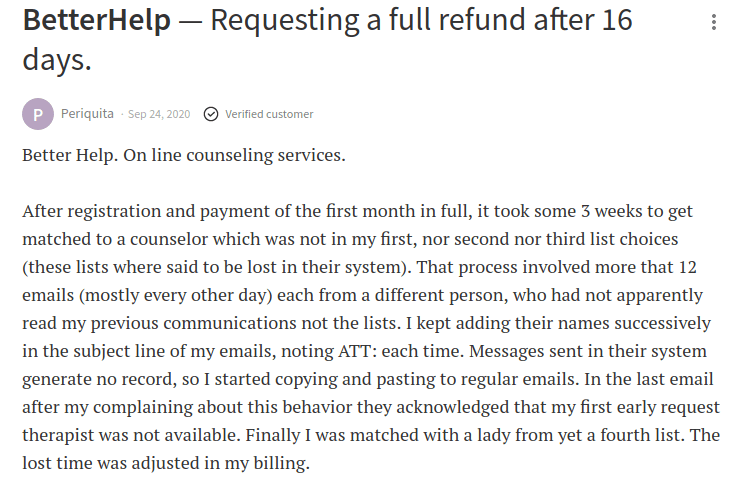
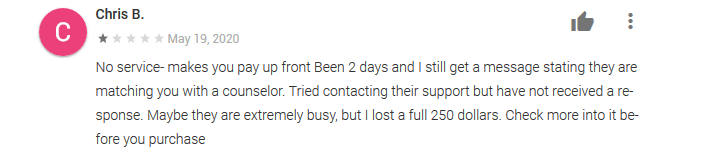
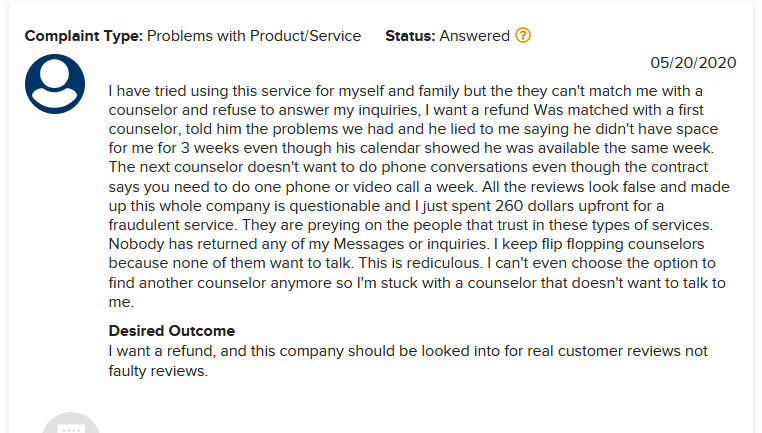
It’s no wonder that some clients end up paying in advance for no service at all:
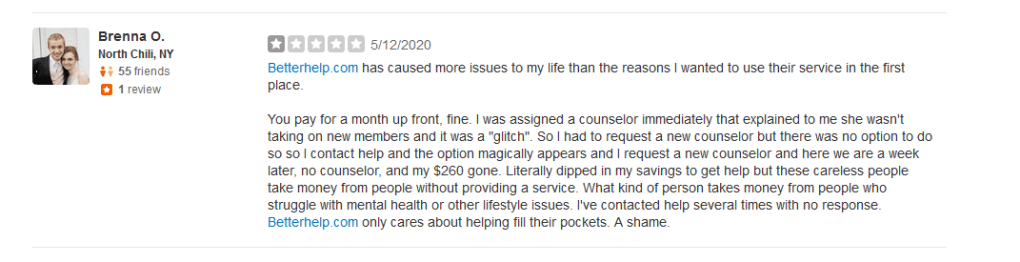

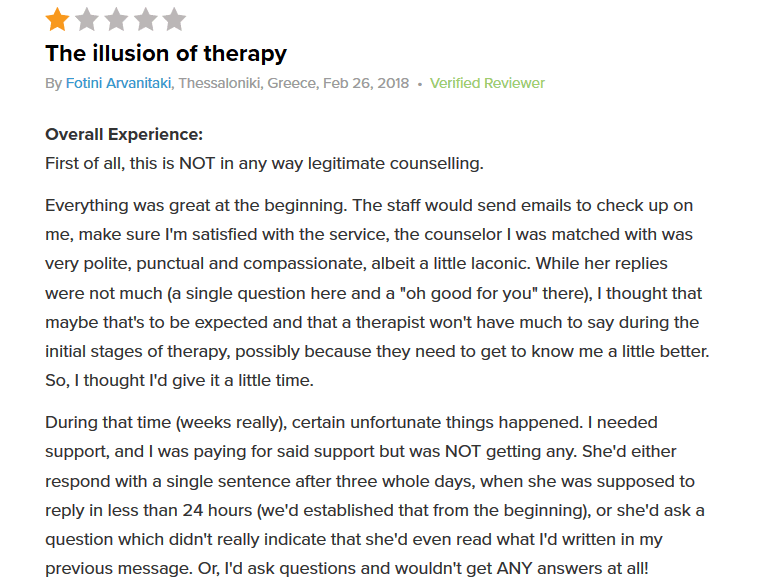
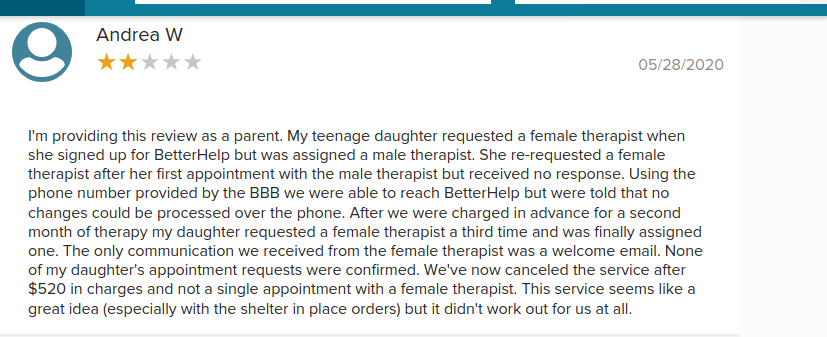
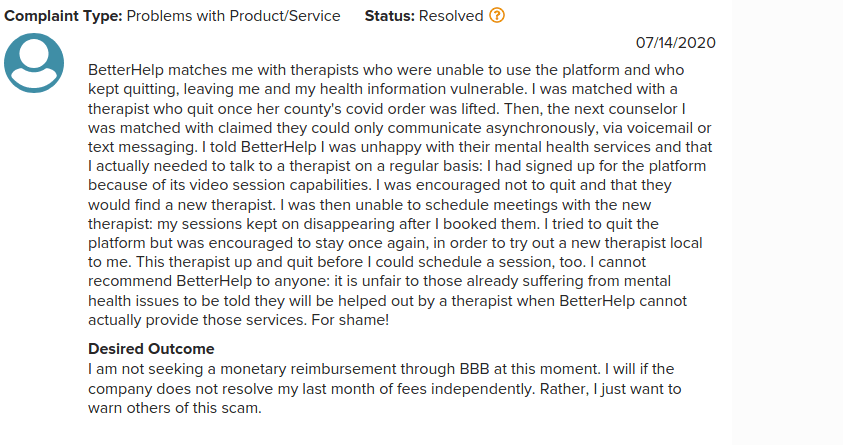

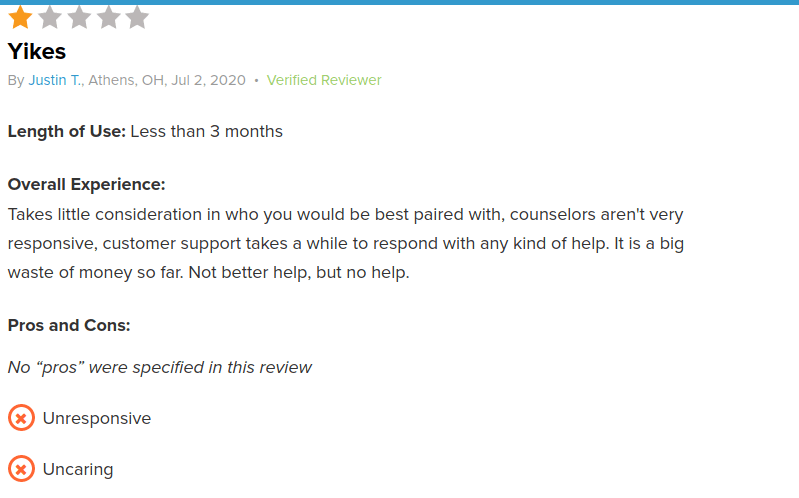


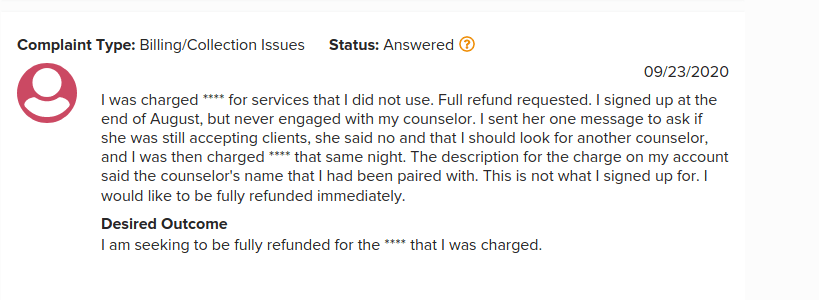


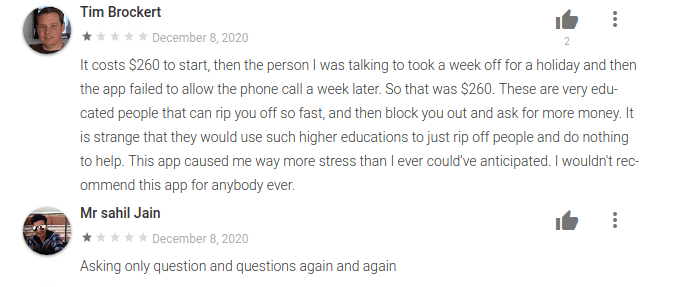
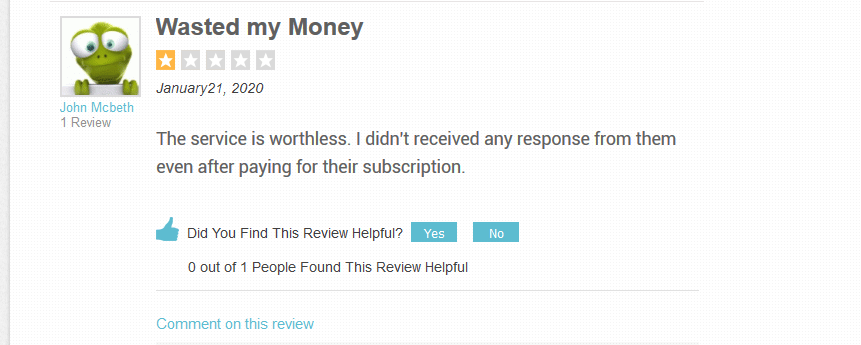

2. Luring people into a subscription (at times deceptively) and making it difficult to cancel; charging repeatedly after someone has cancelled (see the Enzyte scam comparison)
Akin to Berkeley Neutraceuticals when ran by Steven Warshak, BetterHelp seems to have one goal – to get someone’s bank details, start charging them with no warning and no bill, and sometimes, continue to do so even after the service is cancelled. In earlier years, just like the Enzyte scam, they left the client with no option to cancel their subscription single-handedly; they needed a counsellor to cancel it for them. Evidently, the counsellor would often become unresponsive and the subscription would continue, with the client left powerless to stop the charges.
People are often lured by such companies with a free trial. Somewhere in the fine print, one can read that if they fail to cancel, their subscription (and billing) will start automatically. Judging by the number of complaints, this isn’t made obvious. People are accustomed to confirming a paid subscription and authorising any payment, and are taken by surprise when BetterHelp just starts taking their money.
When someone does cancel their subscription, unfortunately, it doesn’t always mean BetterHelp will stop charging them. In fact, some people are charged for months on end after closing their accounts. At times, the company pretends to be unable to find their details due to the account having been closed, and refuses to help them, even if they have proof from their bank that their money was indeed siphoned monthly by BetterHelp.
BetterHelp does not, in fact, delete the details of former subscribers. Everything is kept, including payment information, as mentioned by people who complained on BBB that they were simply looking at the website after having used it previously, and were automatically re-subscribed (and immediately charged) by clicking on a button which did not indicate this would happen. Someone else complained they had used the platform years prior, signed up again and could not clear their old details, which no longer fit their situation, and were evaluated according to those. Hence when the company claims to have lost access to someone’s details, they are almost definitely lying.
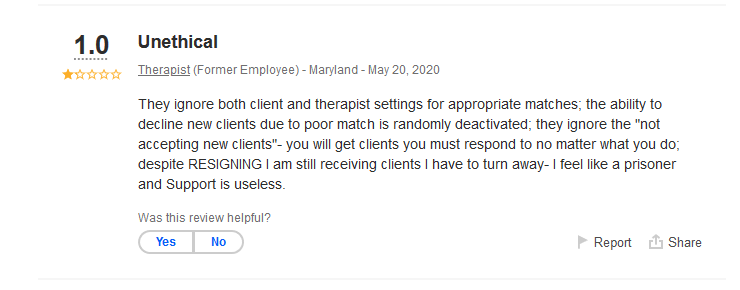
3. Matching clients with unavailable counsellors (including some who have quit!)
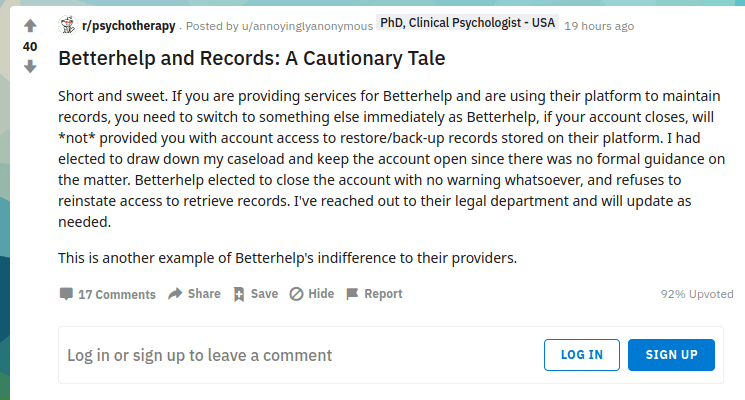
Sporadically mentioned on Indeed.com by former counsellors, it seems this is common practice: regardless of setting their status as unavailable to take on more clients, or even quitting BetterHelp, a counsellor will keep getting referrals.
This was never a temporary glitch; it keeps happening to this day. Recently, someone who had just quit detailed this on Reddit.
The way this works is the company sends an automated introductory message on the counsellor’s behalf to the client/prospective client. Some people mentioned being matched first and charged afterwards, whilst others were charged first and waited for days to be matched.
In the first situation, a prospective client would fill out a form and send it through the app; they would then receive an automated message from the counsellor they had been paired with, and were immediately prompted to pay (for at least a month) in order to see it. There have doubtlessly been situations of the first match being a false one. And whatever happened afterwards (whether they were later matched with someone else), there was a period of waiting and confusion on the client’s part (and time, and money).
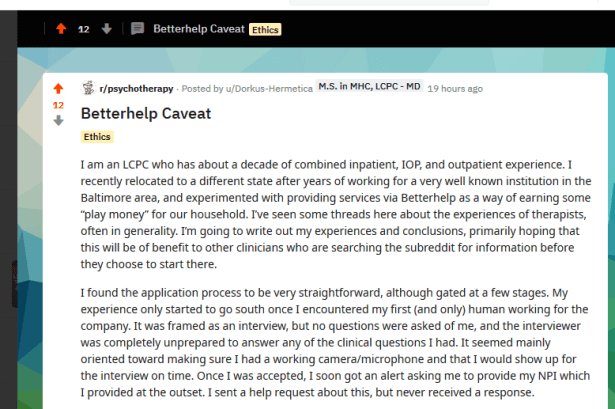


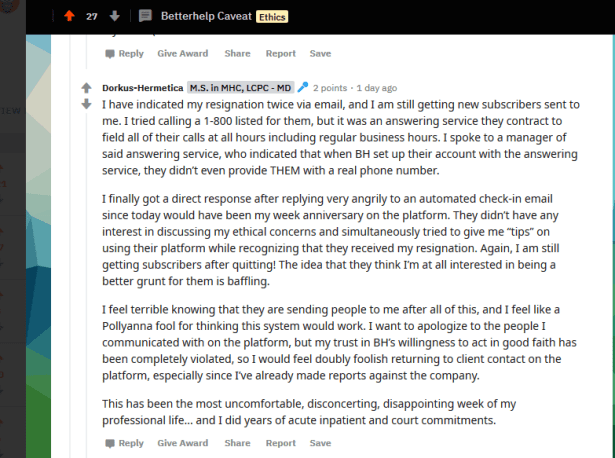
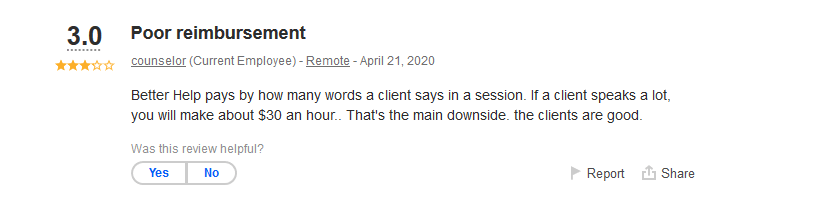
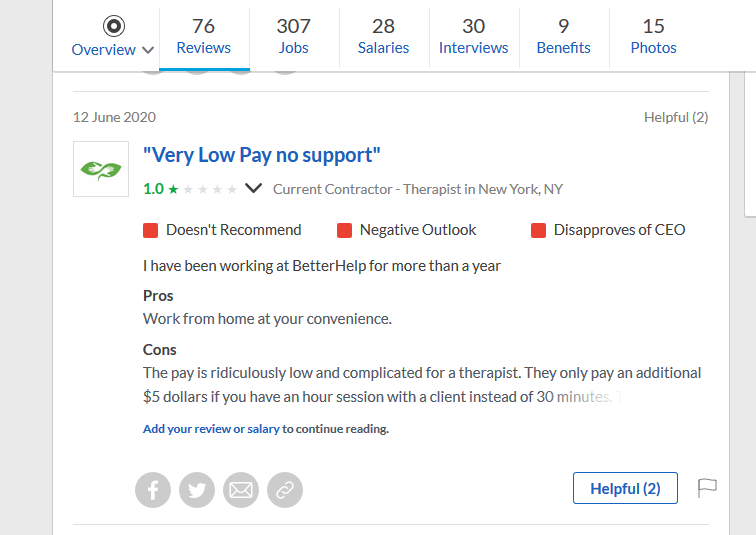
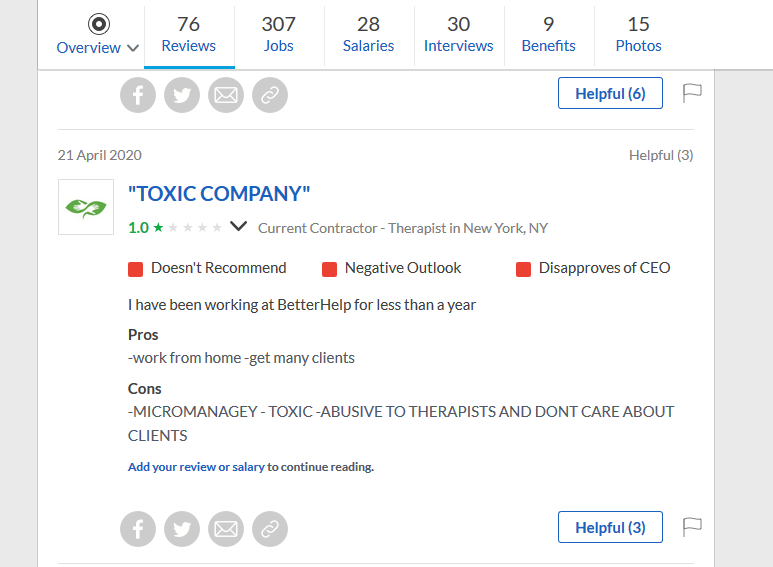
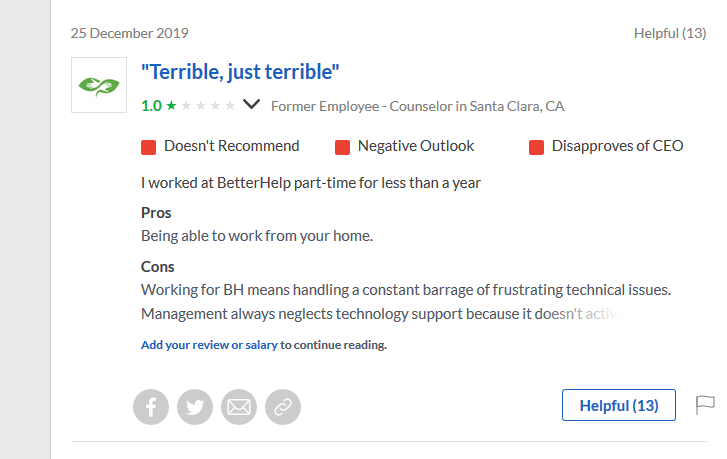
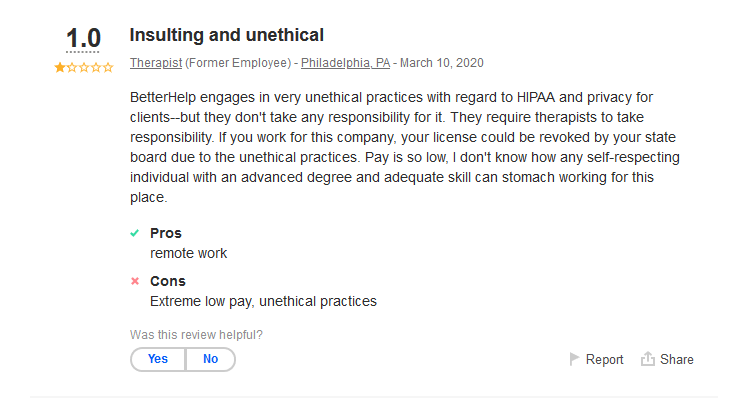
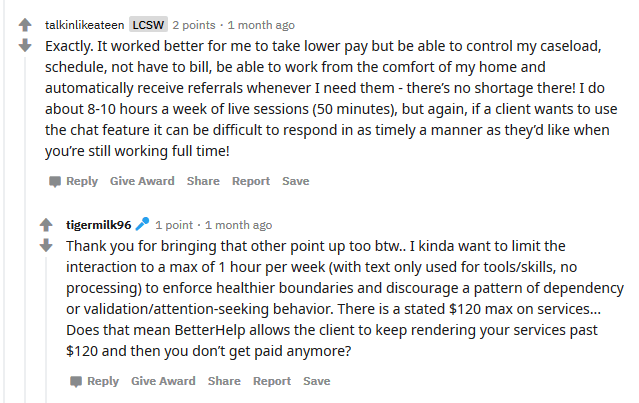
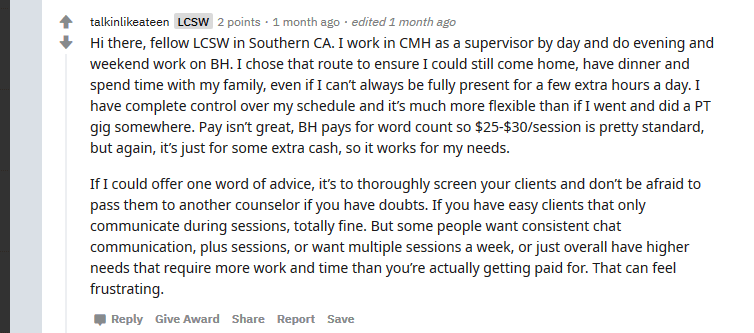
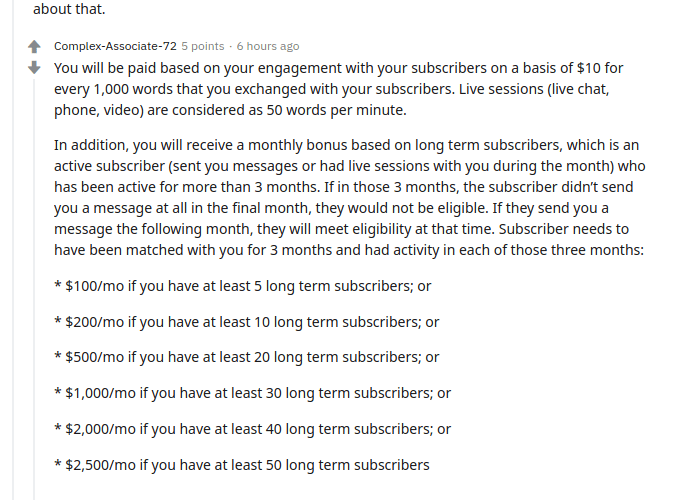
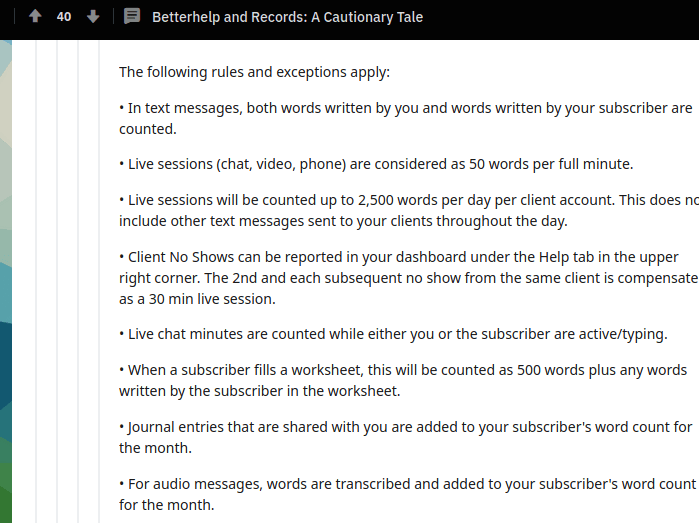
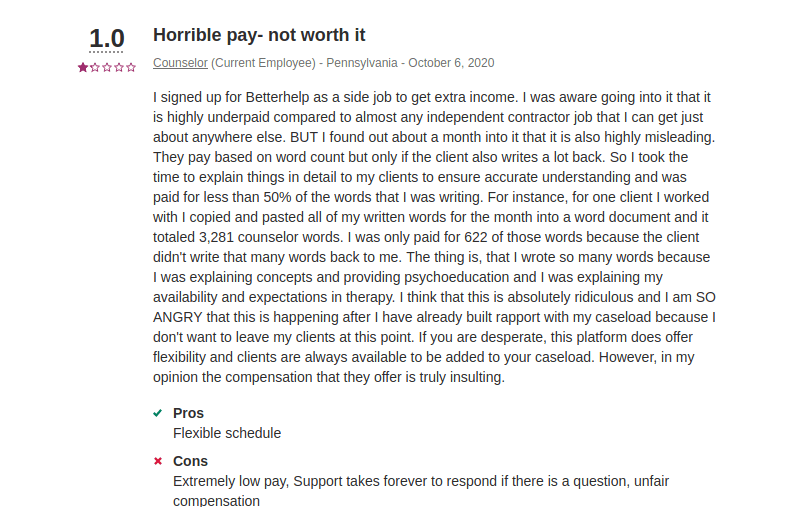
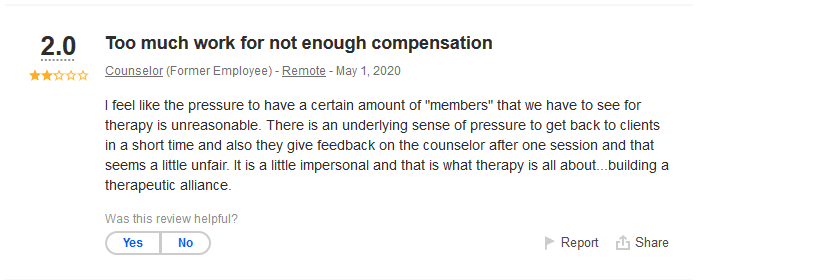
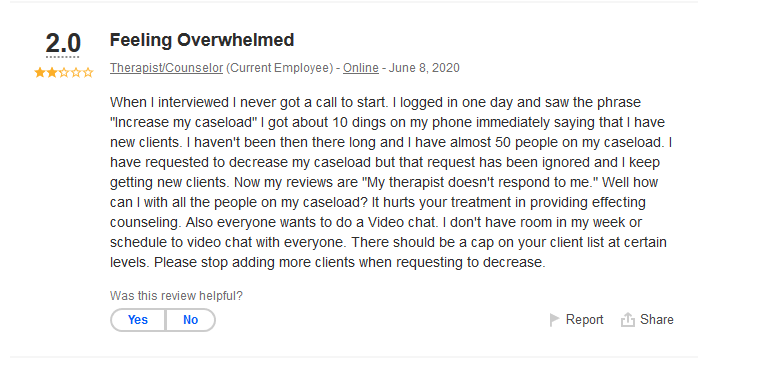
4. Paying counsellors per word, regardless of the quality of the service
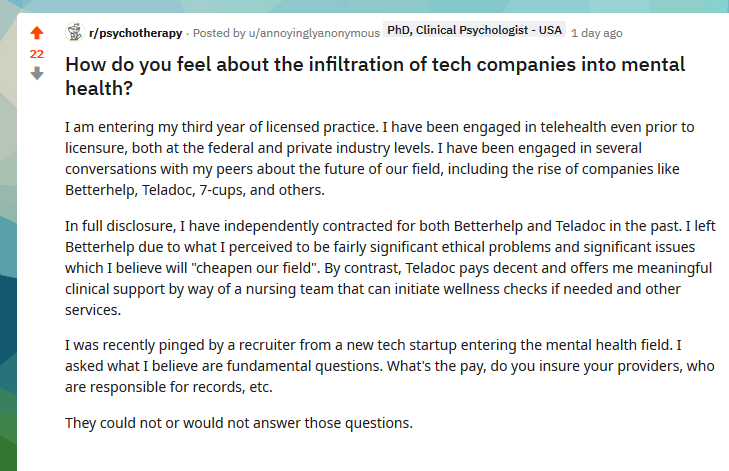
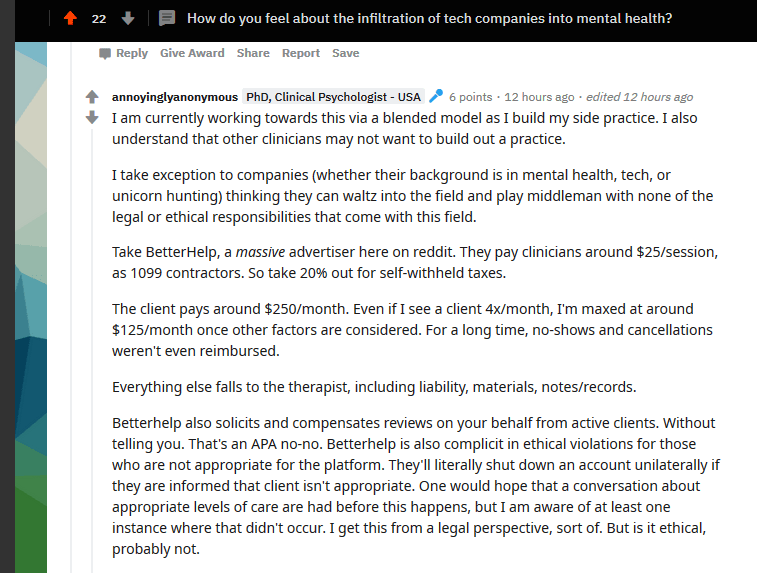
I have detailed this issue in this post. Briefly, BetterHelp pays counsellors for the number of words exchanged with a client, phone or video sessions counting as a certain number of words per minute. It’s all automated, and the content of those exchanges, as well as quality, could not matter less, as their TOS clearly state (SS of TOS regarding services). This was a huge revelation and explained why counsellors sometimes ignore clients after a certain period of time; they’re simply not being remunerated for their work past a certain limit.
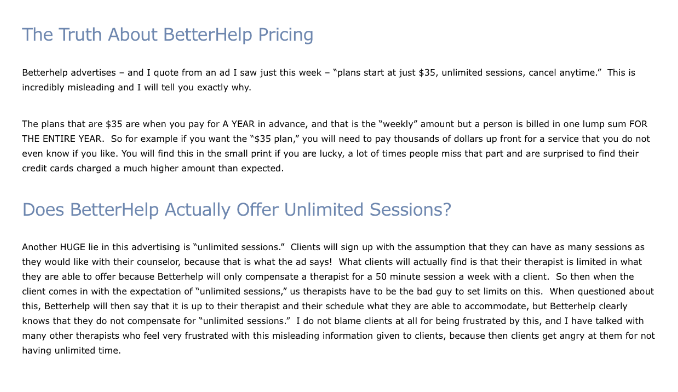
The client, of course, is oblivious to that, and thinks they paid for an “unlimited service”. And it’s the client who ends up paying the price, as in being ignored by a counsellor who is (justifiably) unwilling to work for free. Where my sympathy stops for these counsellors is failing to be honest with the client, choosing to ignore them instead, leaving them dumbfounded and equally out of pocket, as they are now paying the company for services the contractor will not render, without anyone explaining the situation to them.













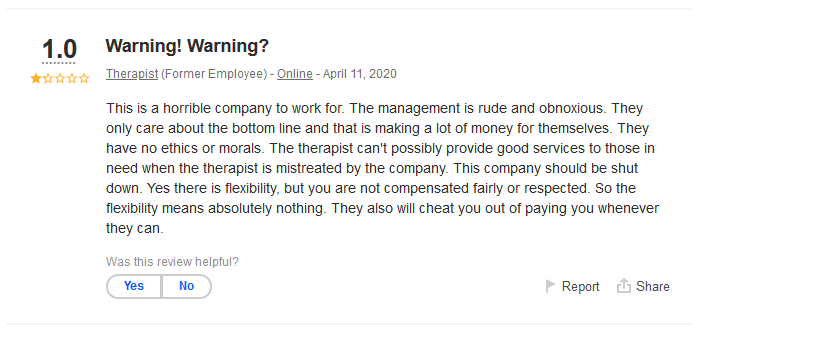
4.Sending clients’ private data to social media companies and a data analytics firm; breaching confidentiality during phone/video sessions
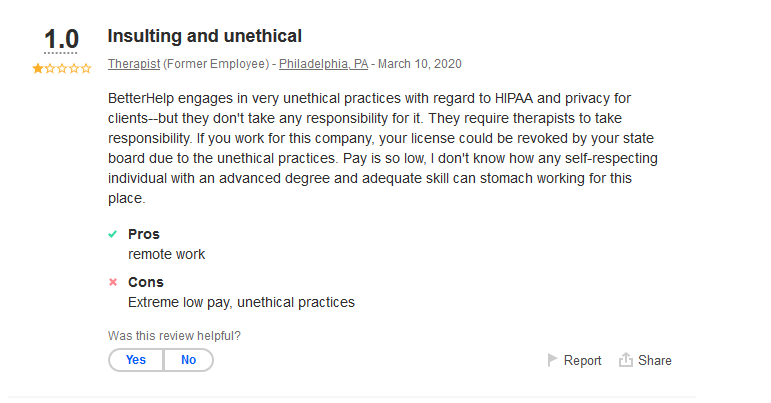
Unfortunately, those who speculated on this two years ago were not conspiracy theorists. In February of this year, this article came out on Jezebel, after a journalistic investigation into BetterHelp’s handling of client data.
It turned out they send a substantial amount of data to Facebook in real time, as well as other social media platforms. Phone and video sessions meanwhile, which as a legal standard should be private, seem to be routinely accessed by BetterHelp employees (Silicon Valley tech people), monitoring counsellors’ performance:


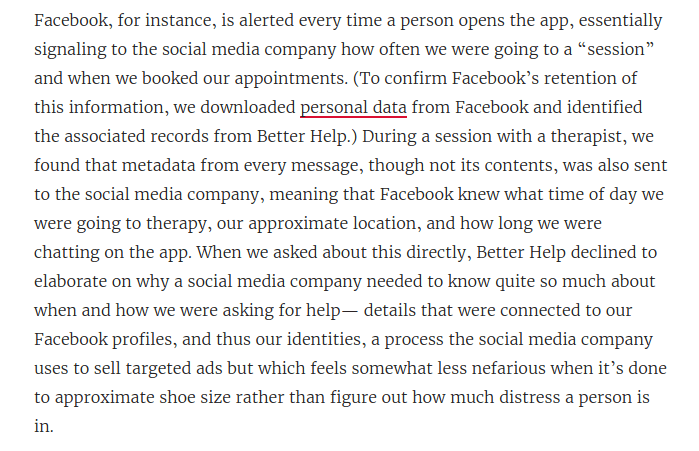
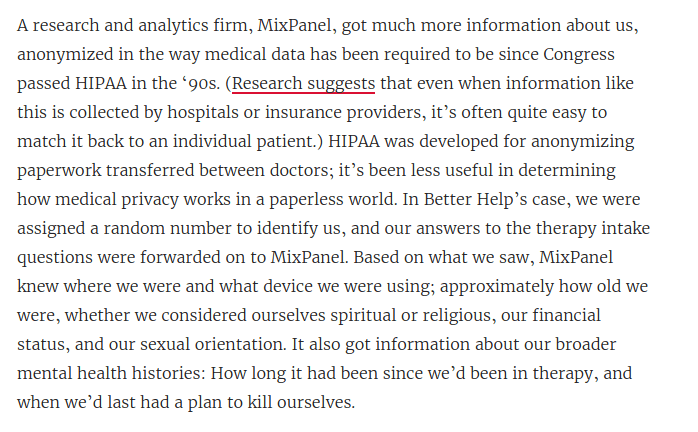
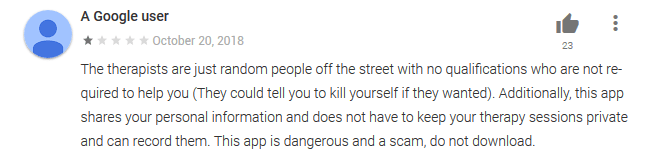

5.Obscure billing practices, lies regarding billing and frequent theft
Where to even start on this one…? It’s the source of at least half of all complaints, the rest concerning the services themselves.
It must be mentioned that when dealing with people who are in a vulnerable state of mind, they should make their billing clearer than expected, as opposed to obscure, to make sure there is no confusion whatsoever. Especially when targeting people with financial challenges, who cannot afford to lose any amount of money. They do the exact opposite.
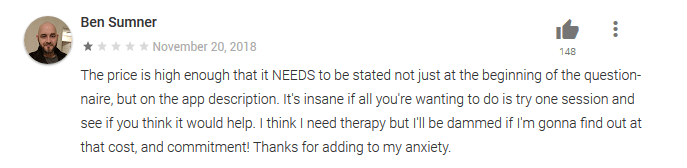
Unclear listing of prices and the final amount to be immediately charged. This has been an issue for years; so many have signalled being confused by the fact that the final amount was not listed; many thought that if the price was listed as weekly, the payment would be collected as such. As mentioned, this is so common the only conclusion can be they make this obscure enough to create confusion.


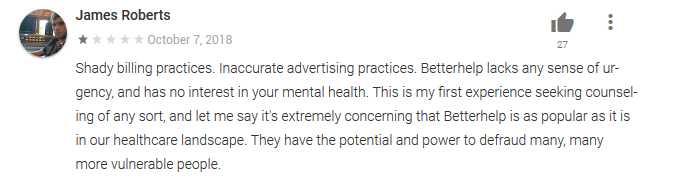

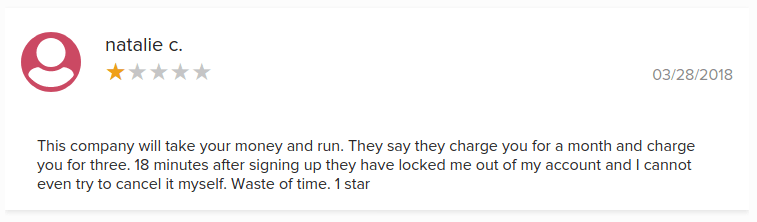
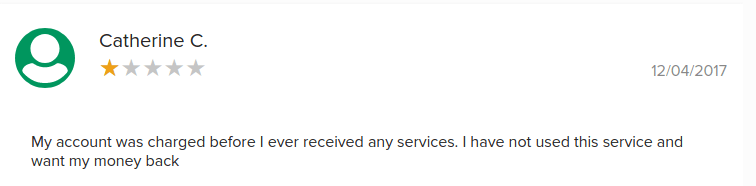



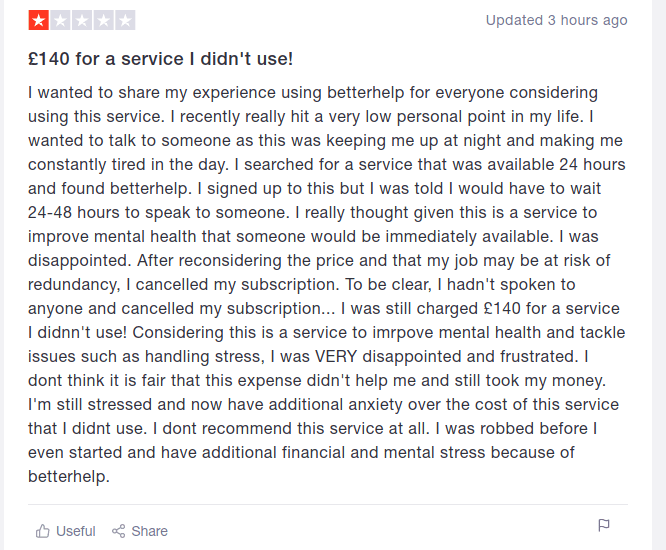

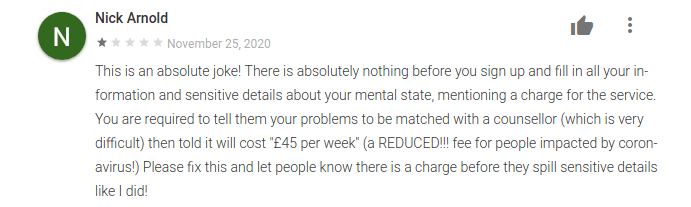

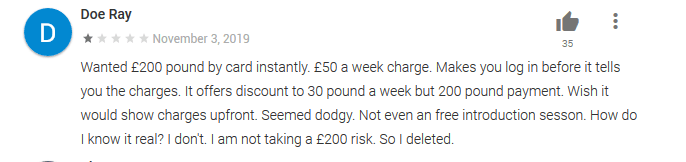
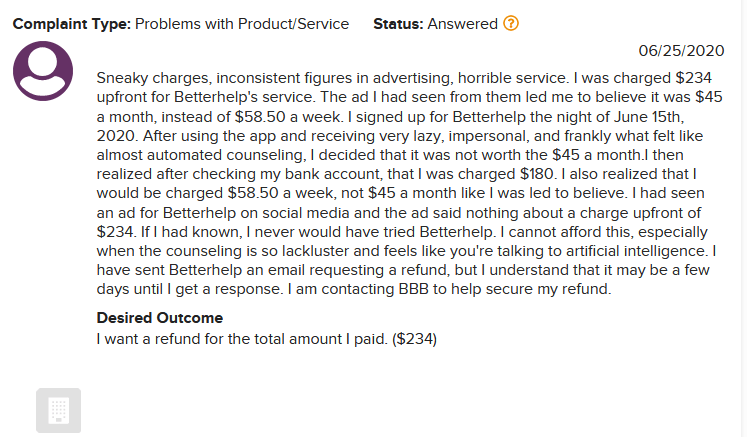

No formal request or notification before charging. Besides often not knowing the final sum, clients are not notified before a sum is withdrawn from their bank account. This is particularly relevant in the situations mentioned below, when money is taken on a different date than the client was told.


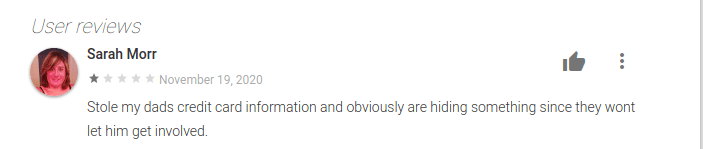


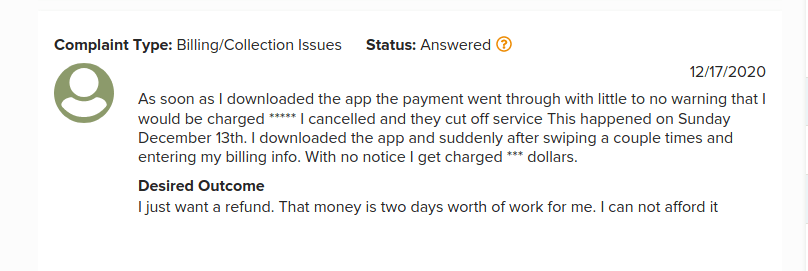
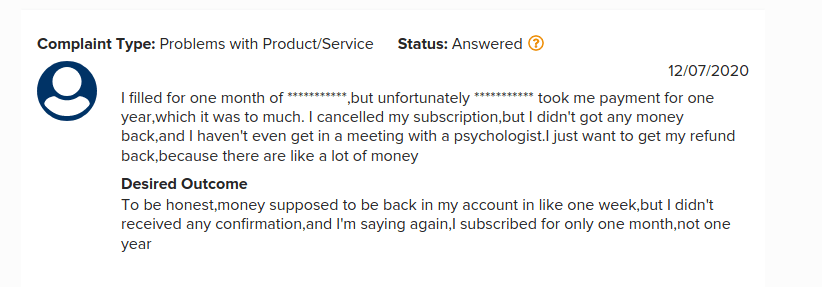
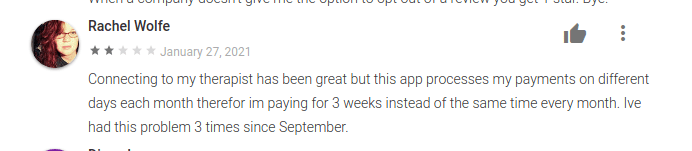


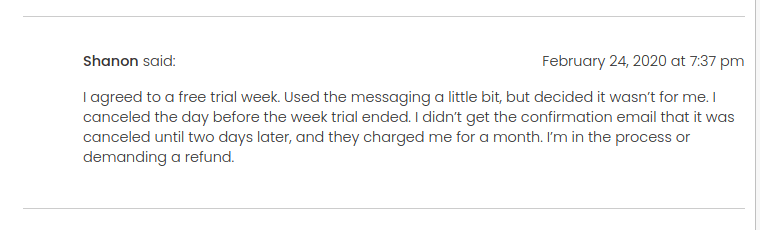
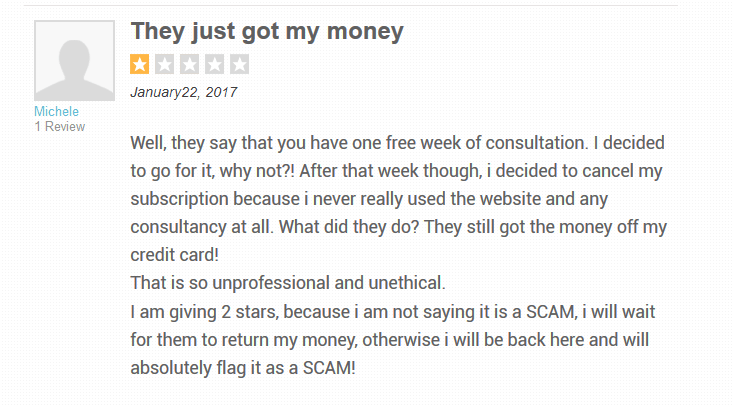
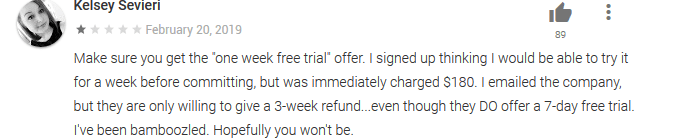
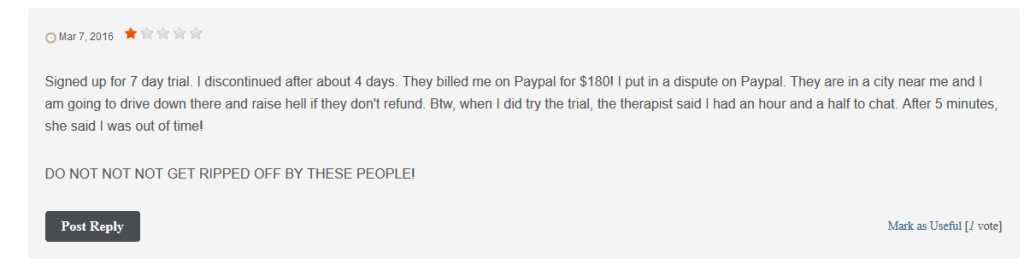
Charging during free trials. This has been extremely common while free trials were being offered for a week; some people were immediately charged, whilst others were charged after half a week. This could happen at any point, although they’d been told they had 7 days to decide whether they would pay for the service at the end of it. Another issue with the free trials was not outright telling clients they had to cancel before the 7 days were through, otherwise they’d be automatically charged. Many people were not aware of this and hadn’t read the fine print. Likewise, some who continued with the service noticed their “free week” had been included in their first monthly payment, being charged again 3 weeks after paying – therefore it hadn’t been free at all.
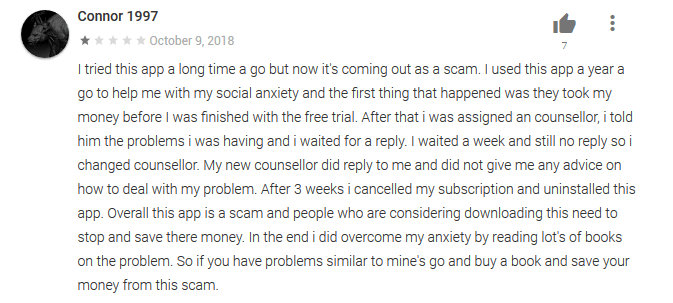


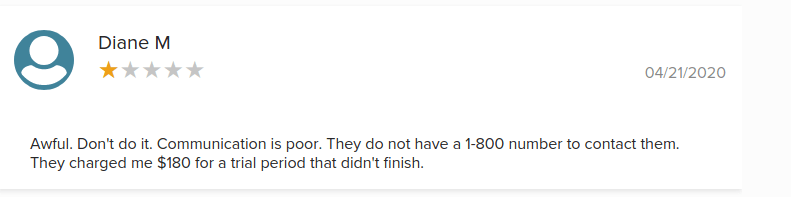

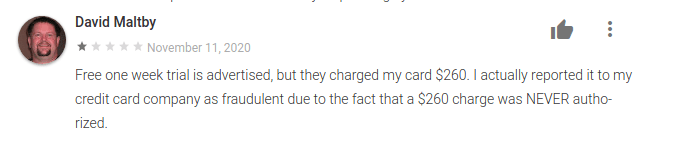




Lying regarding the step required to charge someone (being matched with a counsellor). BetterHelp’s adverts state one is not charged before being assigned a counsellor, and people tend to take that at face value. Nowadays it seems this has become less of an expectation, since people are known to wait for up to two weeks, after paying, with still no match. Of course being immediately matched, as mentioned above, doesn’t mean that particular counsellor is available (or even working there anymore). Either way, this is still mentioned on their site and is just another lie.
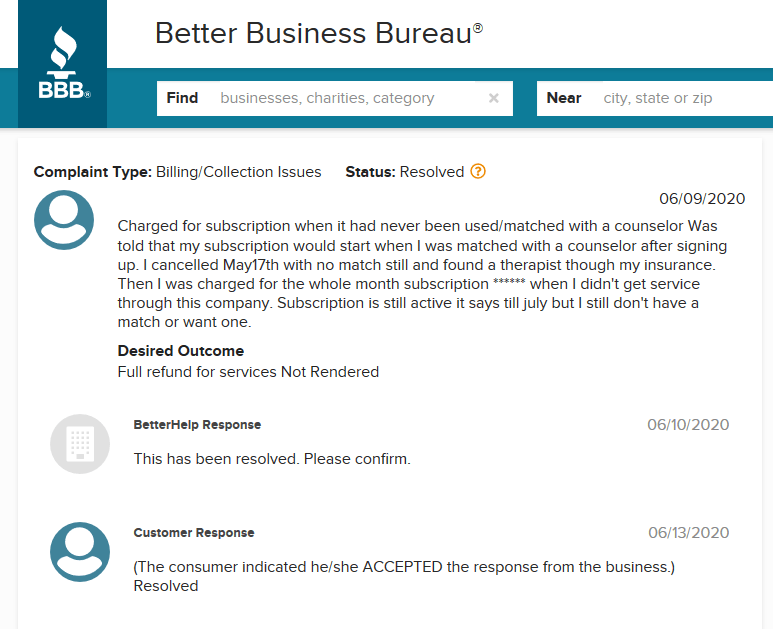
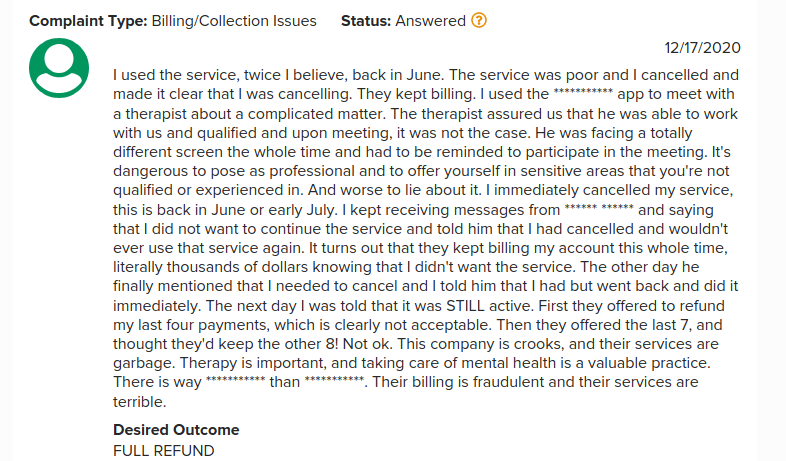
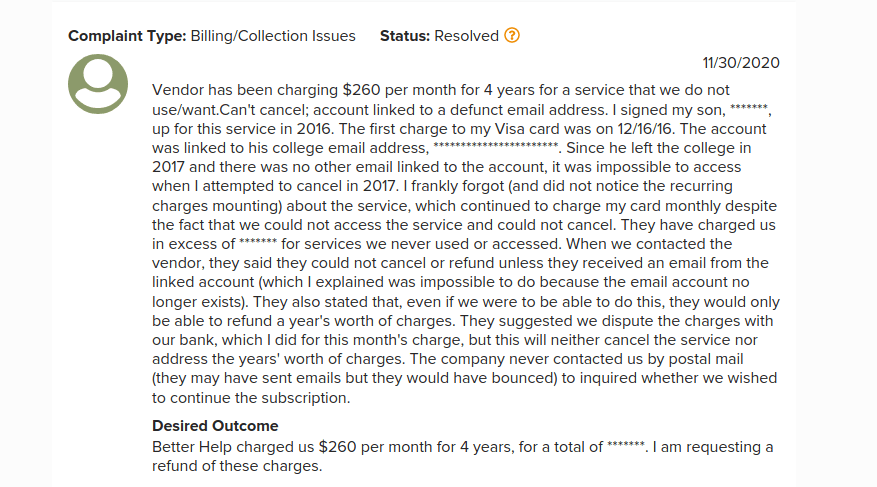
Charging after someone has cancelled the service (quite frequent) . Needless to say, this should never happen, and it’s shocking to see how often it happens with this company. Some people report being charged for months on end after cancelling, and not noticing (since BetterHelp never notifies them when taking their money either).


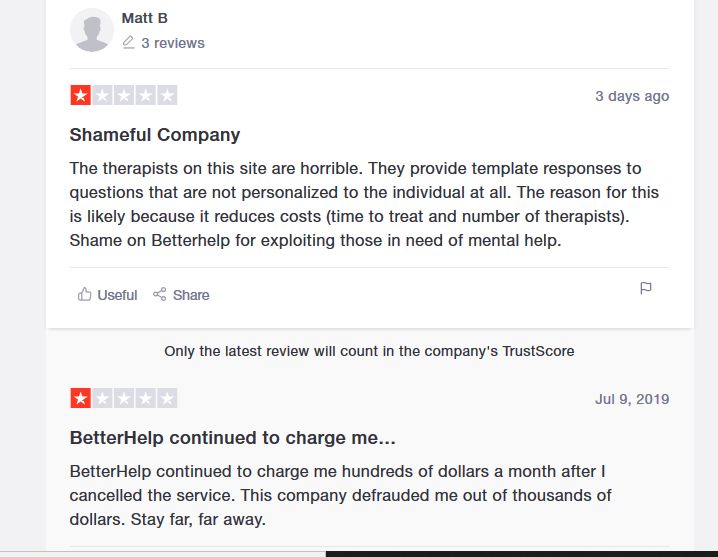
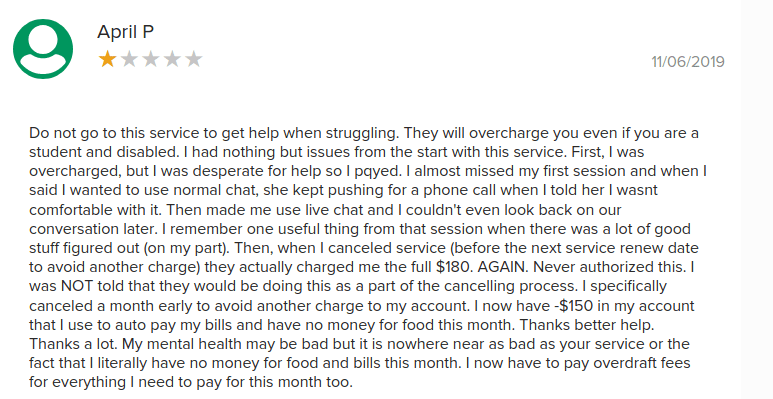


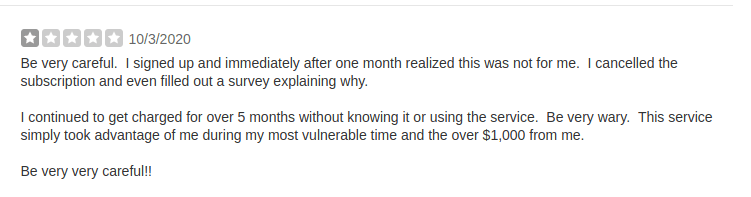

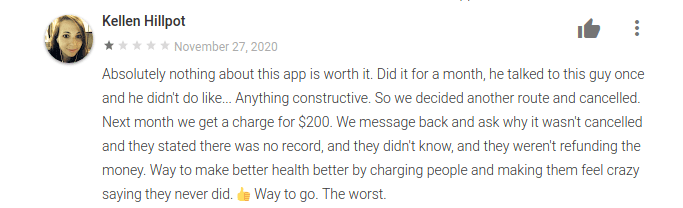

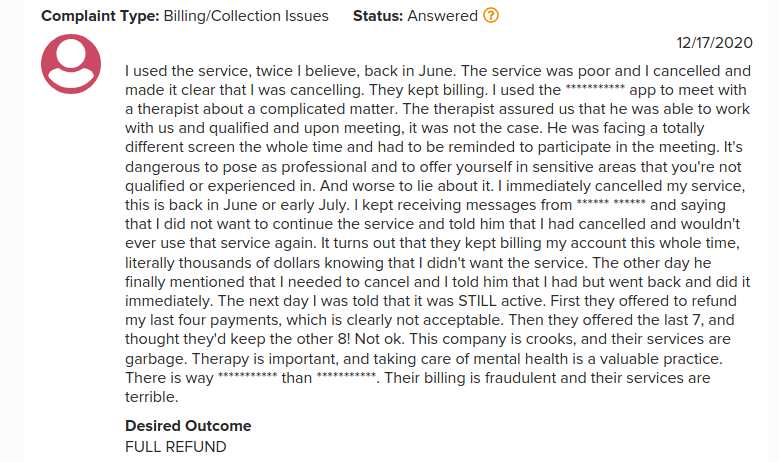
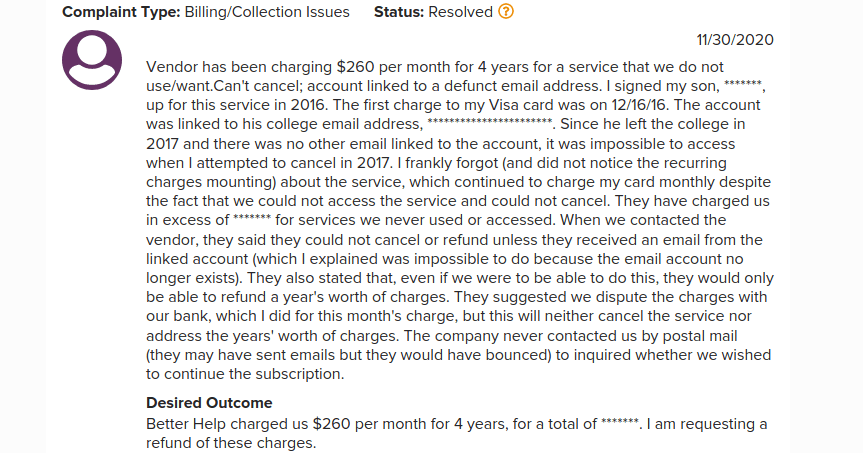



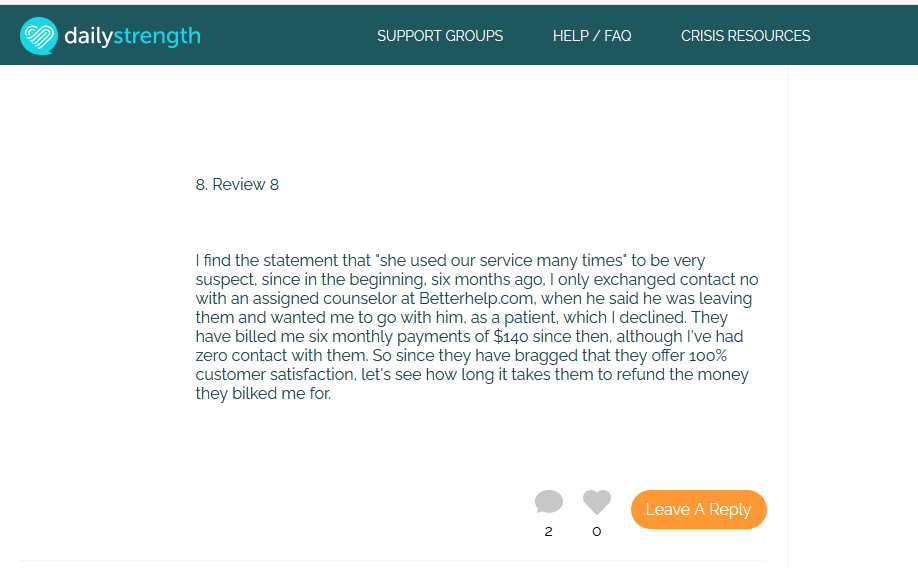
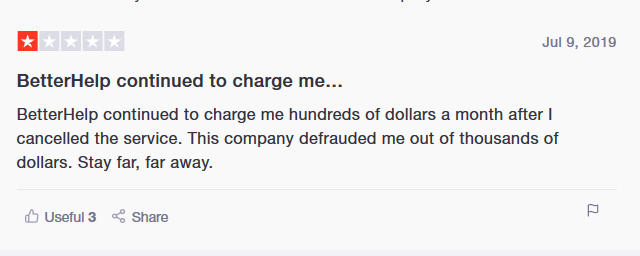


Charging in advance and telling the client services will be greatly delayed, or that no counsellor is available, after leaving them waiting for days. This has been very frequent since the pandemic started. Instead of telling people no one was available, they kept them hanging for days (one person mentioned 11 days) before finally letting them know. Not to mention refunds take up to 10 days as well to process.
Charging and denying service (closing a client’s account abruptly), at times without refunding immediately. A number of times, as described in reviews, clients were not immediately declined service, but were charged in advance, matched with a counsellor and subsequently had their account deleted from the website without warning, some turning to BBB for refunds (which is incredibly common since customer service tends to ignore people for days on end).

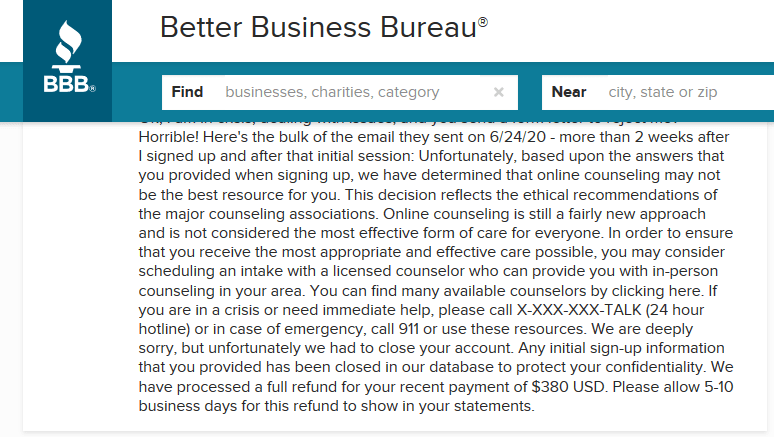
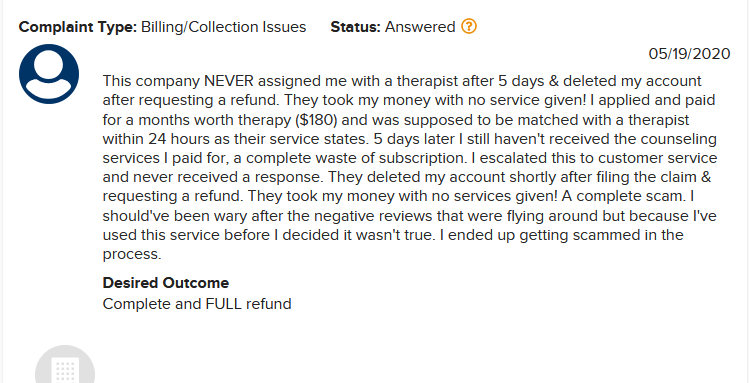

Charging early, randomly or overcharging
There are many complaints from people whose bank accounts this company took money from randomly, without a purpose or warning.

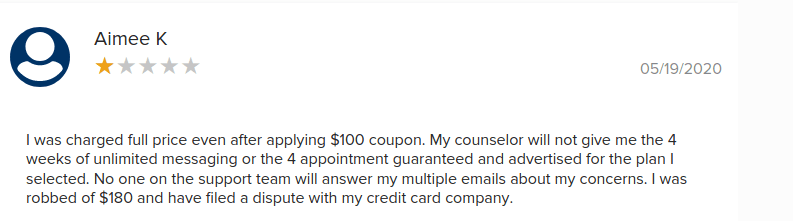
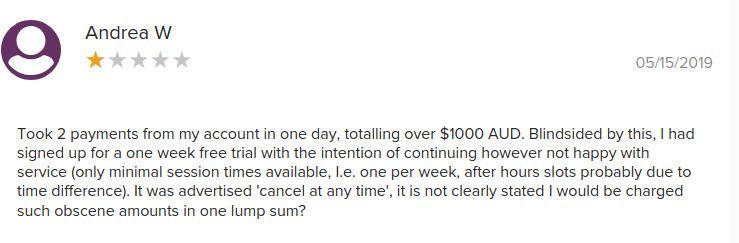

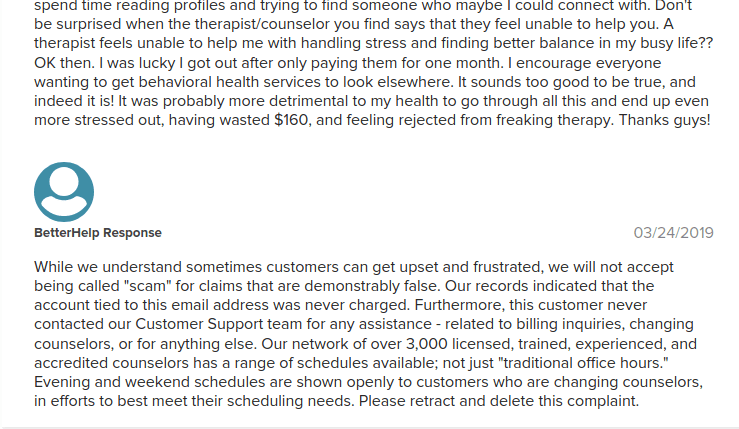
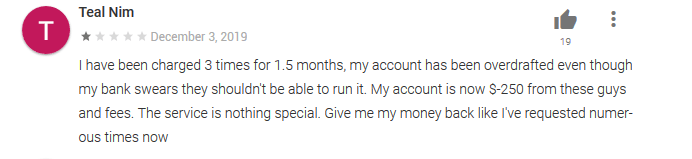
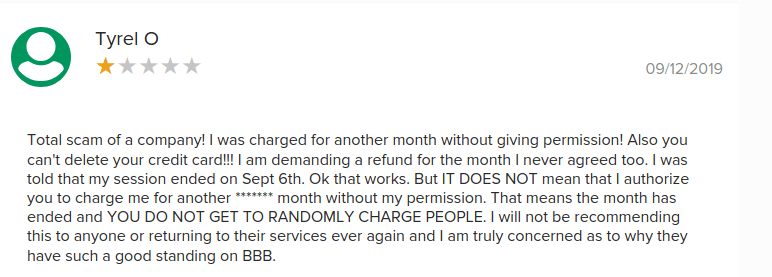
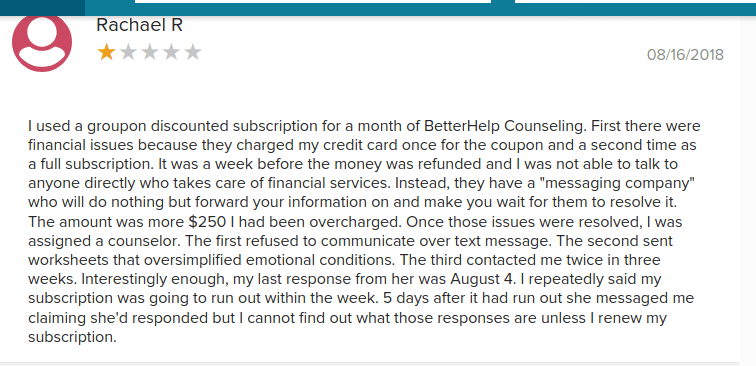
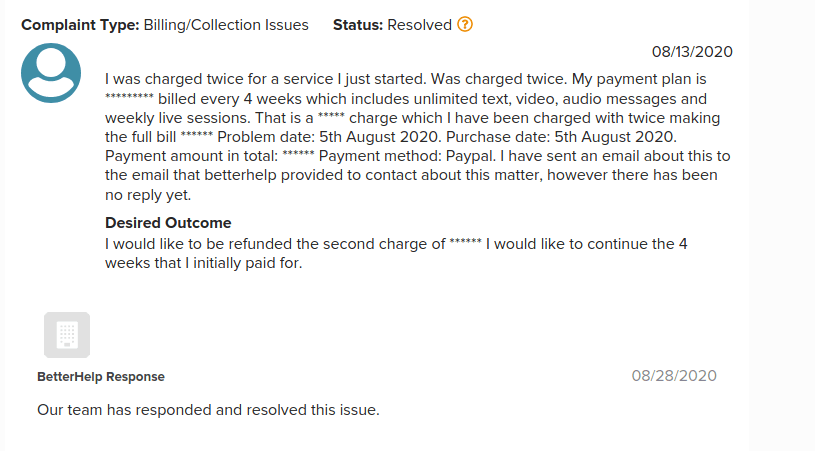


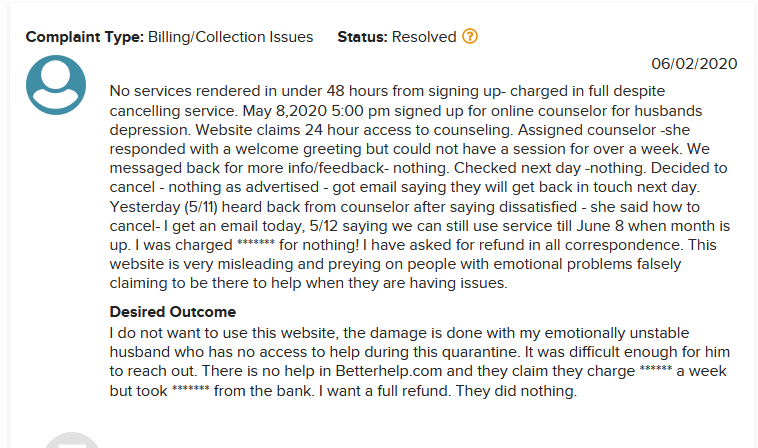

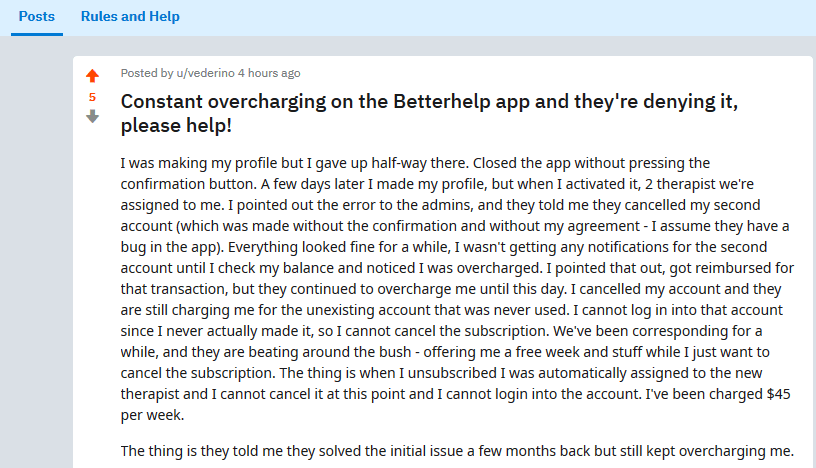

Charging people who never even signed up (!!)
This is turning up more frequently on BBB, as in people who were simply browsing the website and hadn’t created an account being charged as if they had subscribed. The staple response from the company is that “we can’t find an account associated with this email address”. These people can prove BH has been taking their money. Others say they were signed up to a more costly plan than the one they had selected.

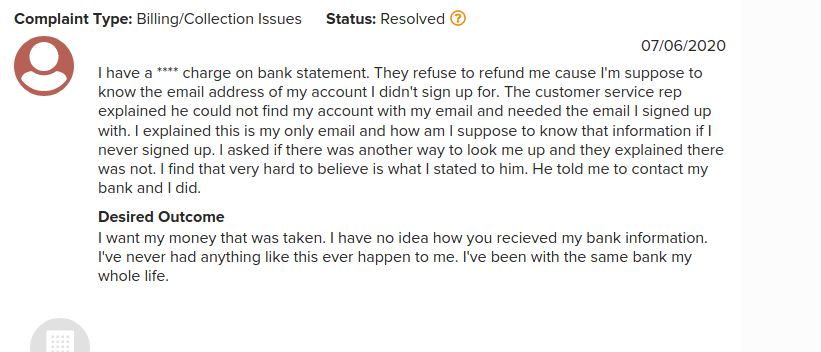
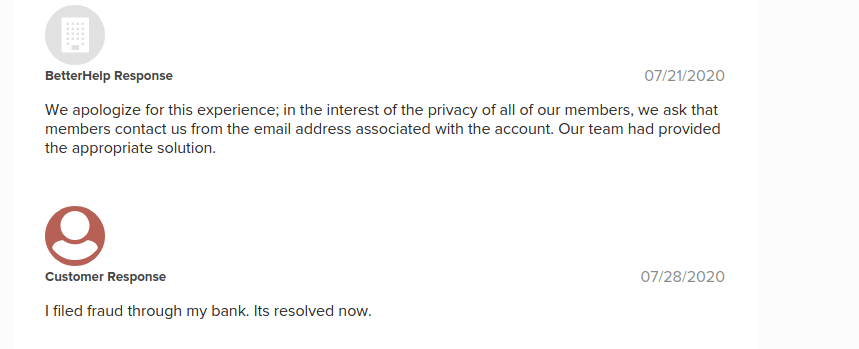
6. Disregarding the impact on people who had a terrible experience
Sadly, for some, BetterHelp was their first experience of therapy (even when it clearly isn’t therapy at all). Ergo the reviews stating it had taken a lot of courage to seek help in the first place, only to be rejected abruptly or scammed, or both. And to those mentioning the experience, it had been too disappointing to seek help again.
Overall, this company seems happy enough to resolve individual complaints when they are made publicly, on BBB or TrustPilot for instance. Then they contact the person, who ends up there after customer service has been unresponsive, and finally issue a refund. But nothing changes; the same complaints have been raised day in and day out, for years. Which means they have no plans to improve their services anytime soon. They know clients will have this experience again and again. And they don’t care.
7. Enrolling clients into a direct sales marketing scheme, as of 2020
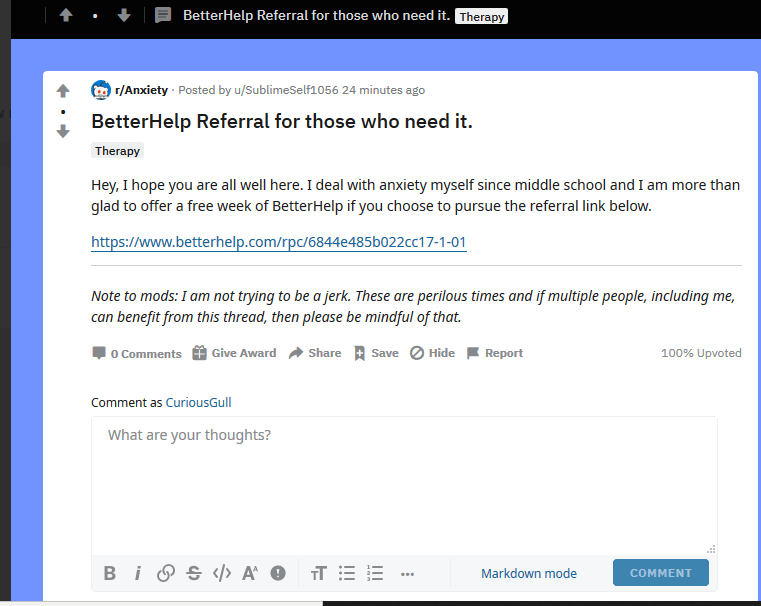
In 2020, a curious phenomenon emerged on Reddit: BetterHelp clients popping up on therapy-related threads, offering their referral links, which would grant them a free week for each new person they got to sign up, one being granted to the new client.
That is to say clients are given an incentive to do marketing for the company in their spare time. In the field of psychotherapy, that is a no-no (getting clients to engage in promotion). Not to mention that should these people be broke and feel they momentarily depend on BetterHelp for assistance, their ability to use the platform (by getting free weeks) might depend on how well they perform in getting new clients for the company. This is unethical and exploitative.


8. Customer service frequently ignoring complaints, as well as refund demands
As mentioned above, many people end up posting negative reviews and filing complaints after customer service is unresponsive or unhelpful. The only phone number they are given is that of a third party which in turn emails BetterHelp, which is useless, as clients can do so themselves (often to no avail). There is no way to reach the company directly, even for urgent matters, such as overcharging. (SS)
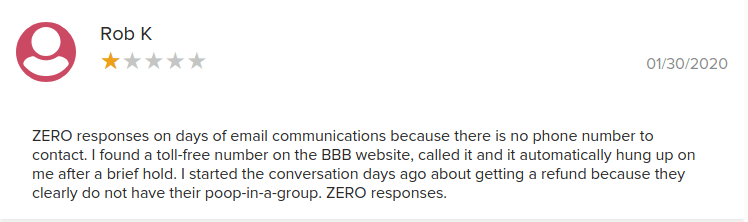
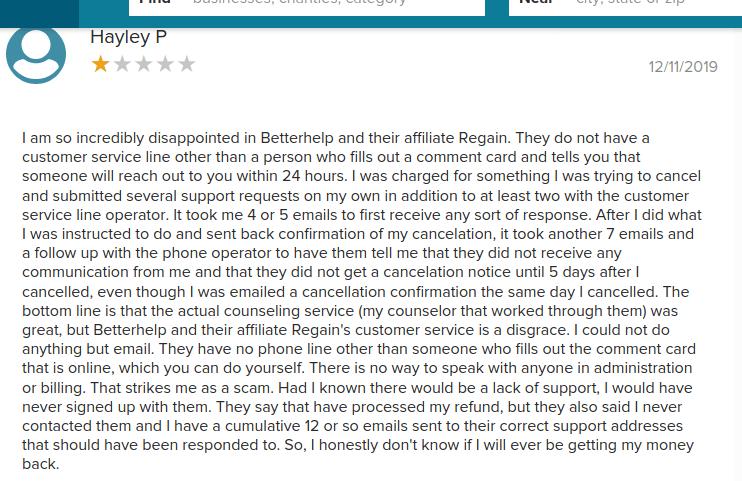
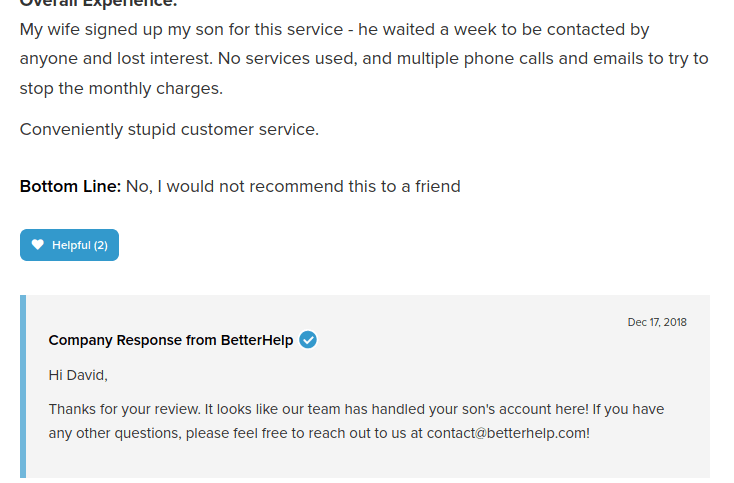

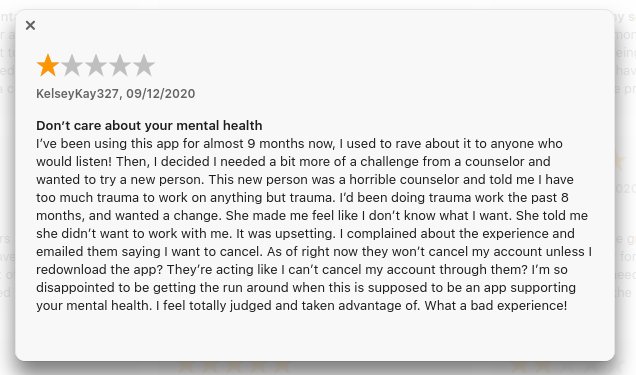
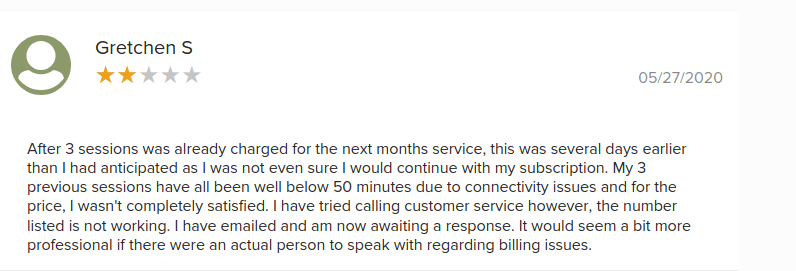
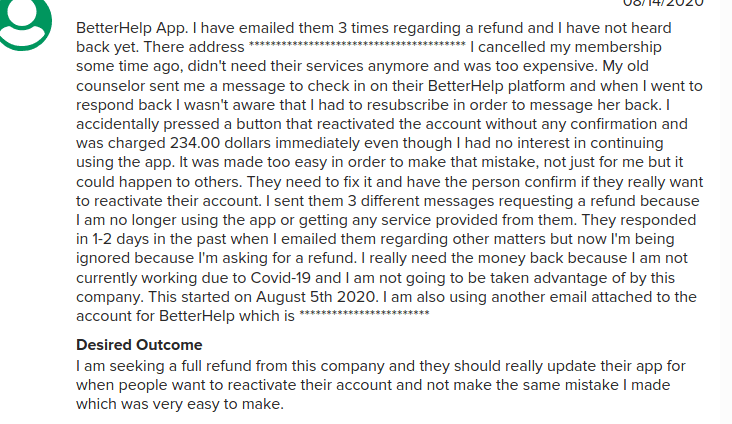
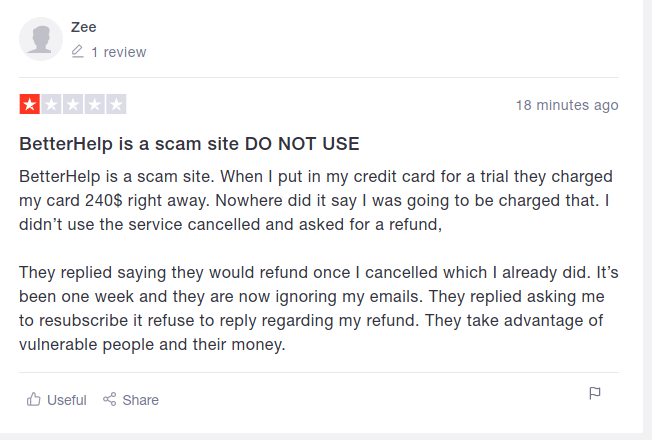


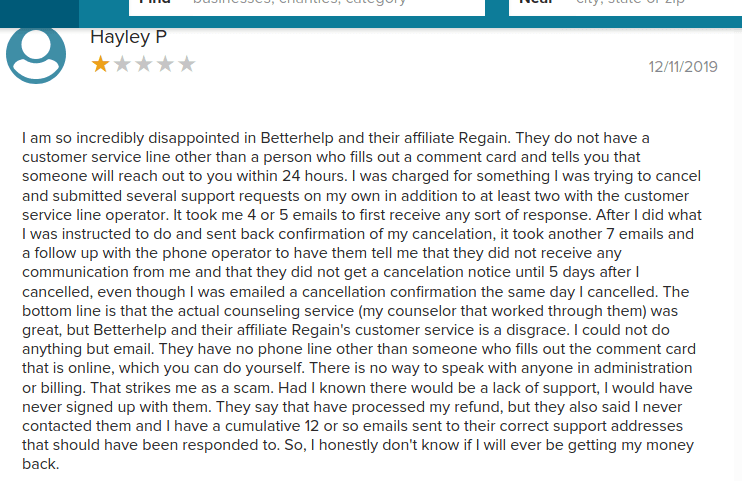


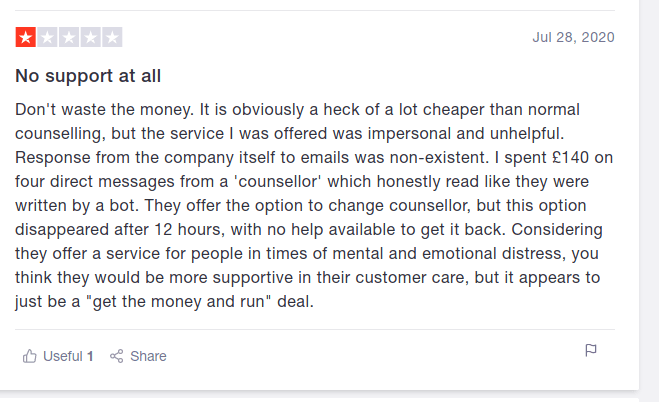

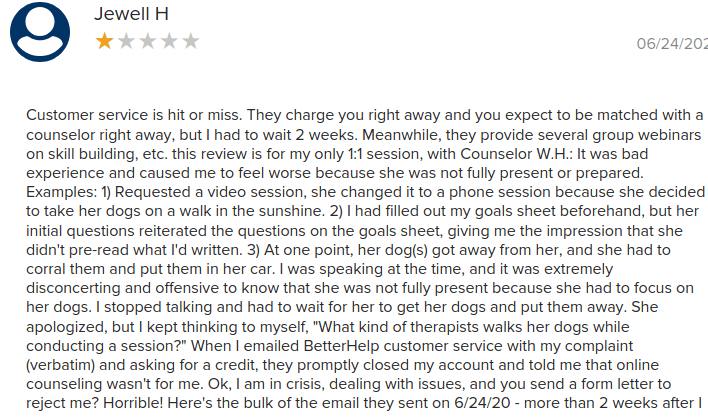
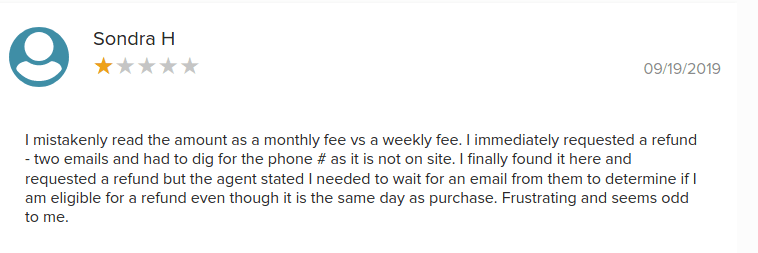
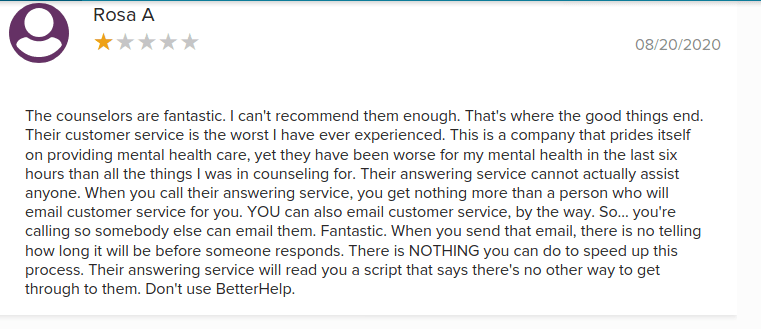
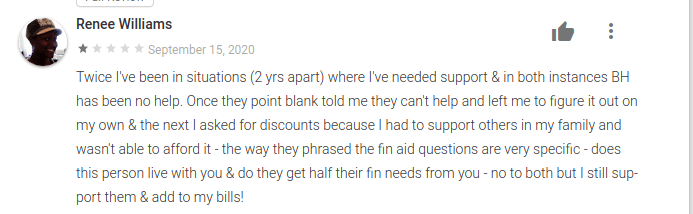
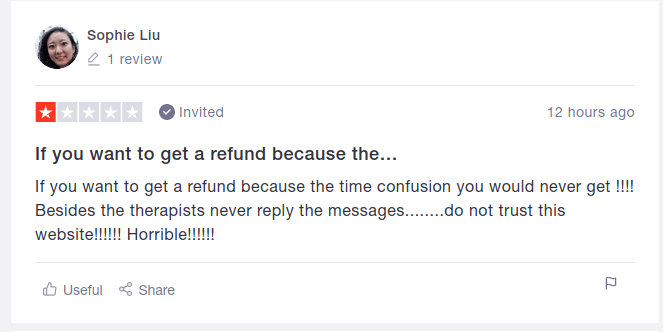


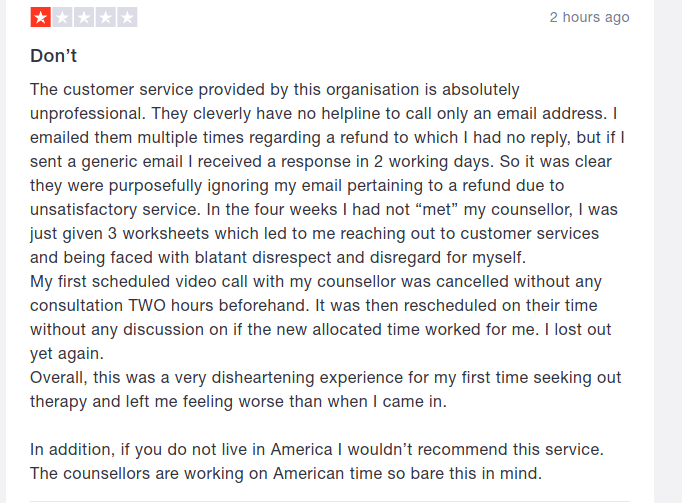


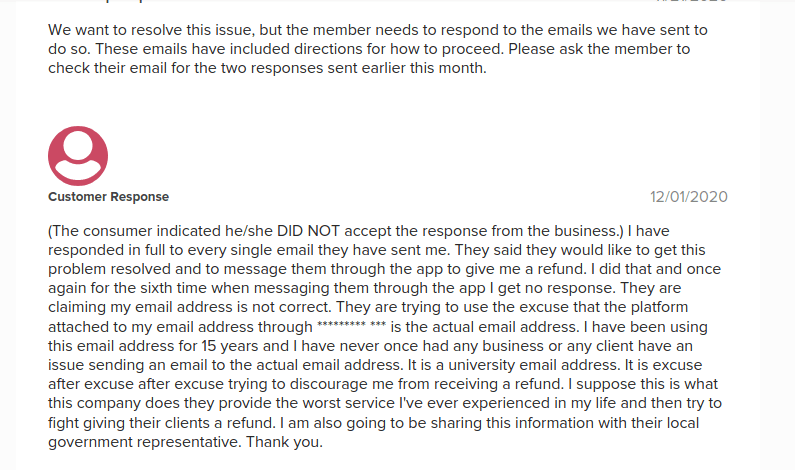
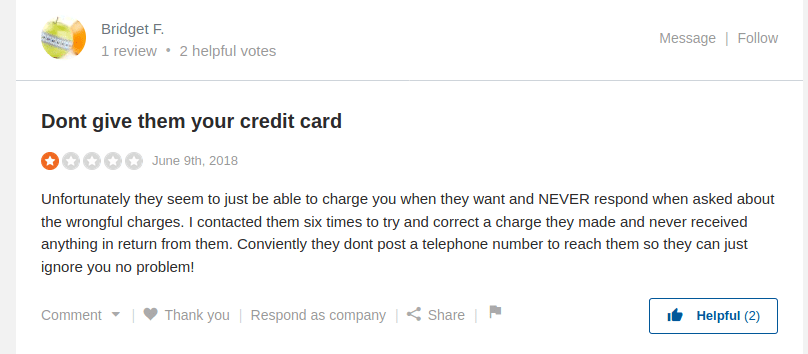


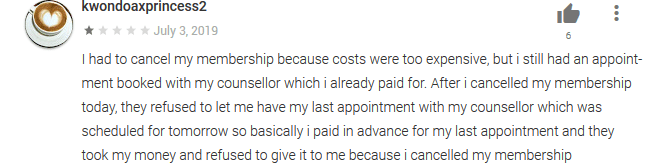
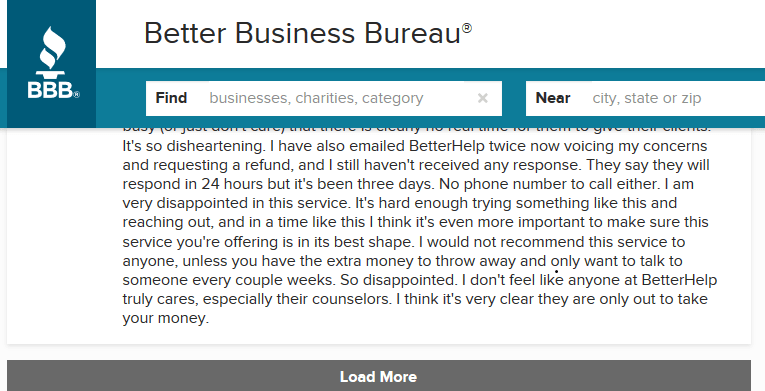
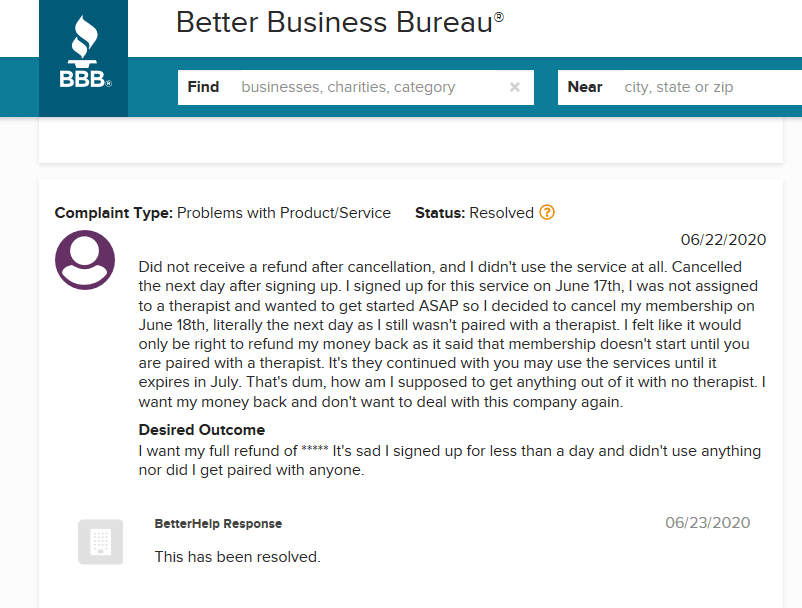


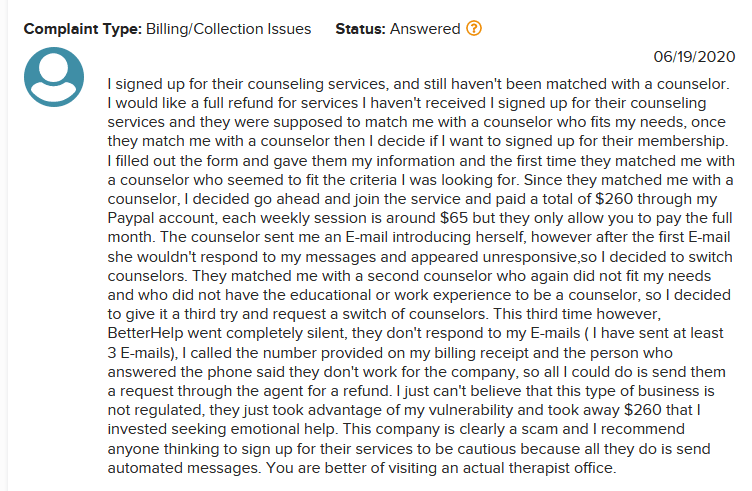
Hence people are forced to resort to the following:
- Posting complaints online so BetterHelp would finally contact them;
- Disputing charges with PayPal or their bank;
- Reporting fraud to their bank;
- Cancelling their credit/debit cards, to prevent further theft.
If the company weren’t a dumpster fire overall and at least communicated efficiently with clients, none of the above would be necessary. Despite this being such a frequent problem, they are apparently offended when being referred to as a scam.
9. Technical issues they refuse to address (they’ve been occurring for months)
Particularly since the start of the pandemic, when the platform was overwhelmed by demand, people have been complaining of technical issues which rendered it almost unusable. Most seem to arise during live sessions; for others, the platform just doesn’t work at all, after having paid in advance.


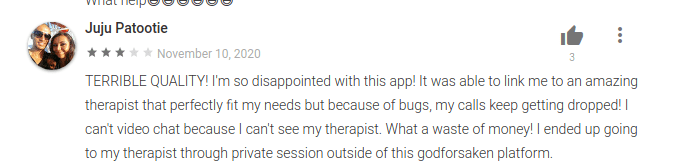



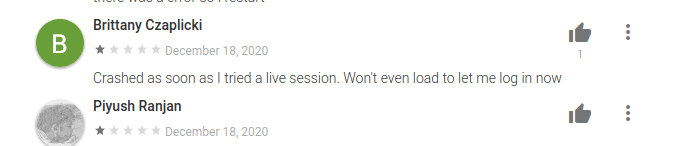

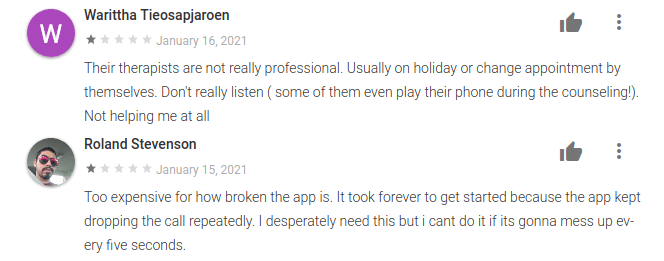


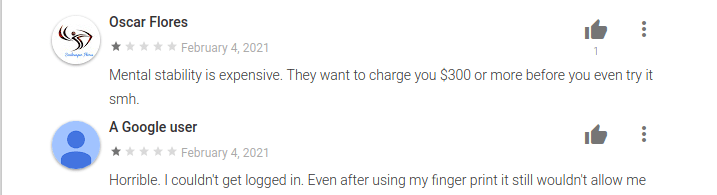


10. Punishing clients for signalling their administrative mistakes, such as overcharging.
Several people have reported having their accounts deleted at the slightest sign of trouble or dissatisfaction, whereas others were placated and encouraged to continue. The experience varies greatly.
11. Finally, other issues worth mentioning:
There have been repeated complaints of attempted religious conversions by Christian counsellors, or clients being advised to “turn to God”, embrace a certain spiritual path etc.


Clients are constantly pestered to review their counsellor and the company, even before having a chance to properly asses the service.


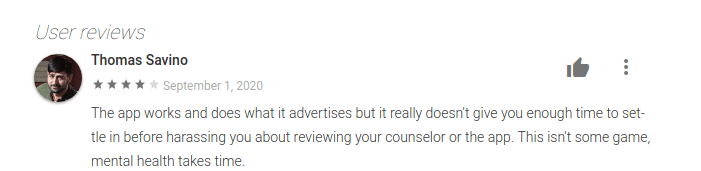


There’s probably no point writing a conclusion to this; it’s self-explanatory. As a final note, please don’t trust influencers and “unbiased reviews” on “reputable sites”, and check for affiliate status, as it will be there 99% of the time.
 The Artistry Of Glorified Bullshit
This is terrible and unethical. I’ve heard countless ads for BetterHelp on various podcasts and it always sounded like a questionable format. It’s so much worse learning that the company blatantly takes advantage of those suffering and most in need of support. Thanks for compiling the information–I hope that it gets out to anyone who is considering using the service.
LikeLiked by 2 people
Thank you for the kind comment. I hope so too. It’s tiring and annoying for people to deflect to the situation in 2018, which is such a small part of the entire issue.
LikeLiked by 2 people