

Every time someone is scammed by a company with excellent ratings, they are left aghast, especially after finding many similar accounts online, buried under tons of praise and five star reviews.
At times, the contrast between the principles a company claims to stand behind and the chilling exploitation it engages in (of customers/clients, employees, contractors etc) is so strong one is perplexed.
Take BetterHelp for instance, an intermediary between clients and counsellors, claiming to provide a platform for online therapy (when their TOS clearly state these services don’t meet that definition). This company has possibly engaged in every kind of “shysterism” under the sun, from advertising an unfeasible level of support to desperate people, to blatant lying to, and stealing from them individually, as many complaints have detailed.
Whilst there are enough misdeeds on their part to fill out five pages, this post focuses on their marketing, detailing ways to recognise deceptive advertising in general. So if you smell a fish with regards to an aggressively advertised company, this is what to look for:
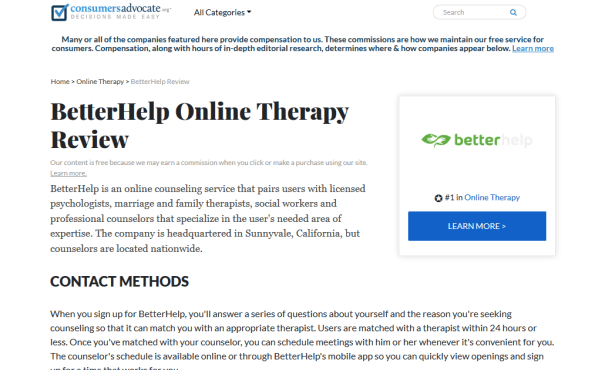
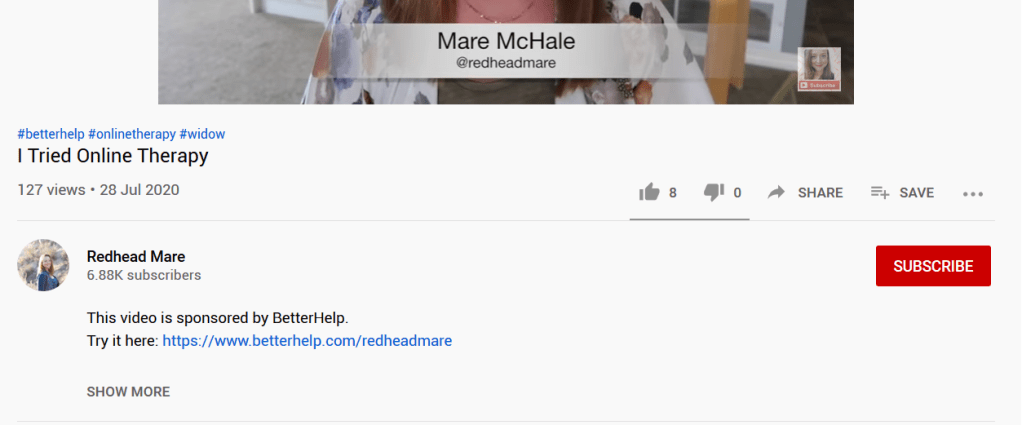
- Affiliate status, on the part of whomever promotes or “reviews” the company
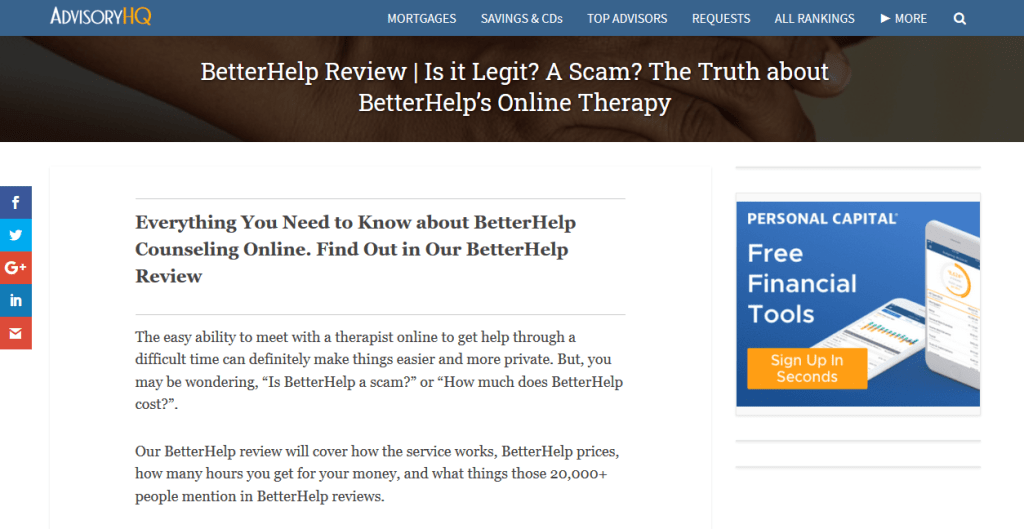
Of course this should be a “no brainer”, but some sites make it less clear, particularly when you’re browsing through them quickly. In fact, some deliberately mislead readers with titles such as these:
- Is X legit or is it a scam? The truth.
- I tried X; here’s my unbiased opinion.
- My honest experience with X.
Out of about 25 “reviews” of BetterHelp on websites and blogs dedicated to mental health, I found one (just one) that wasn’t sponsored. The rest mentioned somewhere on the page that they were affiliated with the company and would be compensated if someone signed up through their referral links. Whilst some make it obvious, others hide it in small font at the bottom or in a corner of the page, or even on other pages, which you have to notice and click on to open. Always inspect a site thoroughly before trusting such “unbiased opinions”.



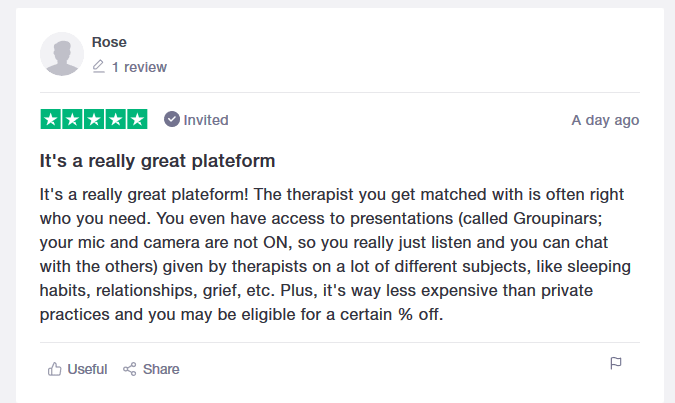
2. On TrustPilot, check whether reviews are organic or “invited”
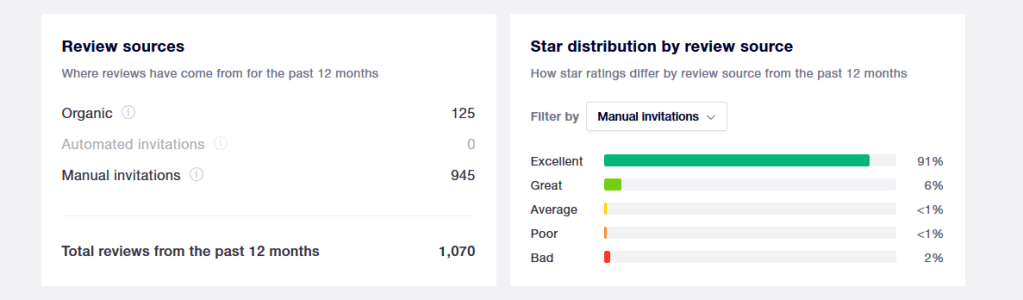
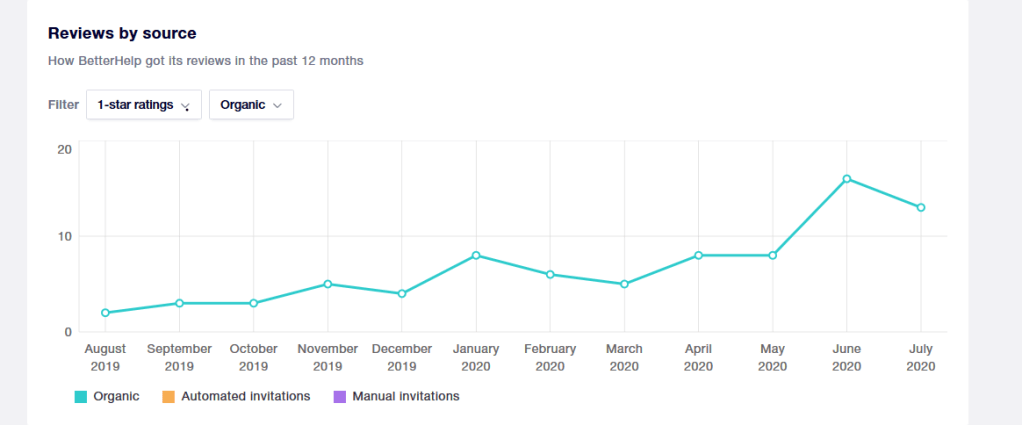
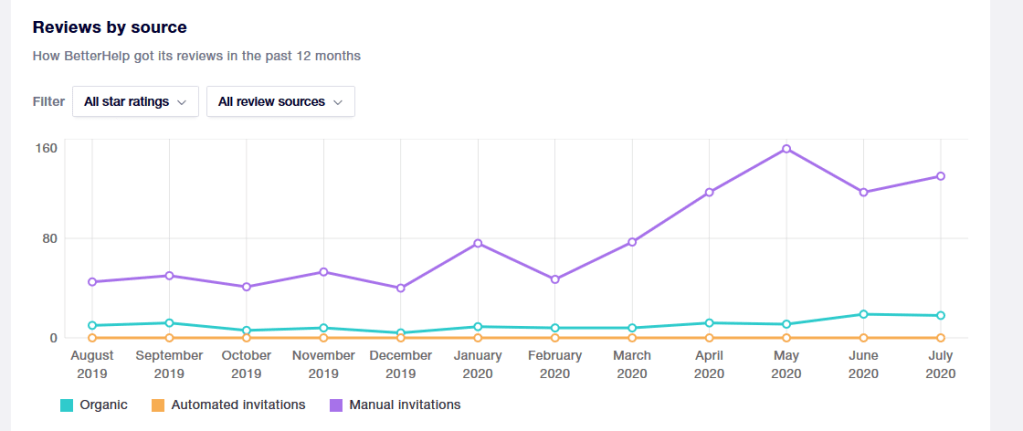
TrustPilot has come under fire in recent months, especially after being exposed by Channel4 (UK) for allowing just anybody to post reviews to boost a company’s ratings (even those of a fictitious one). Recently, they introduced a useful feature: they now mark certain reviews as “invited”, meaning they were obtained directly by the company. You can also access a graph showing you the exact number of organic vs invited reviews.
The reason many reviews here don’t appear as such is that I took the screenshots before this feature was introduced, which was only a few days ago, and didn’t go back to screenshot them again.
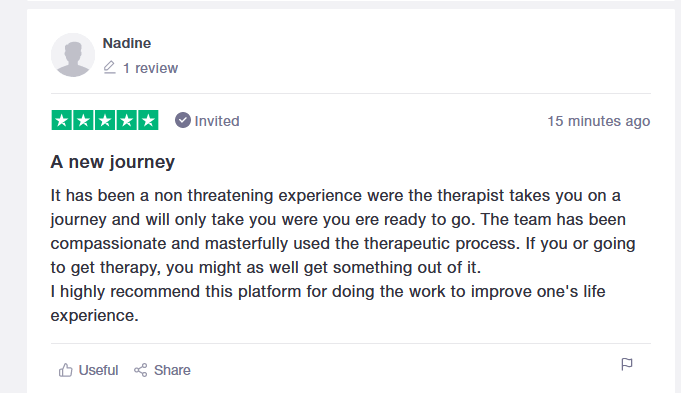
This immediately revealed the obvious truth about BetterHelp: their batches of 5-10 five star reviews in a row, burying negative ones, were all marked as “invited”, whilst the vast majority of negative ones (minus one or two) were all organic. If that doesn’t paint a picture, I don’t know what will!

3. Used car salesman vibes from certain reviews
The likelihood of a review being fake can transpire as quickly as seeing the title. If it reads like an ad, and the reviewer seems to have taken an Ecstasy pill, someone on a content farm tried too hard.
Look for blatant exaggerations, an excess of exclamation marks, and especially slogans and sales tactics one wouldn’t use in their everyday language, such as:
- Try it now!
- What are you waiting for?
- Don’t miss out!
- You NEED this! etc

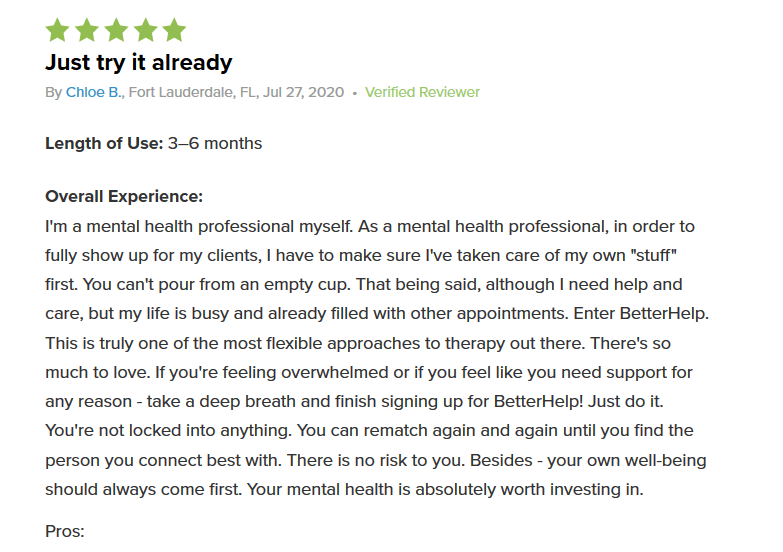

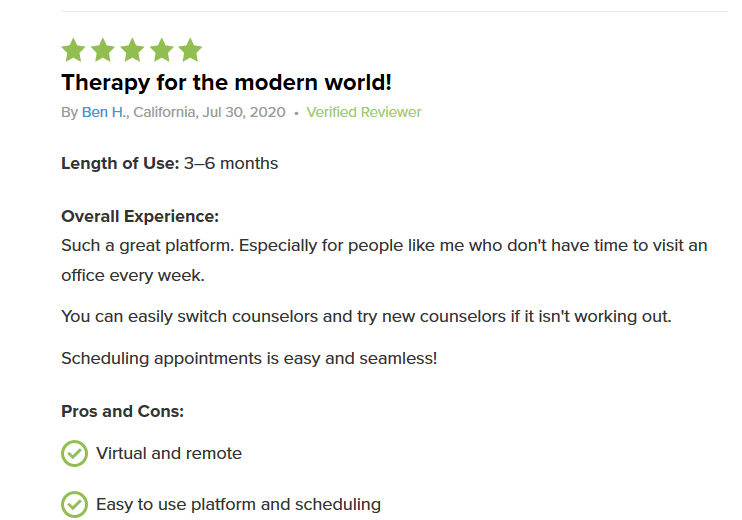
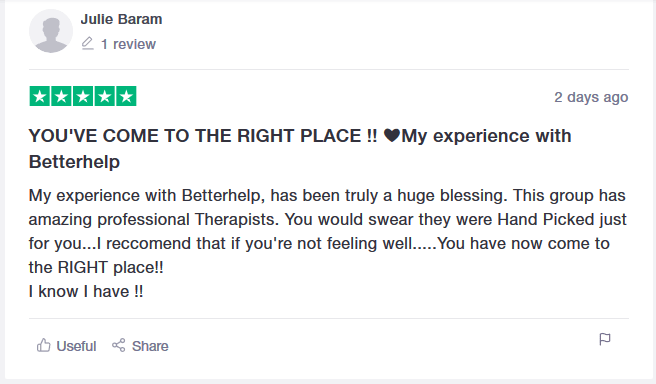


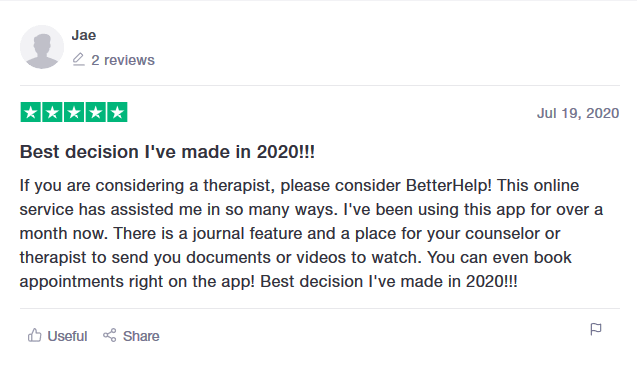
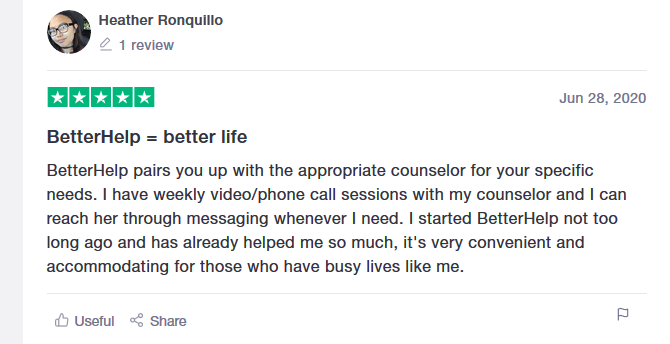
This stands out particularly when the over-excited tone used in describing a service is inappropriate. Such were the reviews claiming BetterHelp made therapy easy and fun. Anyone remotely familiar with therapy knows processing your traumas is anything but easy and fun.
Imagine reading the following about a funeral service:
With Sarcophagus Inc, my granny’s funeral became a day out! Their morticians are so talented she looked just like she did on her wedding day! It truly was like going to a picnic, and they took care of everything for us! I will recommend this service to family, friends and everyone I know. The best on the market!! Don’t miss out!!
4. Reviews clearly sourced from content farms
Nowadays, these are quite easy to identify, as content farms mainly employ writers from countries where the currency has a lower value than the dollar, pound, euro etc, in order to use their services way cheaper. When it comes to BetterHelp, since they post them in batches almost daily, they must order them in much larger batches, so it wouldn’t be surprising if 50 or 100 were written by the same person.
Back when content farms hadn’t ruined the market and the pay was still decent, I worked as a content writer for a few years (I never did reviews though), so I know filler when I see it.
What to check for is poor grammar, general information one could glean from an advert, and an awkward use of language. Also, you’ll often notice a string of positive adjectives (normally 3), praising the service and its providers. Exaggerations and generalisations are often made, as in claims the reviewer can’t possibly verify, such as all counsellors on BetterHelp are attentive, dedicated and thoughtful. Quite a claim after only speaking to one; and if they had to change counsellor repeatedly, clearly a few didn’t fit that description.
A comprehensive listing of every feature/service a company offers is also a red flag, as it’s nothing more than a rephrasing of what the writer was provided with, as opposed to recounting a personal experience.


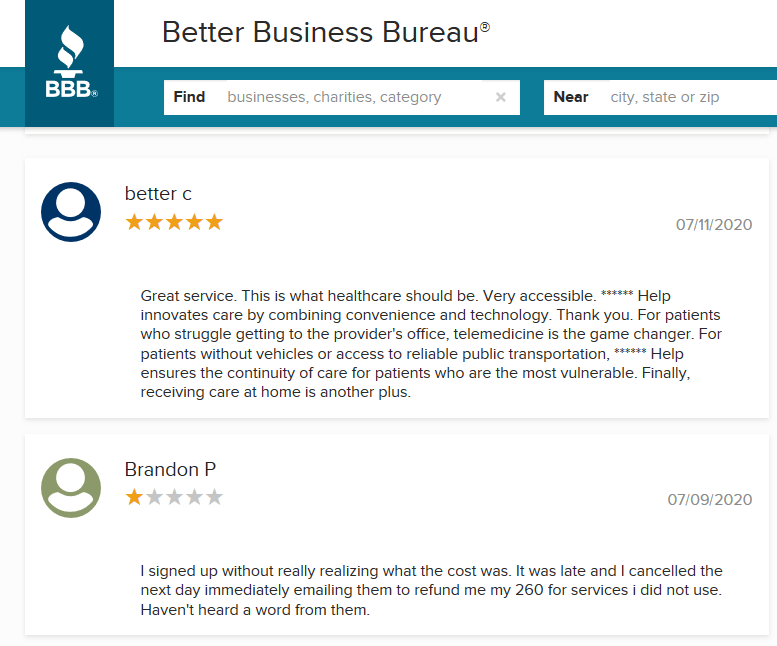
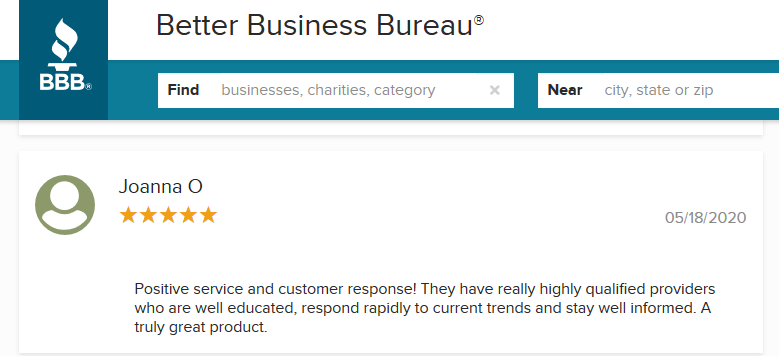
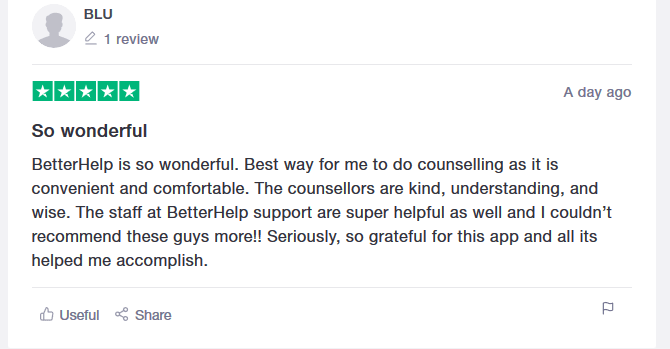
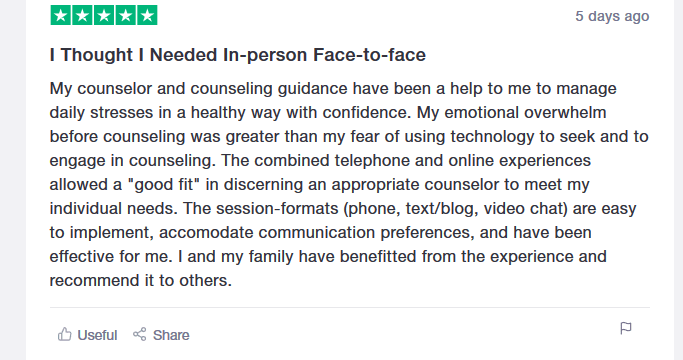

5. The dynamic between positive and negative reviews
What companies making heavy use of fake reviews are interested in is gaming the algorithm on a website, to get as close to 5 stars as possible. For that purpose they make sure every negative review is followed by a batch of 5-10 excellent ones, regardless of how ridiculous they are. If you see a pattern (and the company mainly has either 5 or 1 star reviews, with few average ones) it’s clearly a red flag.
Fake reviews make poor ones seem few and far between, yet if you click to see them exclusively, you’ll notice new ones are posted almost daily:
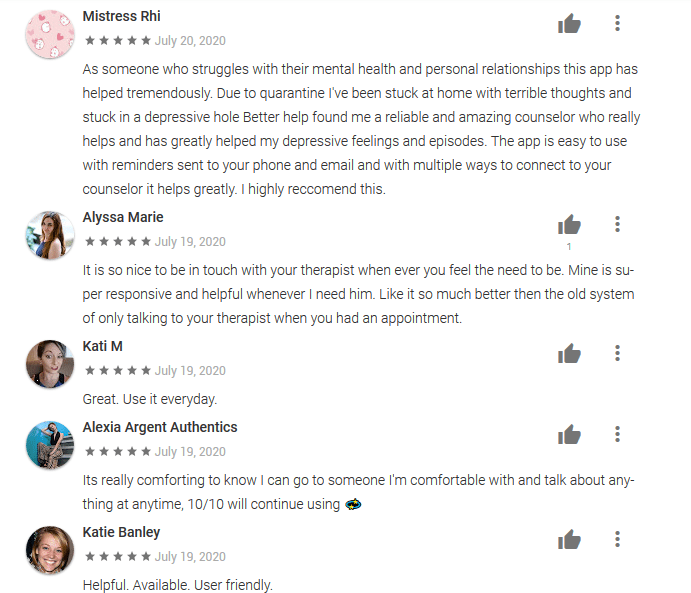
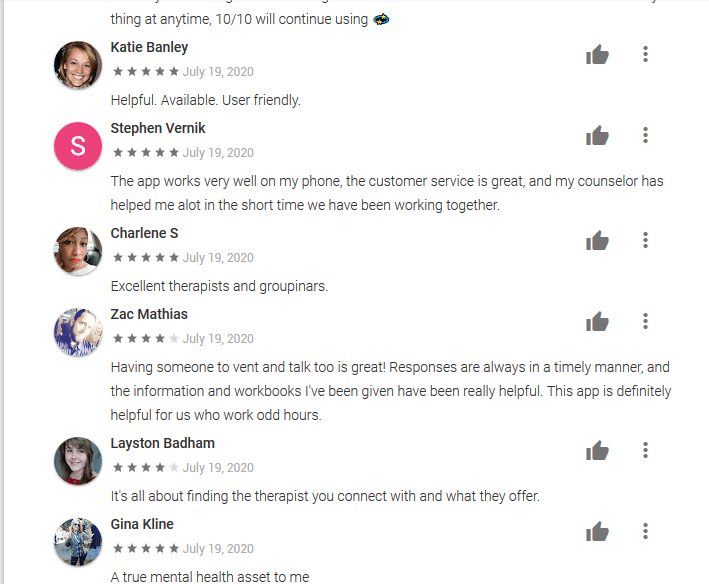
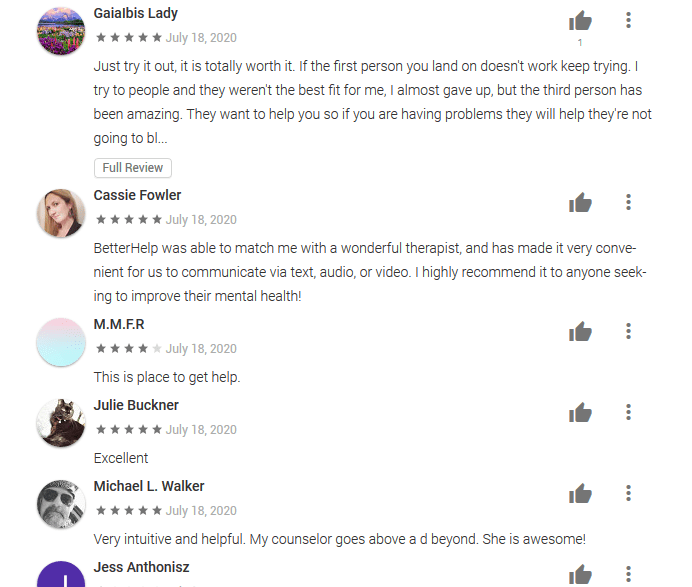
I’ll demonstrate this further by showing what happened in July of this year with BetterHelp’s reviews on Google Play. They had been very low rated for months, and in June and July it got particularly bad (they were mostly negative, due to all the issues on the site, worsened by the Covid pandemic, which brought an influx of clients with not enough counsellors to assist them; technical issues worsened as well). The reviews below are in chronological order, between the 9th and 18th of July, from the bottom up (I haven’t only selected poorly rated ones).
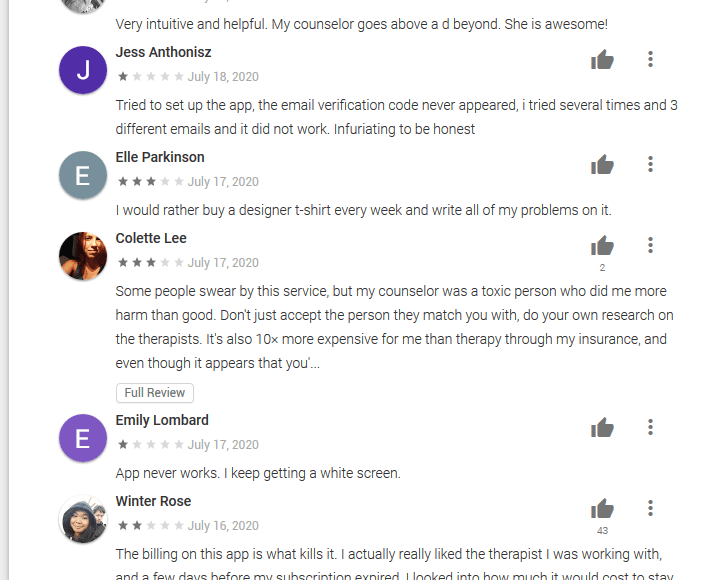


On the 18th of July and over the following days, there was a fresh injection of 5 star reviews, many in a row, which keeps reoccurring to this day, but was particularly noticeable then, given how low they had been for months. Also notice how many were posted in just two days, compared to the previous week.

6. MLM-like (direct sales) tactics
Many crappy companies give incentives to customers/clients to invest time into finding them new customers/clients, who in turn will do the same. That’s how MLMs operate.
Not surprisingly, BetterHelp has also been employing this tactic recently, although again, their service has been even poorer than usual, due to their inability to meet a higher demand. They are now offering a free week to clients who can get someone else to sign up, and a free week to those signing up through a referral link.
There are many issues with this, the first one being mental health providers are not even supposed to solicit testimonials from clients, let alone have them do promotional work in their spare time.
Unlike influencers, who have a platform and needn’t put more that 2 minutes into reaching potential clients, these people, presumably low on money, scour social media platforms for users who post about their mental health issues and offer them their referral link.
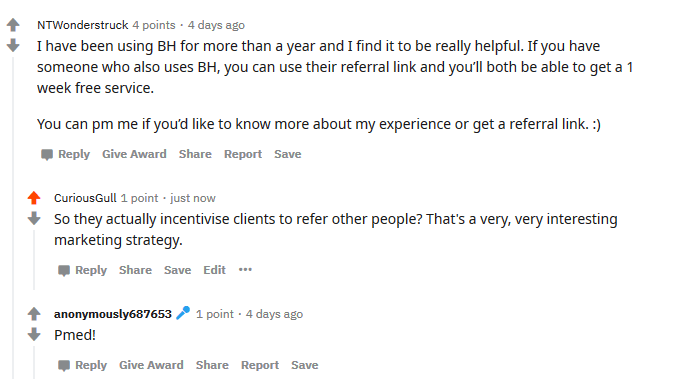
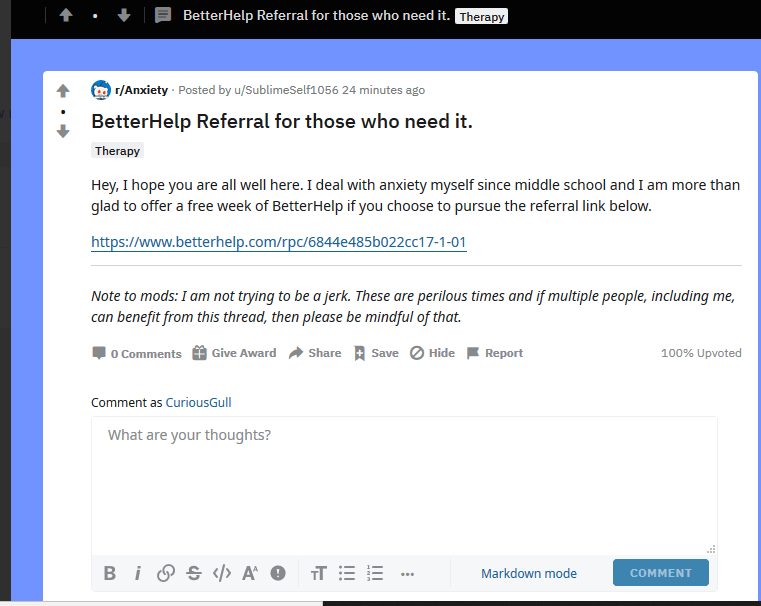

Given that it’s a mental health service, not a cable subscription, their ability to access something they feel they need may well depend on their ability to find new clients for the company. This is predatory.
7. Repeated uncommon words or phrases in different reviews
A company might provide content writers with certain keywords, which keep mysteriously appearing in reviews, although they are not necessarily common. After reading hundreds of reviews, I have identified the following for BetterHelp:
- game changer
- at your fingertips/ with one click/ with the ease of a click/ with the click of a button
- always responds in a timely manner
- the future of therapy
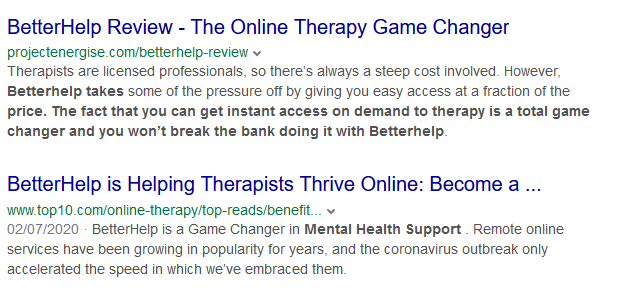
Let’s take the first one, “game changer”. There is also a review above, on the BBB website, containing this. By simply entering it into the search engine, I found the following:



8. Reviews written by people who clearly don’t know much about the service (hence they haven’t used it)
If you’re somewhat familiar with a product or service, watch out for reviews making up nonexistent features, which could be invalidated even by those who like it. At times, these are exaggerations of already misleading ads, hence they end up describing an impossible experience with a company.
Here’s an example:
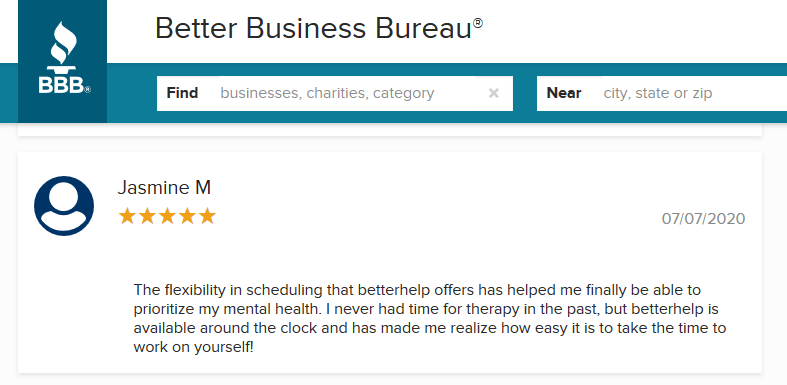
Whereas they advertise one can set up an unlimited number of sessions with a counsellor, that literally never happens (a maximum of one a week is offered, and nowadays, it can be one every 2 weeks, since availability has greatly decreased and they can’t cope with the number of clients). Needless to say, the one session is often cancelled at the last minute, a no-show (the counsellor simply doesn’t turn up), is cut short or fails due to audio and video technical issues. And there’s no way to set up another appointment until the previous one is completed, which means a client is always at the mercy of a counsellor’s availability, despite paying for the service.
Here’s another one:
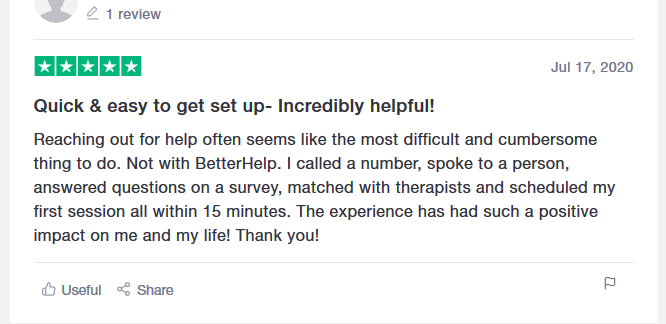
Signing up is done exclusively online. They don’t even have a customer service number (they use an answering service which then emails BH on a client’s behalf, which the client can do themselves). They didn’t even provide that answering service with a phone number, so it’s impossible for this company to be reached directly by phone. In conclusion, this reviewer never signed up and used the service.
And here’s a third one as well:

As mentioned, their customer service only functions by email, with promises of responding within 24 hours. Numerous complaints signal the fact that they received a reply after a few days or not at all, and their issue was not handled. Counsellor reviews on Indeed.com describe the same problem: there is no support; not even for them.
Many of these fake reviews seem to mitigate the most common complaints, which entails denying real problems clients face. They are likely directed on what to write by people who read these complaints on a regular basis.
9. Countering and trying to silence critics whenever possible
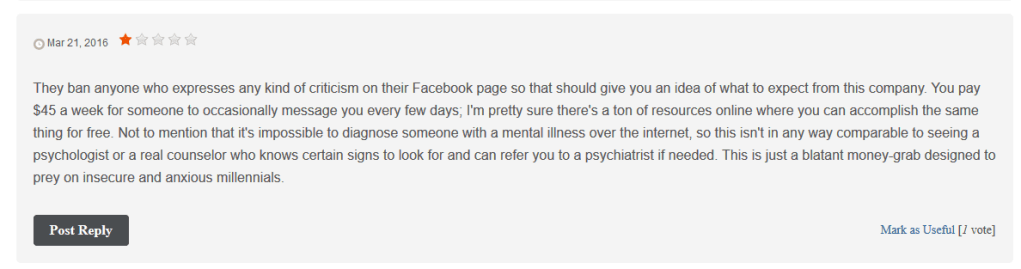
This includes their own platform. They make a forum available to counsellors yet moderate every single comment on it, and anything critical of the company is removed, along with the possibility of the issue being addressed.
They also hire people to trawl through social media sites and besides promoting the company, respond to criticism or concerns, at times aggressively (in a way that reminds me of Landmark).

The brief reality of this service
BetterHelp is simply a business-oriented middle man, cutting corners and disclaiming all responsibility for the services a client receives through them (or lack thereof). Their matching service disregards preferences and often matches clients with counsellors listed as unavailable, or those who have already quit, to string them along (I will detail that further in a different post). They have already been reported for this.
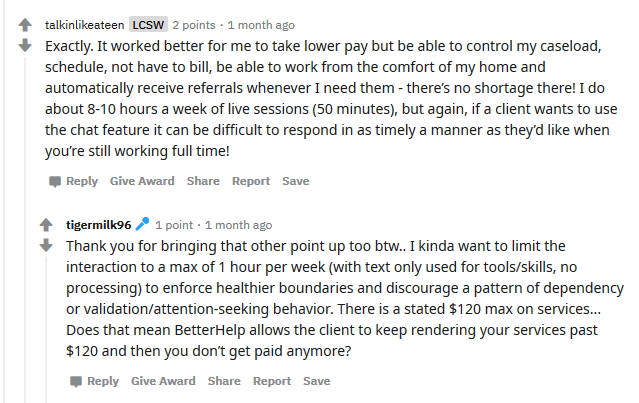
Counsellors are aware the service is falsely advertised as providing 24/7 support, unavoidably resulting in many complaints, and some openly discuss not just their inability but their unwillingness to provide that support. Which is a way of saying “I hope these people don’t actually expect what the company advertises”, placing the onus on the client to realise and accept they can’t receive what they thought they had paid for.

That said, I will compile all that has transpired about this company in 2020 in a separate post (as there is quite a lot).
 The Artistry Of Glorified Bullshit